• Fri frakt över 249 kr
  • •
  • Snabba leveranser
  • •
  • Billiga böcker
Kundservice

Du är på sajten för privatpersoner.

Företag, bibliotek eller offentlig verksamhet?

Du handlar på classic.bokus.com, där alla dina funktioner finns intakta.
Till classic.bokus.com
Bokus logotyp. Gå till startsidan.
  • Erbjudanden
  • Nyheter
  • Student
  • Topplistor
  • Barn & ungdom
  • Bokus Play
  • E-böcker
  • Pocketböcker
  • Spel & pussel

10% studentrabatt med kod TERM26

Sidfot

Mina sidor

    Hjälp

    • Kundservice
    • Vanliga frågor och svar
    • Frakt och leverans
    • Retur vid ångerrätt
    • Reklamera vara
    • Betalning
    • Köpvillkor
    • Allmänna villkor
    • Information om webbplatsens tillgänglighet

    Om Bokus

    • Om oss
    • Pressrum
    • För studenter
    • För företag
    • För bibliotek och offentlig verksamhet
    • För leverantörer
    • Hållbarhet

    Populärt

    • Aktuella erbjudanden
    • Presentkort
    • Studentlitteratur
    • Nya böcker
    • Topplistor
    • Signerade böcker
    • Engelska böcker

    Inspiration

    • Boktips
    • BookTok
    • Populära bokserier
    • Barnbokskaraktärer
    • Populära författare
    Logotyp för Bokus
    Följ oss på Facebook (extern länk)Följ oss på Instagram (extern länk)Följ oss på YouTube (extern länk)Följ oss på TikTok (extern länk)
    bokus @ CookiesAnpassa cookiesIntegritetspolicyKöpvillkor
    Till Citymail hemsida (extern länk)Till Budbee hemsida (extern länk)Till Postnord hemsida (extern länk)Till Schenker hemsida (extern länk)Till Early Bird hemsida (extern länk)Till Walleys hemsida (extern länk)
    1. Ekonomi och Ledarskap
    2. Nationalekonomi

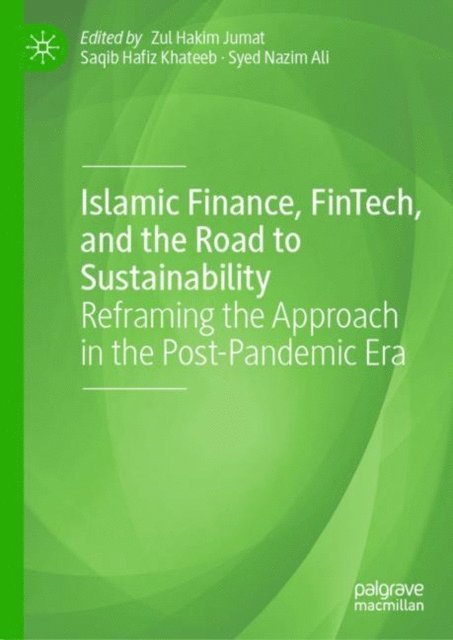
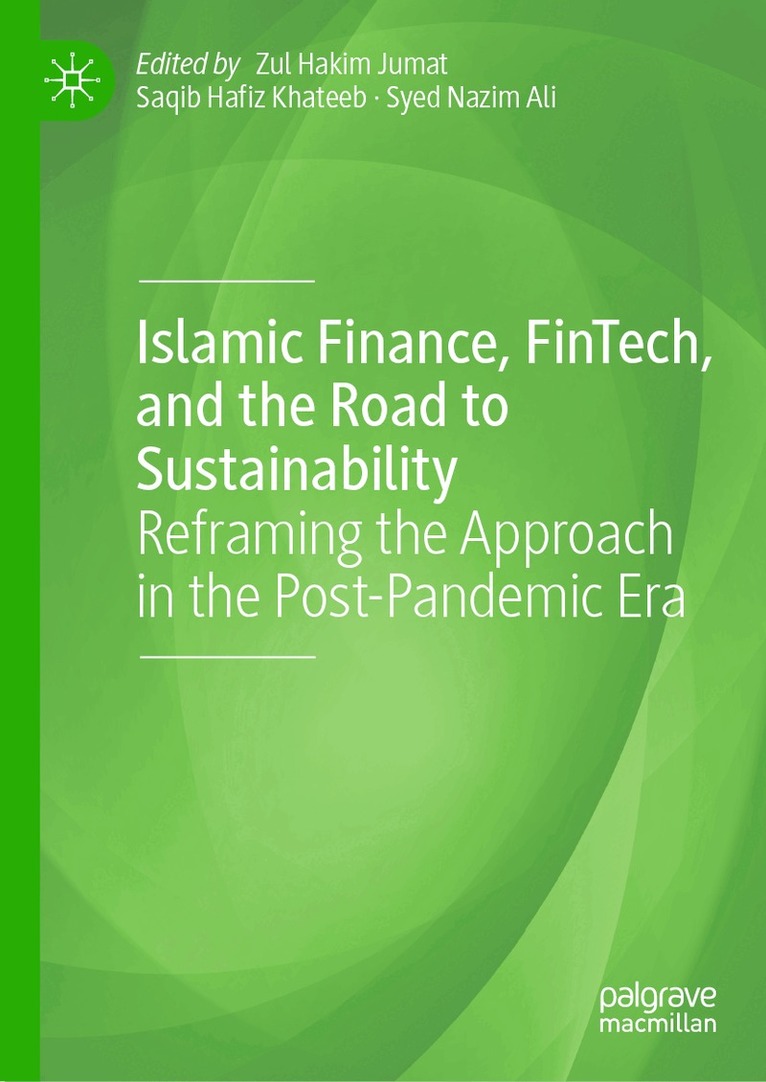
    Islamic Finance, FinTech, and the Road to Sustainability

    Reframing the Approach in the Post-Pandemic Era

    AvZul Hakim Jumat,Saqib Hafiz Khateeb

    Häftad, Engelska, 2024

    Del i serien Palgrave CIBFR Studies in Islamic Finance

    2 242 kr

    Beställningsvara. Skickas inom 10-15 vardagar. Fri frakt över 249 kr.

    Beskrivning

    The recent unprecedented economic downturn and global supply chain disruption by the COVID-19 pandemic is accelerating the urgency for sustainable financing infrastructure that is agile, adaptable, and transformable. Sustainability and the 4th Industrial Revolution are about more than just technology-driven change; it is an opportunity to help everyone, including leaders, policymakers and people from all income groups and nations, to navigate industry disruptions and transitioning to a new normal by harnessing converging technologies in order to create an inclusive, human-centered future. The edited volume provides critical discussions on reframing the Islamic finance approach to sustainability and socio-economic development in the post-pandemic era. It highlights how selected Islamic finance tools alongside FinTech can not only ensure financial sustainability but also promote socio-economic policies that will aid the much-desired value and impact creation in the economy. The book focuses its analysis on the following three areas: reframing Islamic finance sustainability and socio-economic development;  innovative Islamic financial tools for sustainable and socio-economic impact; and the role of FinTech in the road to sustainability. The edited volume will be of interest to scholars, researchers, and students of Islamic finance, sustainability, and financial technology.

    Produktinformation

    • Utgivningsdatum:2024-01-18
    • Mått:148 x 210 x 22 mm
    • Vikt:506 g
    • Format:Häftad
    • Språk:Engelska
    • Serie:Palgrave CIBFR Studies in Islamic Finance
    • Antal sidor:358
    • Förlag:Springer International Publishing AG
    • ISBN:9783031133046

    Utforska kategorier

    • Nationalekonomi inom Ekonomi och Ledarskap
    • Internationell ekonomi inom Ekonomi och Ledarskap
    • Finansiering inom Ekonomi och Ledarskap

    Mer om författaren

    Zul Hakim Jumat is a Researcher for the Center of Islamic Economics and Finance (CIEF), College of Islamic Studies, Hamad Bin Khalifa University (HBKU), Qatar Foundation. Saqib Hafiz Khateeb is a Research Fellow at College of Islamic Studies, Hamad Bin Khalifa University (HBKU), Qatar Foundation. Under the fellowship, he is the Project Lead for IBIR project - a bibliographic databank of Islamic Economics and Finance.  Syed Nazim Ali is a Research Professor and the Director for the Research Division, College of Islamic Studies, at the Hamad Bin Khalifa University, Qatar Foundation.

    Innehållsförteckning

    • Chapter 1: Islamic Finance, FinTech and the Road to Sustainability – Reframing the Approach in the Post-Pandemic Era: An Introduction.- Part I: Re-Framing Islamic Finance Sustainabilit and Socio-Economic Development.- Chapter 2: Islamic Finance and Sustainability: The Need to Reframe Notions of Shariah Compliance, Purpose, and Value.- Tools and Conditions for Achieving Sustainable Development in Islamic Finance.- Chapter 3: Maqasid al-Shariah and Sustainable Development Goals Convergence: An Assessment of Global Best Practices.- Chapter 4: The Resilience of Islamic Finance Against Pandemic-Induced Future Economic Crisis.- Chapter 5: Emergence of Islamic Finance in the Fourth Industrial Revolution and COVID-19 Post Pandemic Era.- Part II: Innovative Islamic Financial Tools for Sustainable and Socio-Economic Impact.- Chapter 6: Sukuk Innovation: Powering Sustainable Finance  in Islamic Markets.- Chapter 7: Mobilizing Funds for Industrialization and Development Through Islamic Value System, Capital Markets, and Social Finance .- Chapter 8: The Role of Green Sukuk in Maqasid Al-Shariah and SDGs: Evidence from Indonesia.- Chapter 9: Is Islamic Microfinance a Resilient Business Model During Periods of Crisis?.- Chapter 10: Empirical Evidence from Arab Countries.- Part III: FinTech Role in The Road to Sustainability.- Chapter 11: Digital Finance and Artificial Intelligence: Islamic Finance Challenges and Prospects.- Chapter 12: Open Banking for Financial Inclusion: Challenges and Opportunities in Muslim-Majority Countries.- Chapter 13: Islamic Specialized FinTech for Inclusive and Sustainable Growth in Sub-Saharan Africa.- Chapter 14: The Role of Technology in Effective Distribution of Zakat to Poor and Needy.- Chapter 15: Notion of Value-Added in RegTech Research Work: What is there for Islamic Finance?