• Fri frakt över 249 kr
  • •
  • Snabba leveranser
  • •
  • Billiga böcker
Kundservice

Du är på sajten för privatpersoner.

Företag, bibliotek eller offentlig verksamhet?

Du handlar på classic.bokus.com, där alla dina funktioner finns intakta.
Till classic.bokus.com
Bokus logotyp. Gå till startsidan.
  • Erbjudanden
  • Nyheter
  • Student
  • Topplistor
  • Barn & ungdom
  • Bokus Play
  • E-böcker
  • Pocketböcker
  • Spel & pussel

10% studentrabatt med kod TERM26

Sidfot

Mina sidor

    Hjälp

    • Kundservice
    • Vanliga frågor och svar
    • Frakt och leverans
    • Retur vid ångerrätt
    • Reklamera vara
    • Betalning
    • Köpvillkor
    • Allmänna villkor
    • Information om webbplatsens tillgänglighet

    Om Bokus

    • Om oss
    • Pressrum
    • För studenter
    • För företag
    • För bibliotek och offentlig verksamhet
    • För leverantörer
    • Hållbarhet

    Populärt

    • Aktuella erbjudanden
    • Presentkort
    • Studentlitteratur
    • Nya böcker
    • Topplistor
    • Signerade böcker
    • Engelska böcker

    Inspiration

    • Boktips
    • BookTok
    • Populära bokserier
    • Barnbokskaraktärer
    • Populära författare
    Logotyp för Bokus
    Följ oss på Facebook (extern länk)Följ oss på Instagram (extern länk)Följ oss på YouTube (extern länk)Följ oss på TikTok (extern länk)
    bokus @ CookiesAnpassa cookiesIntegritetspolicyKöpvillkor
    Till Citymail hemsida (extern länk)Till Budbee hemsida (extern länk)Till Postnord hemsida (extern länk)Till Schenker hemsida (extern länk)Till Early Bird hemsida (extern länk)Till Walleys hemsida (extern länk)
    1. Kultur
    2. Arkitektur

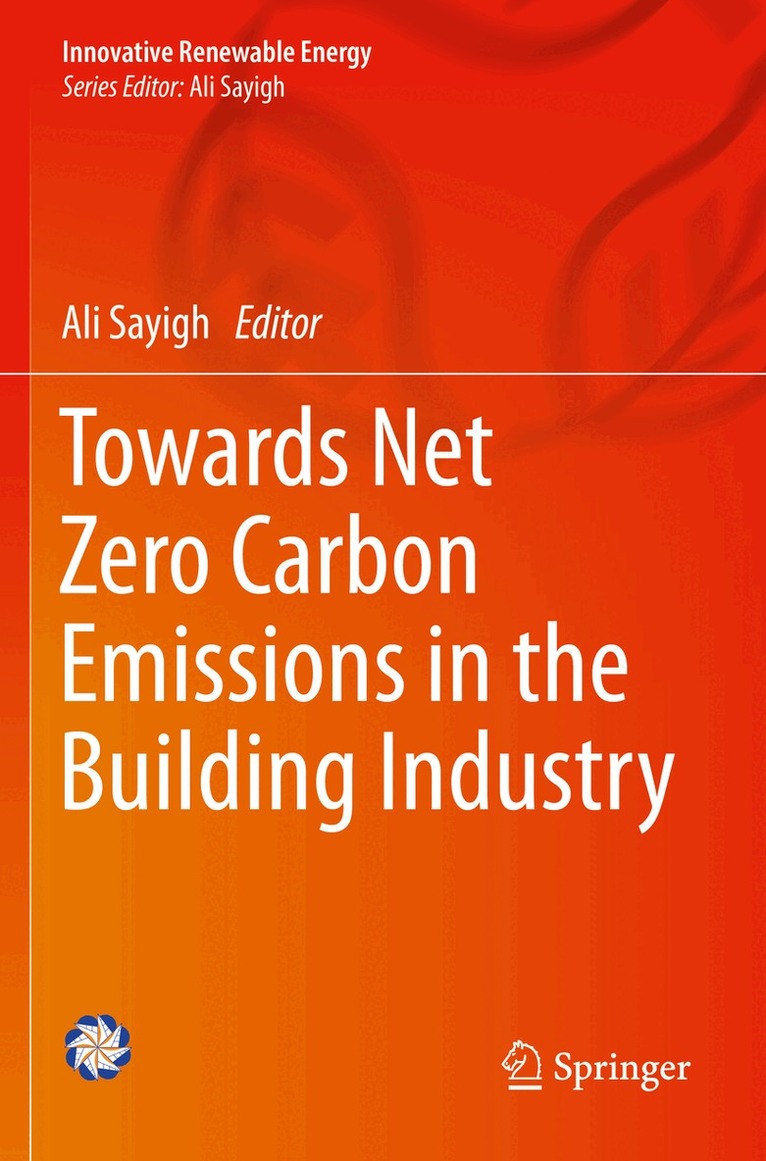
    Towards Net Zero Carbon Emissions in the Building Industry

    AvAli Sayigh

    Häftad, Engelska, 2023

    Del i serien Innovative Renewable Energy

    1 236 kr

    Beställningsvara. Skickas inom 10-15 vardagar. Fri frakt över 249 kr.

    Beskrivning

    Towards Net Zero in the Building Industry looks at the contributions that the building and construction industry can (and must) make to help achieve net zero carbon emissions. The building industry accounts for close to 40% of global emissions and this book brings together a global group of contributors from 15 countries to examine ways in which the industry can help with overall CO2 reduction. Coverage includes factors such as building design strategy, materials selection, use of local materials with a low carbon imprint, renewable energy use, energy conservation, greenery and appropriate aesthetics, building size and scale, climate suitability, building functionality and comfort, material recycling, and adoption of green policies. Chapter 6 is available open access under a Creative Commons Attribution 4.0 International License via link.springer.com.

    Produktinformation

    • Utgivningsdatum:2023-11-10
    • Mått:155 x 235 x 25 mm
    • Vikt:674 g
    • Format:Häftad
    • Språk:Engelska
    • Serie:Innovative Renewable Energy
    • Antal sidor:437
    • Förlag:Springer International Publishing AG
    • ISBN:9783031152207

    Utforska kategorier

    • Arkitektur inom Kultur
    • Energiteknik inom Naturvetenskap och teknik
    • Byggnadsteknik inom Naturvetenskap och teknik

    Mer om författaren

    Professor Ali Sayigh is Chairman and Founder of the World Renewable Energy Congress (WREC), Director-General of the World Renewable Energy Network (WREN), Chairman and Founder of the Arab Solar Energy Society, and Past Chairman of the UK Solar Energy Society. He actively consults on renewable and sustainable energy issues for several international organizations, including UNESCO, ISESCO, UNDP, ESCWA, and UNIDO. Dr. Sayigh was Director of Solar Seminars at ICTP Trieste, Italy from 1977 to 1995, and Professor of Solar Energy at King Saud University, Saudi Arabia, from 1969 to 1981. He was head of renewable energy at the Kuwait Institute for Scientific Research from 1981 to 1985, a founding expert on renewable energy at OAPEC from 1985 to 1987, Professor at Reading University from 1987 to 1994, and Professor at the University of Hertfordshire from 1994 to 2004. He was the founding Editor and Editor-in-Chief of the Renewable Energy journal from 1984 to 2014, and in 2017 helped establish and was Editor-in-Chief of the journal Renewable Energy and Environmental Sustainability. He is a Chartered Engineer and a Fellow of the Institute of Energy, the Institution of Engineering and Technology, and the Royal Society of Arts. Dr. Sayigh has published more than 300 papers and has contributed to and edited more than 30 books. He was the Editor-in-Chief of the multi-volume reference work Comprehensive Renewable Energy (Elsevier, 2012).

    Innehållsförteckning

    • Brains for Buildings to Close the Performance Gap.- The Integrated Design Studio as Means to Achieve Zero Net Energy Building.- Green  Urbanism  With  "Genuine"  Green Architecture: An Exemplary Case in New York.- Net Zero Energy Buildings: A Study in Two Cities: Ajman and Lisbon.- The Proper Geometrical Parameters of Urban Street Profile to Enhance Outdoor Thermal Comfort in Highland Zone of Algeria.- Beyond Energy Efficiency: The Emerging Era of Smart Bioenergy.- Turning an Ordinary House Into Something Extraordinary on the Road to Net Zero.- Environmental Dimensions of Climate Change: Endurance and Change in Material Culture.- What It Takes to Go Net Zero: A Technical and a Social Challenge.- Zero Energy Houses for the Mediterranean: Energy Refurbishment Optimisation Studies of Residential Building Typologies in Cyprus.- Studies of Residential Building Typologies in Cyprus.- Simulated vs. Monitored Building Behaviours: Sample Demo Applications in a North-ItalianClimate.- The Current Trends and Future Perspectives of Using Building Integrated Photovoltaic Thermal (BIPV-T) Systems to Achieve Net Zero Goal.- Dynamic Simulations of High Energy Performance Buildings: The Role of Climatic Data and the Consideration of Climate Change.- Thermal Behavior of Exterior Coating Texture and Its Effect on the Building Thermal Performance.- Towards Climate Neutrality: Global Perspective and Actions for Net Zero Buildings to Achieve Climate Mitigation and SDGs.- External Solar Shading Design for Low-energy Buildings in Humid Temperate Climates.- The Reuse of Old Building Structure in Architectural Design.- The Next Challenge of Nearly Zero Energy Buildings (NZEB): Advanced Materials and Traditional Technologies to Realize Positive Energy Buildings (PEB).- Achieving Zero Energy Facades.- Lesson From First Net Zero Energy Buildings.