• Fri frakt över 249 kr
  • •
  • Snabba leveranser
  • •
  • Billiga böcker
Kundservice

Du är på sajten för privatpersoner.

Företag, bibliotek eller offentlig verksamhet?

Du handlar på classic.bokus.com, där alla dina funktioner finns intakta.
Till classic.bokus.com
Bokus logotyp. Gå till startsidan.
  • Erbjudanden
  • Student
  • Topplistor
  • Barn & ungdom
  • Bokus Play
  • E-böcker
  • Ljudböcker
  • Pocketböcker
  • Spel och pussel

Pocketfynda! Hundratals böcker för 49 kr/st →

Sidfot

Mina sidor

    Hjälp

    • Kundservice
    • Vanliga frågor och svar
    • Frakt och leverans
    • Retur vid ångerrätt
    • Reklamera vara
    • Betalning
    • Köpvillkor
    • Allmänna villkor
    • Information om webbplatsens tillgänglighet

    Om Bokus

    • Om oss
    • Pressrum
    • För studenter
    • För företag
    • För bibliotek och offentlig verksamhet
    • För leverantörer
    • Hållbarhet

    Populärt

    • Aktuella erbjudanden
    • Presentkort
    • Studentlitteratur
    • Nya böcker
    • Topplistor
    • Signerade böcker
    • Engelska böcker

    Inspiration

    • Boktips
    • BookTok
    • Barnbokskaraktärer
    • Populära författare
    Logotyp för Bokus
    Följ oss på Facebook (extern länk)Följ oss på Instagram (extern länk)Följ oss på YouTube (extern länk)Följ oss på TikTok (extern länk)
    bokus @ CookiesAnpassa cookiesIntegritetspolicyKöpvillkor
    Till Citymail hemsida (extern länk)Till Budbee hemsida (extern länk)Till Postnord hemsida (extern länk)Till Schenker hemsida (extern länk)Till Early Bird hemsida (extern länk)Till Walleys hemsida (extern länk)
    1. Naturvetenskap och teknik
    2. Teknik och industri
    3. Byggnadsteknik

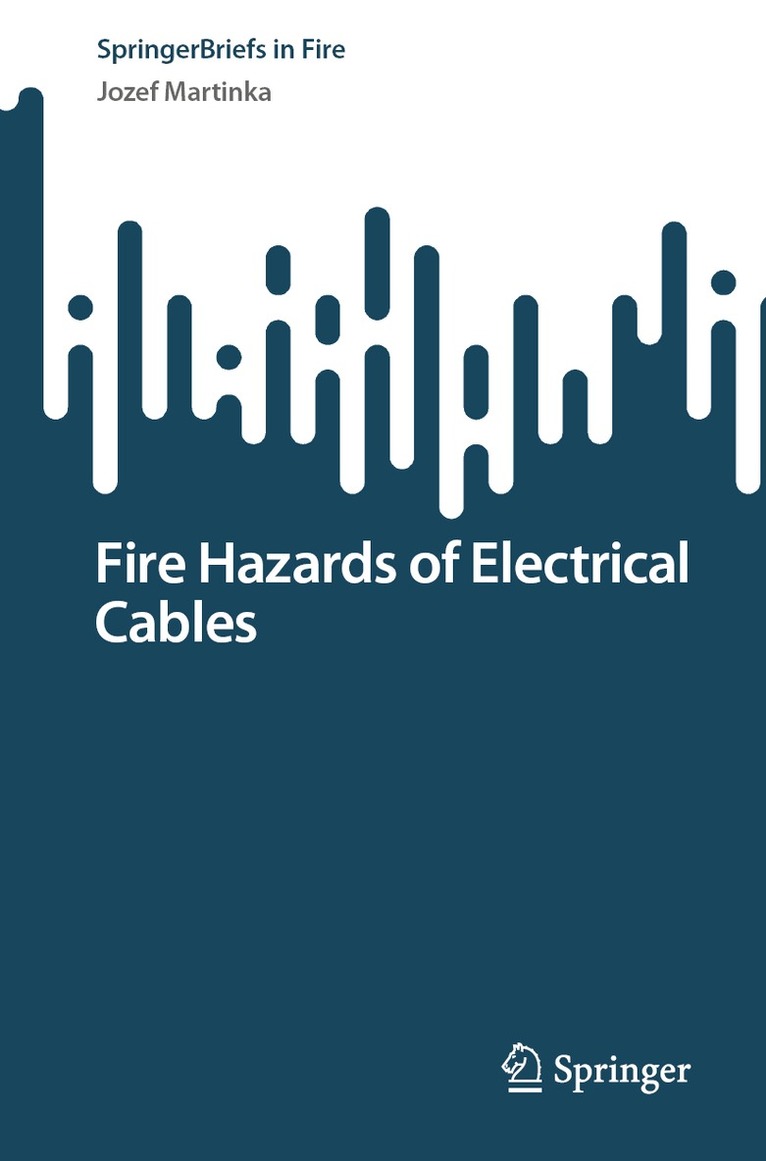
    Fire Hazards of Electrical Cables

    AvJozef Martinka

    Häftad, Engelska, 2022

    Del i serien SpringerBriefs in Fire

    543 kr

    Beställningsvara. Skickas inom 10-15 vardagar. Fri frakt över 249 kr.

    Fler format och utgåvor

    E-bok

    710 kr

    Beskrivning

    This book offers a comprehensive approach to the assessment of fire hazards of electrical cables. The first part of the book describes division of cables, main parameters of electrical cables, and fault scenarios of cables leading to fire or occupant injuries. The traditional approach to fire hazards of electrical cables assessment is also described in the first part. The second part of the book is focused on the creation and description of a new approach to fire hazard assessment of electrical cables. The new approach is based on the assessment of both ignition parameters of electrical cables and the impact of their fires on the surrounding area. The ignition parameters include critical heat flux, ignition temperature, and critical electrical current. The impact of cable fires on the surrounding area is expressed by the released heat, toxicity of combustion products (determined by the amount of released carbon oxides and oxygen consumed), and visibility (determined by the smoke extinction area). Newly created approach is practically illustrated on specific types of cables (power cables classified to B2ca and Fca reaction to fire class) in this book. The book is intended mainly for academics in the fields of both fire protection engineering and electrical engineering. Besides that, the professionals in fire safety will find valuable information concerning impact of electrical cables on the safety of occupants and structures during fire in the book. In addition, the book sheds light on the issue of fire safety of electrical cables for the professionals in both electrical and power engineering. Last but not least, the book is appropriate also for students in the fields of fire, electrical, and power engineering in bachelor, master, and Ph.D. degree.

    Produktinformation

    • Utgivningsdatum:2022-10-27
    • Mått:155 x 235 x 7 mm
    • Vikt:217 g
    • Format:Häftad
    • Språk:Engelska
    • Serie:SpringerBriefs in Fire
    • Antal sidor:102
    • Förlag:Springer International Publishing AG
    • ISBN:9783031170492

    Utforska kategorier

    • Byggnadsteknik inom Naturvetenskap och teknik

    Mer om författaren

    Prof. Jozef Martinka, Ph.D., graduated (Ph.D. degree) in the field of Fire Protection Engineering in 2010. Currently, he is a full professor and the head of the Department of Fire Protection Engineering of the Slovak University of Technology in Bratislava. He is continuously engaged in the research of the fire hazards of substances, materials, and products since his Ph.D. studies. The core of his research is the fire hazard of electrical cables as construction products. He has been the head and the vice-head of research teams of many scientific projects founded by: the Slovak Research and Development Agency, the Scientific Research Agency of the Ministry of Education of the Slovak Republic, and the Cultural and Educational Agency of the Ministry of Education of the Slovak Republic. He is an author or a co-author of two scientific monographs, two university textbooks, four university course books; fifteen patent applications, more than thirty papers in scientific journals that are indexed in WOS, and almost hundred papers for conference proceedings. He lectures in the following subjects at the Slovak University of Technology in Bratislava: Fundamentals of Fire Engineering, Reserved Technical Devices, Theory of Fire and Explosions, Fire Safety of Structures and Fire Investigation. In addition, he participated in lecture stays at the University of Wrocław and at the University of Zielona Góra (both Poland). He is a member of commissions of the Slovak Office of Standards, Metrology and Testing (for preparation of the Slovak Technical Standards in field of fire safety), a referee of the Slovak Accreditation Agency for Higher Education, and a member of both the Association of Fire and Safety Engineering and the Czech Chemical Society (both the Czech Republic).

    Innehållsförteckning

    • 1. Introduction.- 2. Description and the Parameters of Electrical Cables.- 3. Fault Scenarios of Electrical Cables.- 4. Traditional Approach to Assessment of Fire Hazards of Electrical Cables.- 5. New Approach to Assessment of Fire Hazards of Electrical Cables.- 6. Conclusion.