• Fri frakt över 249 kr
  • •
  • Snabba leveranser
  • •
  • Billiga böcker
Kundservice

Du är på sajten för privatpersoner.

Företag, bibliotek eller offentlig verksamhet?

Du handlar på classic.bokus.com, där alla dina funktioner finns intakta.
Till classic.bokus.com
Bokus logotyp. Gå till startsidan.
  • Erbjudanden
  • Nyheter
  • Student
  • Topplistor
  • Barn & ungdom
  • Bokus Play
  • E-böcker
  • Pocketböcker
  • Spel & pussel

10% rabatt på allt med kod: NYSTART10 →

Sidfot

Mina sidor

    Hjälp

    • Kundservice
    • Vanliga frågor och svar
    • Frakt och leverans
    • Retur vid ångerrätt
    • Reklamera vara
    • Betalning
    • Köpvillkor
    • Allmänna villkor
    • Information om webbplatsens tillgänglighet

    Om Bokus

    • Om oss
    • Pressrum
    • För studenter
    • För företag
    • För bibliotek och offentlig verksamhet
    • För leverantörer
    • Hållbarhet

    Populärt

    • Aktuella erbjudanden
    • Presentkort
    • Studentlitteratur
    • Nya böcker
    • Topplistor
    • Signerade böcker
    • Engelska böcker

    Inspiration

    • Boktips
    • BookTok
    • Populära bokserier
    • Barnbokskaraktärer
    • Populära författare
    Logotyp för Bokus
    Följ oss på Facebook (extern länk)Följ oss på Instagram (extern länk)Följ oss på YouTube (extern länk)Följ oss på TikTok (extern länk)
    bokus @ CookiesAnpassa cookiesIntegritetspolicyKöpvillkor
    Till Citymail hemsida (extern länk)Till Budbee hemsida (extern länk)Till Postnord hemsida (extern länk)Till Schenker hemsida (extern länk)Till Early Bird hemsida (extern länk)Till Walleys hemsida (extern länk)
    1. Juridik
    2. Rättsvetenskap

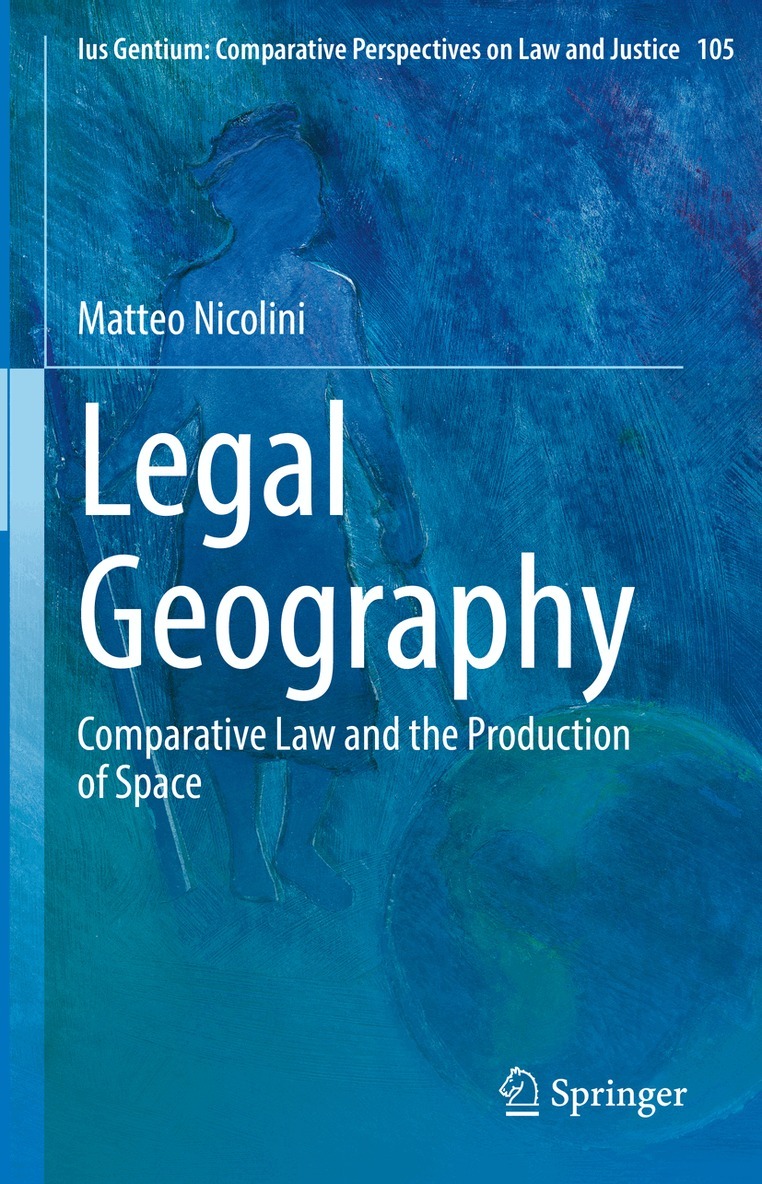
    Legal Geography

    Comparative Law and the Production of Space

    AvMatteo Nicolini

    Häftad, Engelska, 2023

    Del 105 i serien Ius Gentium: Comparative Perspectives on Law and Justice

    1 396 kr

    Beställningsvara. Skickas inom 10-15 vardagar. Fri frakt över 249 kr.

    Fler format och utgåvor

    Inbunden

    1 396 kr

    E-bok

    1 735 kr

    Beskrivning

    This book invites readers to critically rethink the interrelations between geography and the law. Traditionally, legal-geographical interrelations have been dominated by scholars with backgrounds in geopolitics, economics, or geography. More recently, a new interdisciplinary approach has been developed with the aim of offering a fresh perspective on how law and geography intersect. There has been a steady growth in cross-disciplinary research in this field; how legal-geographical taxonomies interrelate has attracted attention from scholars and academics with a diverse range of backgrounds – namely, law, anthropology, and human/physical geography –, thus giving rise to several publications.Against this backdrop, the book adopts a legal comparative perspective and assesses ‘normative spatialities’, which are the outcomes of processes of legal-spatial production. In addition, the comparative analysis offers readers new insights on some traditional geographicfeatures which are essential to legal studies (territorial identity, regional demarcation, territorial alternation, and place-name policy). Examples are drawn from several jurisdictions (both from the Global North and the Global South) and partly employ a diachronic perspective.As its subversive character is ideally suited to revealing policies and agendas, comparative law is used to identify the ethnocentric and colonial biases underpinning the use (and misuse) of legal geographic devices by policymakers and academics. In sum, the book presents legal geography as an interdisciplinary undertaking in which geographers and legal scholars can jointly examine common concepts in the historical, cultural, political and social contexts in which law is practised. The book transcends the boundaries between disciplines to engage in a fruitful dialogue on how the law can help to address the current socio-geographic and ecological crises.

    Produktinformation

    • Utgivningsdatum:2023-12-06
    • Mått:155 x 235 x 18 mm
    • Vikt:482 g
    • Format:Häftad
    • Språk:Engelska
    • Serie:Ius Gentium: Comparative Perspectives on Law and Justice
    • Antal sidor:296
    • Förlag:Springer International Publishing AG
    • ISBN:9783031194122

    Utforska kategorier

    • Rättsvetenskap inom Juridik
    • Geografi inom Naturvetenskap och teknik
    • Komparativ rätt inom Juridik

    Mer om författaren

    Matteo Nicolini, PhD, is Associate Professor of Public Comparative Law at the Department of Law of the University of Verona (Italy), where he teaches Comparative Constitutional Traditions and Global Comparative Law. He is also Visiting Lecturer at the Newcastle University Law School (UK) and External Partner of the Centre for the Study of Law in Theory and Practice (LTAP), Liverpool John Moores University (UK). He has held teaching and visiting appointments at the Universities of Stellenbosch, Barcelona, Valladolid, Tübingen, Lille, UNED (Madrid), Alberto Hurtado (Chile), and Innsbruck. He is author and editor of several works written in Italian, Spanish, and English, which include: “Law, Territory and Conflict Resolution. Law as a Problem and Law as a Solution” (Brill, 2016) (editor with Francesco Palermo and Enrico Milano); “Law and Imagination in Troubled Times A Legal and Literary Discourse” (Routledge, 2020) (editor with Richard Mullender, Thomas D.C. Bennett, Emilia Mickiewicz); “Comparative Constitutional Justice” (Eleven, 2021) (author with Silvia Bagni); Islands in Geography, Law, and Literature. A Cross-Disciplinary Journey (de Gruyter 2022) (coeditor with Chiara Battisti, Sidia Fiorato, Thomas Perrin).

    Innehållsförteckning

    • Law and Geography: A Special Relationship.- Part I Methodologies.- From Law and Geography to Legal Geography.- Part II Spatial Normativies.- Law and ‘Geographies’.- Colonial Underpinnings: Spatiality of Law.- Critical Legal Geographies.- Part III Territorial Nomenclatures.- Legal Geography, Linguistics, and Borders.- ‘Federal’ Legal Geographies.- Part IV De-Territorialised Legal Geographies.- Un-Bounded Legal Spaces.- Part V Conclusions.- Perspectives.