• Fri frakt över 249 kr
  • •
  • Snabba leveranser
  • •
  • Billiga böcker
Kundservice

Du är på sajten för privatpersoner.

Företag, bibliotek eller offentlig verksamhet?

Du handlar på classic.bokus.com, där alla dina funktioner finns intakta.
Till classic.bokus.com
Bokus logotyp. Gå till startsidan.
  • Erbjudanden
  • Student
  • Topplistor
  • Barn & ungdom
  • Bokus Play
  • E-böcker
  • Ljudböcker
  • Pocketböcker
  • Spel och pussel

Pocketfynda! Hundratals böcker för 49 kr/st →

Sidfot

Mina sidor

    Hjälp

    • Kundservice
    • Vanliga frågor och svar
    • Frakt och leverans
    • Retur vid ångerrätt
    • Reklamera vara
    • Betalning
    • Köpvillkor
    • Allmänna villkor
    • Information om webbplatsens tillgänglighet

    Om Bokus

    • Om oss
    • Pressrum
    • För studenter
    • För företag
    • För bibliotek och offentlig verksamhet
    • För leverantörer
    • Hållbarhet

    Populärt

    • Aktuella erbjudanden
    • Presentkort
    • Studentlitteratur
    • Nya böcker
    • Topplistor
    • Signerade böcker
    • Engelska böcker

    Inspiration

    • Boktips
    • BookTok
    • Barnbokskaraktärer
    • Populära författare
    Logotyp för Bokus
    Följ oss på Facebook (extern länk)Följ oss på Instagram (extern länk)Följ oss på YouTube (extern länk)Följ oss på TikTok (extern länk)
    bokus @ CookiesAnpassa cookiesIntegritetspolicyKöpvillkor
    Till Citymail hemsida (extern länk)Till Budbee hemsida (extern länk)Till Postnord hemsida (extern länk)Till Schenker hemsida (extern länk)Till Early Bird hemsida (extern länk)Till Walleys hemsida (extern länk)
    1. Data och IT
    2. Systemvetenskap och AI

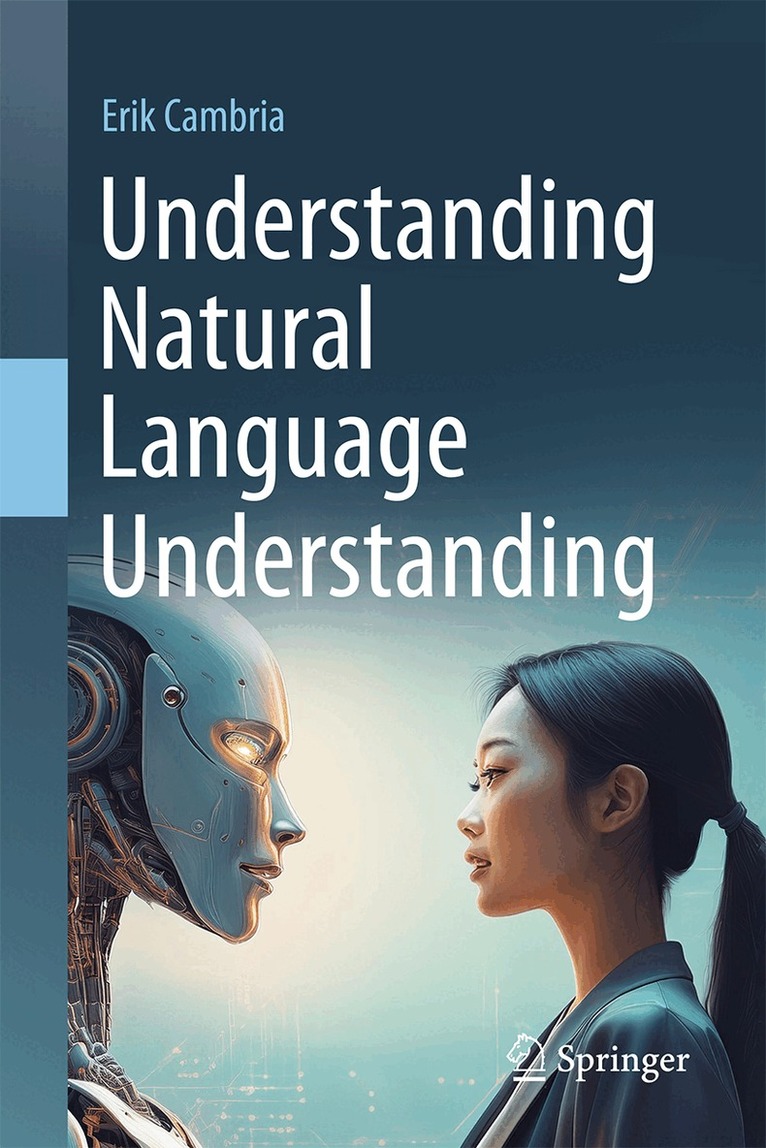
    Understanding Natural Language Understanding

    AvErik Cambria

    Inbunden, Engelska, 2024

    1 000 kr

    Beställningsvara. Skickas inom 10-15 vardagar. Fri frakt över 249 kr.

    Fler format och utgåvor

    E-bok

    1 292 kr

    Häftad

    724 kr

    Beskrivning

    About half a century ago, AI pioneers like Marvin Minsky embarked on the ambitious project of emulating how the human mind encodes and decodes meaning. While today we have a better understanding of the brain thanks to neuroscience, we are still far from unlocking the secrets of the mind, especially when it comes to language, the prime example of human intelligence. “Understanding natural language understanding”, i.e., understanding how the mind encodes and decodes meaning through language, is a significant milestone in our journey towards creating machines that genuinely comprehend human language. Large language models (LLMs) such as GPT-4 have astounded us with their ability to generate coherent, contextually relevant text, seemingly bridging the gap between human and machine communication. Yet, despite their impressive capabilities, these models operate on statistical patterns rather than true comprehension. This textbook delves into the nuanced differences between these two paradigms and explores the future of AI as we strive to achieve true natural language understanding (NLU). LLMs excel at identifying and replicating patterns within vast datasets, producing responses that appear intelligent and meaningful. They can generate text that mimics human writing styles, provide summaries of complex documents, and even engage in extended dialogues with users. However, their limitations become evident when they encounter tasks that require deeper understanding, reasoning, and contextual knowledge. An NLU system that deconstructs meaning leveraging linguistics and semiotics (on top of statistical analysis) represents a more profound level of language comprehension. It involves understanding context in a manner similar to human cognition, discerning subtle meanings, implications, and nuances that current LLMs might miss or misinterpret. NLU grasps the semantics behind words and sentences, comprehending synonyms, metaphors, idioms, and abstract concepts with precision.This textbook explores the current state of LLMs, their capabilities and limitations, and contrasts them with the aspirational goals of NLU. The author delves into the technical foundations required for achieving true NLU, including advanced knowledge representation, hybrid AI systems, and neurosymbolic integration, while also examining the ethical implications and societal impacts of developing AI systems that genuinely understand human language. Containing exercises, a final assignment and a comprehensive quiz, the textbook is meant as a reference for courses on information retrieval, AI, NLP, data analytics, data mining and more.

    Produktinformation

    • Utgivningsdatum:2024-10-23
    • Mått:155 x 235 x 34 mm
    • Vikt:939 g
    • Format:Inbunden
    • Språk:Engelska
    • Antal sidor:500
    • Förlag:Springer International Publishing AG
    • ISBN:9783031739736

    Utforska kategorier

    • Systemvetenskap och AI inom Data och IT
    • Databaser inom Data och IT
    • Språkvetenskap och lingvistik inom Språk och ordböcker

    Mer om författaren

    Erik Cambria is a Professor at Nanyang Technological University, where he also holds the appointment of Provost Chair in Computer Science and Engineering, and Founder of several AI companies, such as SenticNet, offering B2B sentiment analysis services, and finaXai, providing fully explainable financial insights. Prior to moving to Singapore, he worked at Microsoft Research Asia (Beijing) and HP Labs India (Bangalore), after earning his PhD through a joint program between the University of Stirling (UK) and MIT Media Lab (USA). Today, his research focuses on neurosymbolic AI for interpretable, trustworthy, and explainable affective computing in domains like social media monitoring, financial forecasting, and AI for social good. He is ranked in Clarivate’s Highly Cited Researchers List of World’s Top 1% Scientists, is recipient of many awards, e.g., IEEE Outstanding Early Career, was listed among the AI's 10 to Watch, and was featured in Forbes as one of the 5 People Building Our AI Future. He is an IEEE Fellow, Associate Editor of various top-tier AI journals, e.g., Information Fusion and IEEE Transactions on Affective Computing, and is involved in several international conferences as keynote speaker, program chair and committee member.

    Innehållsförteckning

    • Preface.- Acknowledgements.- Acronyms.- 1. Natural Language Understanding & AI.- 2. Syntactics Processing.- 3. Semantics Processing.- 4. Pragmatics Processing.- 5. Knowledge Representation & Reasoning.- 6. Conclusion.