• Fri frakt över 249 kr
  • •
  • Snabba leveranser
  • •
  • Billiga böcker
Kundservice

Du är på sajten för privatpersoner.

Företag, bibliotek eller offentlig verksamhet?

Du handlar på classic.bokus.com, där alla dina funktioner finns intakta.
Till classic.bokus.com
Bokus logotyp. Gå till startsidan.
  • Erbjudanden
  • Nyheter
  • Student
  • Topplistor
  • Barn & ungdom
  • Bokus Play
  • E-böcker
  • Pocketböcker
  • Spel & pussel

10% rabatt på allt med kod: NYSTART10 →

Sidfot

Mina sidor

    Hjälp

    • Kundservice
    • Vanliga frågor och svar
    • Frakt och leverans
    • Retur vid ångerrätt
    • Reklamera vara
    • Betalning
    • Köpvillkor
    • Allmänna villkor
    • Information om webbplatsens tillgänglighet

    Om Bokus

    • Om oss
    • Pressrum
    • För studenter
    • För företag
    • För bibliotek och offentlig verksamhet
    • För leverantörer
    • Hållbarhet

    Populärt

    • Aktuella erbjudanden
    • Presentkort
    • Studentlitteratur
    • Nya böcker
    • Topplistor
    • Signerade böcker
    • Engelska böcker

    Inspiration

    • Boktips
    • BookTok
    • Populära bokserier
    • Barnbokskaraktärer
    • Populära författare
    Logotyp för Bokus
    Följ oss på Facebook (extern länk)Följ oss på Instagram (extern länk)Följ oss på YouTube (extern länk)Följ oss på TikTok (extern länk)
    bokus @ CookiesAnpassa cookiesIntegritetspolicyKöpvillkor
    Till Citymail hemsida (extern länk)Till Budbee hemsida (extern länk)Till Postnord hemsida (extern länk)Till Schenker hemsida (extern länk)Till Early Bird hemsida (extern länk)Till Walleys hemsida (extern länk)
    1. Juridik
    2. Rättsvetenskap
    3. Juridik: metod och teori

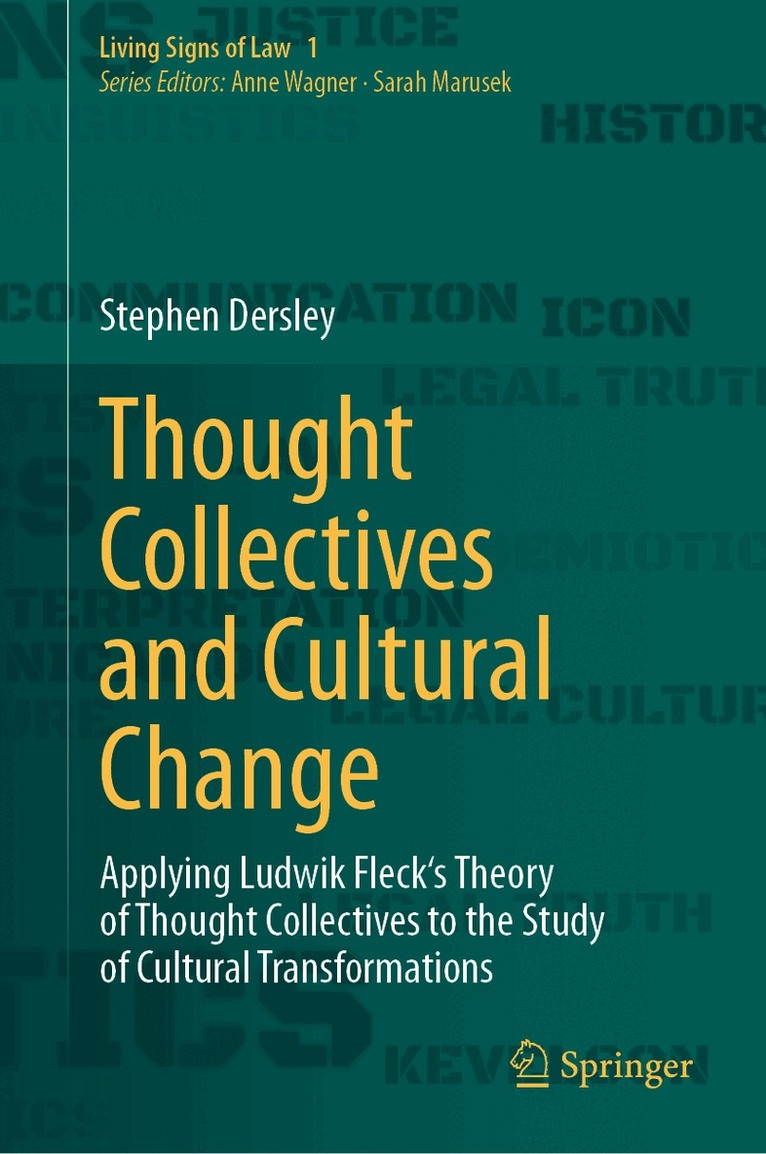
    Thought Collectives and Cultural Change

    Applying Ludwik Fleck's Theory of Thought Collectives to the Study of Cultural Transformations

    AvStephen Dersley

    Inbunden, Engelska, 2025

    Del 1 i serien Living Signs of Law

    1 694 kr

    Beställningsvara. Skickas inom 10-15 vardagar. Fri frakt över 249 kr.

    Fler format och utgåvor

    E-bok

    2 176 kr

    Häftad

    1 694 kr

    Beskrivning

    This book investigates Ludwik Fleck’s thought as a radical critique of institutionalized knowledge production, clarifying and extending his concepts to form an updated methodology. It reconstructs the cultural and institutional factors that, as Fleck insisted, are interactional – i.e., shaped by entangled processes rather than a single determinant. Offering an alternative to dominant models of cultural change, it demonstrates how new thought styles emerge, circulate, and face resistance in moments of revolutionary transformation.The central question addressed is how certain communities come to think in new ways – both in response to and contributing to cultural transformations. Such changes are fiercely contested – through censorship, exclusion, and institutional control. When Fleck’s concepts are enhanced by discourse analysis, these struggles can be revealed archaeologically, showing the layers of contestation beneath claims to neutrality and purity.Tracing these conflicts from antiquity to modernity, this book examines how thought styles are marginalized, suppressed, or institutionalized. It examines the oligarchic thought style in Plato’s responses to cultural trauma and loss of control, follows the spread of the Socratic caesura through Cicero’s philosophia and Shaftesbury’s civic reactivation of Socrates, and analyzes its role in the German university system. There, following the exclusion of Hobbes and Spinoza, Bildung became philosophy’s means of asserting autonomy from theological control, culminating in Kant’s Conflict of the Faculties.This book rejects single-determinant models of cultural change – economic, epistemic, discursive, or technological – while also challenging entrenched dichotomies such as myth vs. logos, Enlightenment vs. Counter-Enlightenment, and the public sphere vs. the state. Expanding on Fleck’s theory of thought styles, it develops an open epistemology that continuously reveals new dimensions of cultural facts and their institutional regulation.The book offers a methodologically innovative framework for understanding cultural change. As such, it will be of interest to scholars of philosophy, intellectual history, discourse analysis, and the history of ideas, as well as those exploring the interplay of thought, power, and institutional authority.

    Produktinformation

    • Utgivningsdatum:2025-07-16
    • Mått:155 x 235 x 30 mm
    • Vikt:844 g
    • Format:Inbunden
    • Språk:Engelska
    • Serie:Living Signs of Law
    • Antal sidor:438
    • Förlag:Springer International Publishing AG
    • ISBN:9783031974304

    Utforska kategorier

    • Juridik: metod och teori inom Juridik

    Mer om författaren

    Stephen Dersley is an independent scholar and language professional based in Poland. He received his MA in Philosophy from the University of Warwick in 1994 and has lived in Poland since 1997. For two decades, he worked as a teacher, teacher trainer, and academic manager, alongside a long-standing collaboration with Adam Mickiewicz University in Poznań as a translator and editor of academic texts—especially in legal theory, philosophy of law, and related fields across the humanities and social sciences. Between 2017 and 2022, he contributed several courses at the university while pursuing doctoral research, and was awarded his PhD in 2023. His research interests include the philosophy of culture, legal theory, the history of society and science, discourse analysis, and knowledge practices.

    Innehållsförteckning

    • 1. Introduction.- 2. Fleck’s Theory in Context.- 3. Chapter 3: Fleck’s Thought – Internal Positioning.- 4. Chapter 4: A Fleckian Framework for the Study of Cultural Change.- 5. Methodology and Supplementation.- 6.The Emergence of Philosophy as a Cultural Practice in Ancient Greece.- 7. The Transmission of Philosophy – the Socratic caesura.- 8. Hegelian Bildung as a development of paideia.- 9. The Rise of the Philosophical Faculty in the German University.- 10. Philosophy, Censorship, and the Public Sphere.- 11. Conclusions.