Häftad, Engelska, 2027
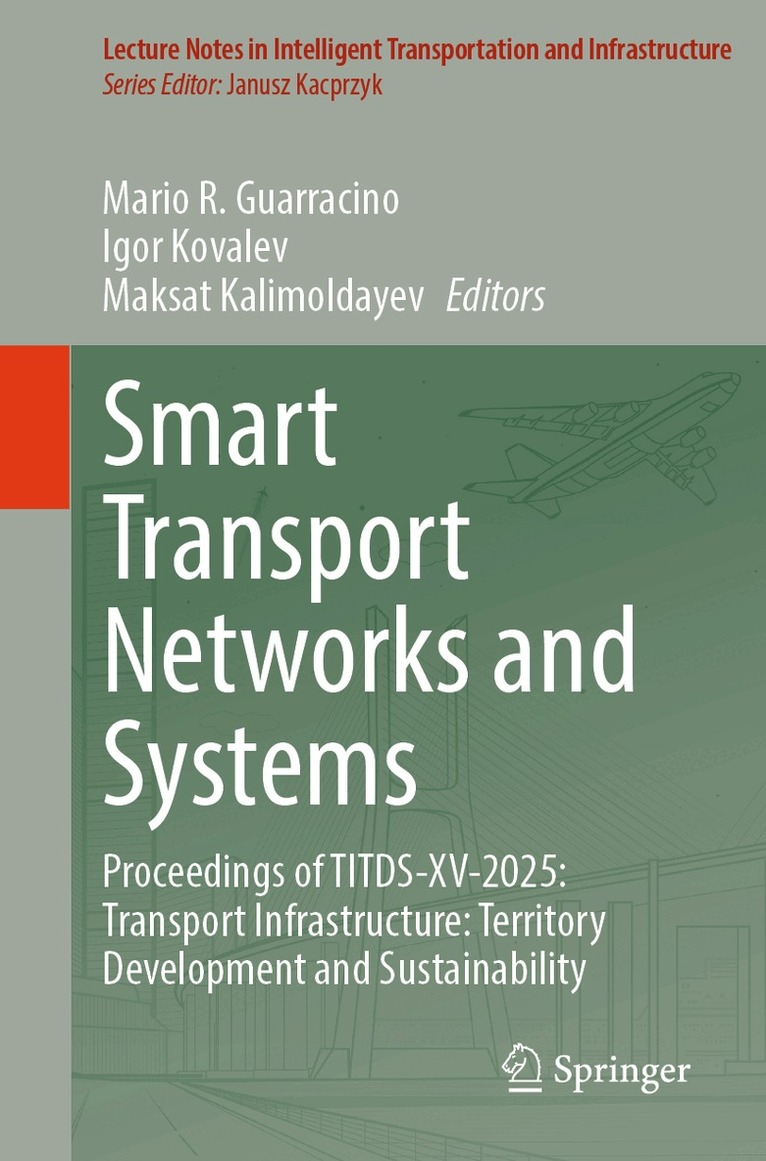
Smart Transport Networks and Systems
Av Mario R. Guarracino, Igor Kovalev, Maksat Kalimoldayev
2677 kr
Kommande
Beskrivning
This book provides a comprehensive set of advanced tools, models, and case-based insights to support more efficient, safer, and sustainable transport systems. It enables readers to translate recent scientific advances into practical solutions for infrastructure design, mobility management, and logistics optimization.The book approaches its subject matter through an integrated and application-oriented framework that combines artificial intelligence, computational modeling, optimization techniques, and infrastructure engineering. Particular emphasis is placed on bridging theory and practice through empirically grounded studies and implementation-focused methodologies. A key novelty of the book lies in the systematic integration of digital technologies such as digital twins, federated learning, and cyber-physical systems with sustainability objectives, allowing the joint consideration of system performance, resilience, and environmental impact.The scope of the book spans six interrelated thematic areas: intelligent transport systems; sustainable mobility and environmental impacts; infrastructure development and smart logistics; urban passenger transport; transport engineering and optimization; and policy and digital transformation. The contributions address a wide range of topics, including congestion prediction, spatiotemporal traffic modeling, AI-driven logistics management, safety and risk assessment, multimodal transport systems, route optimization, and the digitalization of transport infrastructure. The book reflects a broad international perspective, bringing together diverse methodological approaches and case studies that demonstrate the global relevance of the presented research.The book is intended for researchers, engineers, practitioners, and graduate students working in intelligent transportation systems, infrastructure planning, logistics, and smart city development.Key uses include supporting advanced and applied research, informing infrastructure planning and policymaking, guiding the implementation of intelligent and sustainable transport solutions, and serving as a resource for graduate-level education and professional training.
Produktinformation
- Utgivningsdatum: 2027-01-29
- Mått: 155 x 235 x undefined mm
- Format: Häftad
- Språk: Engelska
- Serie: Lecture Notes in Intelligent Transportation and Infrastructure
- Antal sidor: 515
- Förlag: Springer Nature Switzerland AG
- ISBN: 9783032296627
Utforska kategorier
Betyg & recensioner
0 recensioner
Inga recensioner tillgängliga.