• Fri frakt över 249 kr
  • •
  • Snabba leveranser
  • •
  • Billiga böcker
Kundservice

Du är på sajten för privatpersoner.

Företag, bibliotek eller offentlig verksamhet?

Du handlar på classic.bokus.com, där alla dina funktioner finns intakta.
Till classic.bokus.com
Bokus logotyp. Gå till startsidan.
  • Erbjudanden
  • Nyheter
  • Student
  • Topplistor
  • Barn & ungdom
  • Bokus Play
  • E-böcker
  • Pocketböcker
  • Spel & pussel

Må bättre, för mindre! Upp till 50% rabatt på hälsoböcker

Sidfot

Mina sidor

    Hjälp

    • Kundservice
    • Vanliga frågor och svar
    • Frakt och leverans
    • Retur vid ångerrätt
    • Reklamera vara
    • Betalning
    • Köpvillkor
    • Allmänna villkor
    • Information om webbplatsens tillgänglighet

    Om Bokus

    • Om oss
    • Pressrum
    • För studenter
    • För företag
    • För bibliotek och offentlig verksamhet
    • För leverantörer
    • Hållbarhet

    Populärt

    • Aktuella erbjudanden
    • Presentkort
    • Studentlitteratur
    • Nya böcker
    • Topplistor
    • Signerade böcker
    • Engelska böcker

    Inspiration

    • Boktips
    • BookTok
    • Populära bokserier
    • Barnbokskaraktärer
    • Populära författare
    Logotyp för Bokus
    Följ oss på Facebook (extern länk)Följ oss på Instagram (extern länk)Följ oss på YouTube (extern länk)Följ oss på TikTok (extern länk)
    bokus @ CookiesAnpassa cookiesIntegritetspolicyKöpvillkor
    Till Citymail hemsida (extern länk)Till Budbee hemsida (extern länk)Till Postnord hemsida (extern länk)Till Schenker hemsida (extern länk)Till Early Bird hemsida (extern länk)Till Walleys hemsida (extern länk)
    1. Historia och arkeologi
    2. Historia

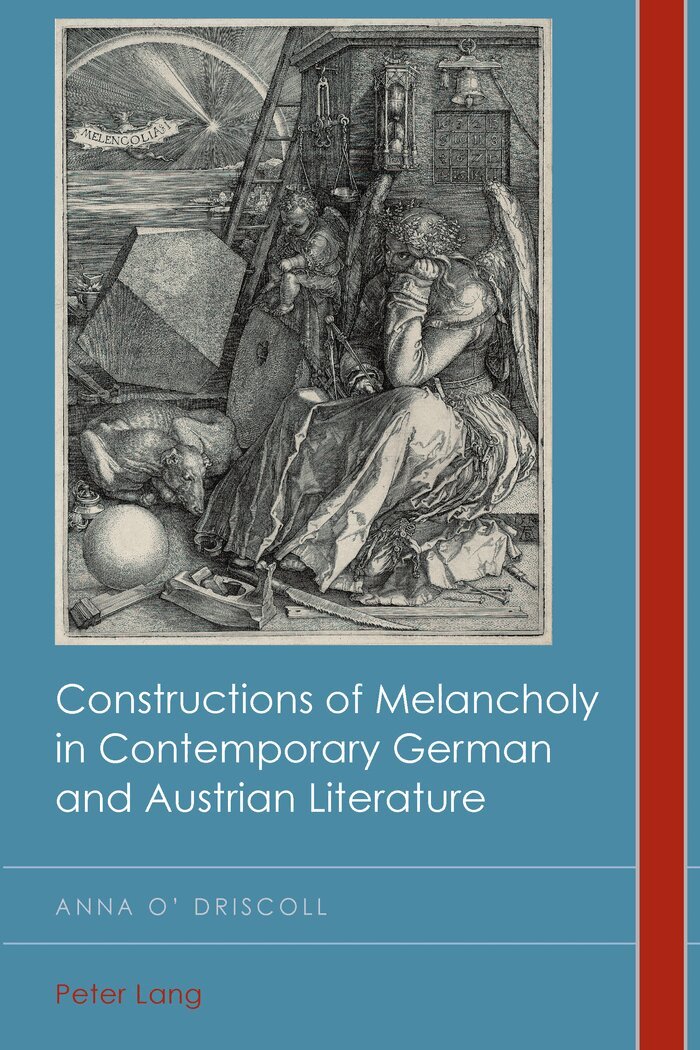
    Constructions of Melancholy in Contemporary German and Austrian Literature

    AvAnna O'Driscoll

    Häftad, Engelska, 2012

    Del 17 i serien Cultural History & Literary Imagination

    1 141 kr

    Beställningsvara. Skickas inom 5-8 vardagar. Fri frakt över 249 kr.

    Beskrivning

    Melancholy has become a central theme of German literature since the fall of the Berlin Wall in 1989. The rapidly changing sociopolitical circumstances of the post-1989 period and the continued burden of the Nazi past have directly contributed to this upsurge in melancholy themes. This book traces the complex discourse of melancholy in contemporary literature in the work of Monika Maron, Christoph Hein, Arno Geiger and Alois Hotschnig. Focusing on key concepts of melancholy – time, transience, historical dislocation and posthistoire – the author’s readings reveal the close connection between the body and melancholy from ageing to our gendered relationships with history. This study also emphasizes the relevance of melancholy for current theoretical issues in German Studies, including Heimat discourse, genealogy and transgenerational memory, and postmemory.

    Produktinformation

    • Utgivningsdatum:2012-10-30
    • Mått:150 x 225 x 17 mm
    • Vikt:380 g
    • Format:Häftad
    • Språk:Engelska
    • Serie:Cultural History & Literary Imagination
    • Antal sidor:256
    • Förlag:Peter Lang AG, Internationaler Verlag der Wissenschaften
    • ISBN:9783034307338

    Utforska kategorier

    • Historia inom Historia och arkeologi
    • Filosofi inom Filosofi och religion
    • Litteraturvetenskap inom Skönlitteratur

    Mer om författaren

    Anna O’ Driscoll received her PhD in German from University College Dublin in 2010 and has published on the topic of melancholy and GDR writers and artists. She is currently working as a freelance translator.

    Recensioner i media

    "Anna O'Driscoll reveals her talent for evoking the melancholy dead zones of the Austro-German literary landscape in her study Constructions of Melancholy in Contemporary German and Austrian Literature." C.E.Findley, Journal of Austrian Studies 49:1-2)

    Innehållsförteckning

    • Contents: Melancholy subjectivity in Monika Maron’s Endmoränen and Ach Glück – Endmoränen as a neo-Romantic representation of melancholy – Christoph Hein’s Frau Paula Trousseau: Art as refuge in the GDR – Divergent conceptions of male and female melancholy in Frau Paula Trousseau – Arno Geiger’s Es geht uns gut: A posthistoire Narrative? – A transgenerational perspective on melancholy loss in Es geht uns gut – Alois Hotschnig’s Ludwigs Zimmer: Evidence of a pre-psychological melancholy paradigm – Manifestation of classical humoral theories as well as a Baroque sensibility in Hotschnig’s Ludwigs Zimmer.