• Fri frakt över 249 kr
  • •
  • Snabba leveranser
  • •
  • Billiga böcker
Kundservice

Du är på sajten för privatpersoner.

Företag, bibliotek eller offentlig verksamhet?

Du handlar på classic.bokus.com, där alla dina funktioner finns intakta.
Till classic.bokus.com
Bokus logotyp. Gå till startsidan.
  • Erbjudanden
  • Nyheter
  • Student
  • Topplistor
  • Barn & ungdom
  • Bokus Play
  • E-böcker
  • Pocketböcker
  • Spel & pussel

10% rabatt på allt med kod NYSTART10 →

Sidfot

Mina sidor

    Hjälp

    • Kundservice
    • Vanliga frågor och svar
    • Frakt och leverans
    • Retur vid ångerrätt
    • Reklamera vara
    • Betalning
    • Köpvillkor
    • Allmänna villkor
    • Information om webbplatsens tillgänglighet

    Om Bokus

    • Om oss
    • Pressrum
    • För studenter
    • För företag
    • För bibliotek och offentlig verksamhet
    • För leverantörer
    • Hållbarhet

    Populärt

    • Aktuella erbjudanden
    • Presentkort
    • Studentlitteratur
    • Nya böcker
    • Topplistor
    • Signerade böcker
    • Engelska böcker

    Inspiration

    • Boktips
    • BookTok
    • Populära bokserier
    • Barnbokskaraktärer
    • Populära författare
    Logotyp för Bokus
    Följ oss på Facebook (extern länk)Följ oss på Instagram (extern länk)Följ oss på YouTube (extern länk)Följ oss på TikTok (extern länk)
    bokus @ CookiesAnpassa cookiesIntegritetspolicyKöpvillkor
    Till Citymail hemsida (extern länk)Till Budbee hemsida (extern länk)Till Postnord hemsida (extern länk)Till Schenker hemsida (extern länk)Till Early Bird hemsida (extern länk)Till Walleys hemsida (extern länk)
    1. Språk och ordböcker
    2. Språkvetenskap och lingvistik

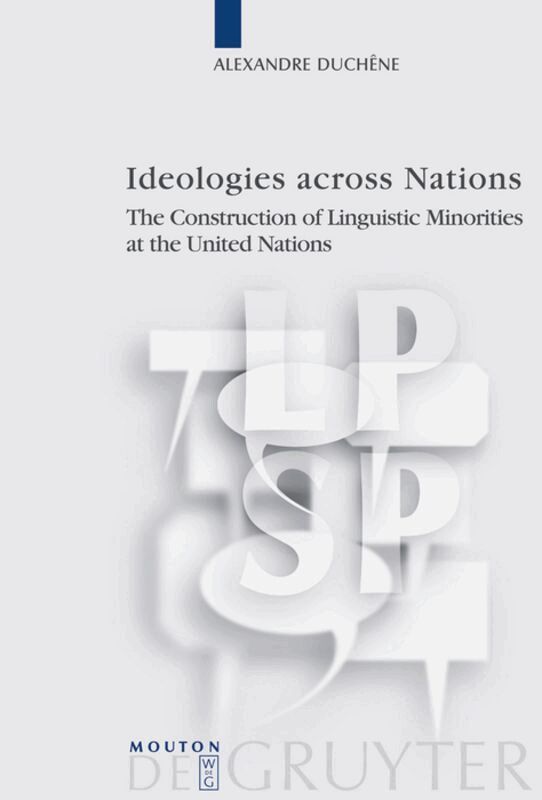
    Ideologies across Nations

    The Construction of Linguistic Minorities at the United Nations

    AvAlexandre Duchêne

    Inbunden, Engelska, 2008

    Del i serien Language, Power and Social Process [LPSP]

    2 834 kr

    Beställningsvara. Skickas inom 5-8 vardagar. Fri frakt över 249 kr.

    Fler format och utgåvor

    E-bok

    2 789 kr

    Beskrivning

    The book is an invitation to a genealogical understanding of the ideological and discursive processes that have emerged out of the regulation of linguistic minorities issues within an international context and, more precisely, at the United Nations. It highlights the contradictions, limits and possibilities in the elaboration of international measures within the universalist framework of human rights. The book also emphasizes the paradoxes between national interests and the elaboration of an international community - paradoxes in which minority issues fundamentally question the homogeneity of the state. It shows that despite the shift from national spaces to international ones, the fears of nation-states for linguistic minorities remain. Finally, the book reveals the importance of the reproduction of the interests of nation-states within an international organization and the reproduction of power through the legal management and regulation of minority rights in general, and those of linguistic minorities in particular.Through its presentation of the history of the United Nations, its vision of the protection of linguistic minorities, the underlying ideologies that have emerged, as well as the limits and possibilities of action, the book contributes to a better understanding of the complexity of the protection of linguistic minorities and the role of language ideologies within an international context.

    Produktinformation

    • Utgivningsdatum:2008-10-20
    • Mått:155 x 230 x 22 mm
    • Vikt:620 g
    • Format:Inbunden
    • Språk:Engelska
    • Serie:Language, Power and Social Process [LPSP]
    • Antal sidor:293
    • Upplaga:8001
    • Förlag:De Gruyter
    • ISBN:9783110205831

    Utforska kategorier

    • Språkvetenskap och lingvistik inom Språk och ordböcker

    Mer om författaren

    Alexandre Duchêne, University of Teacher Education Fribourg, Switzerland.

    Recensioner i media

    "By offering an empirical approach to ideological processes, the book showcases how we can be better equipped to understand the complexities of domination and subordination within the nation-state context by adopting a critical approach to language and ideology."Aria Razfar in: Linguist List 21.2592 "Alexandre Duchene's Ideologies across Nations is a timely contribution to a variety of issues that are becoming increasingly relevant to applied linguistics and sociolinguistics. Such issues include the ways in which institutional practices affect the formulation of policies, possible responses to the challenges of multiculturalism and the politics of identity, and the increasingly complex relationships between communities located at the intra-national, nationaland international levels. Given that much of the recent theorizing regarding multiculturalism has tended to come from political and legal theorists (Benhabib 2002; Ford 2005; Taylor 1994), this book is all the more timely, highlighting the value of a linguistically sensitive approach."Lionel Wee Hock Ann in: Journal of Sociolinguistics 13.4/2009 "Despite this caution and professional cynicism, throughout the volume I detect a note of intelligent optimism regarding the success of interventionist linguistic minority protection. It is as if the author is reminding us that once we can detect what is really going on, behind the scenes and within the text so to speak, we can modify the worst abuses of irrelevance and inactivity as practised by the UN. However, from my point of view, we can only do so if authors as expert and subtle as Alexandre Duchene provide us with the overarching conceptual framework and specific ideological ammunition to fight the good fight. In that respect this is one of the most impressive and powerful illustrations of the claims of critical discourse analysis to shape our thoughts, and I for one am much in the author's debt for his enlightenment of the UN's continued practice of weaving tangled webs."Colin H. Williams in: Multlingua "Through a thorough survey of UN archives, the author lays out why the construction of minorities by the United Nations should not be seen primarily in terms of human rights, but as a tool to protect nation-states, the constituent members of this international organisation. By tackling this topic in a consistently organised and elegantly written discursive analysis, Duchene provides an innovative contribution to the current debates on multiculturalism, diversity management and trans- and sub-national governance."Till Burckardt in:Language Policy "Si cet ouvrage ouvre un champ nouveau du point de vue de la methodologie d'analyse en sociolinguistique, en integrant les questions historiques et discursives bien souvent laissees a la marge, [cet ouvrage] produit, de surcroit, une reelle rupture epistemologique dans l'etude du rapport entre langage et societe.(...) Le lecteur l'aura compris : ce livre est indispensable aux sociolinguistes et ouvre la voie a une ere nouvelle dans notre reflexion sur le langage."Cecile Canut in: Langage et Societe "One of the novelties, from my point of view, is the interactional dimension in the analysis of discourses (the resultant official documents and the reports of the debates in the process of their construction) in order to reconstruct a genealogy of discourses about (linguistic) minorities. The reconstruction of the debate settings/arena of the Commission and Sub-Commission responsible for minorities' rights tells us about the immediate conditions of production. In that sense, Goffman's (1959) idea of space of performance, as used by Duchene, puts us in the role of witnesses of discursive events in which the reader participates through the delicate work of the author in showing us the discursive processes and movements, products of the negotiations made by the members. Such study of the debates reveals the different ideological positions and what was at stake for each party."Adriana Patino Santos in:Journal of Multicultural Discourses