Inbunden, Engelska, 2012
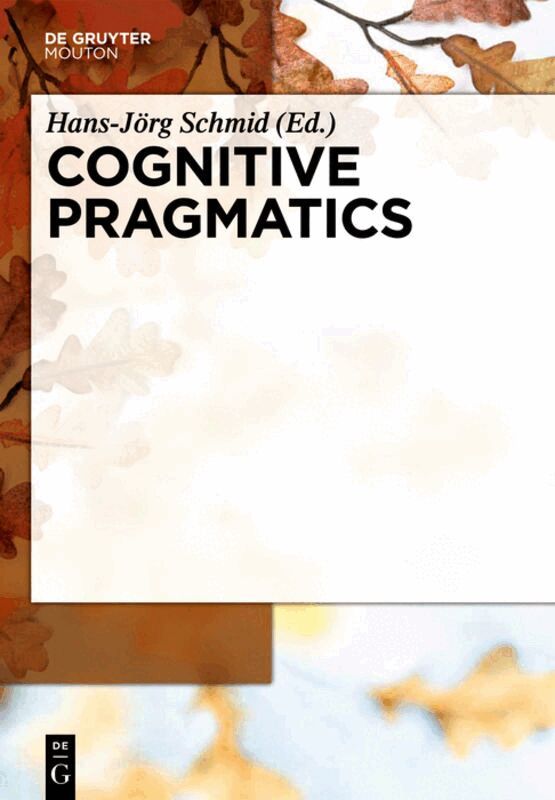
Cognitive Pragmatics
4756 kr
Beställningsvara. Skickas inom 5-8 vardagar. Fri frakt över 249 kr.
Beskrivning
Speakers tend to compose their utterances in such a way that the message they want to get across is hardly ever fully encoded by the meanings of the words and the grammar they use. Instead speakers rely on hearers adding conceptual and emotive content while interpreting the contextually appropriate meanings and intentions behind utterances. This insight, which is of course particularly relevant in all kinds of indirect, figurative or humorous talk, lies at the heart of the linguistic discipline of pragmatics. If pragmatics is the study of meaning-in-context, then cognitive pragmatics can be broadly defined as encompassing the study of the cognitive principles and processes involved in the construal of meaning-in-context. While it would seem only natural that pragmatics as such should have addressed such cognitive issues anyway, it has mainly been due to the historical rooting of this discipline in the philosophy of language that psychological aspects have not been in the pragmatic limelight to date. Being part of the 9-volume-series Handbooks of Pragmatics, this volume is the first to systematically survey this terrain from a wide range of perspectives. It collects state-of-the-art contributions by leading experts from the fields of pragmatics, psycholinguistics, cognitive linguistics, clinical linguistics and historical linguistics. The volume is divided into four parts which tackle the following questions: Part I: The cognitive principles of pragmatic competenceWhat are the general cognitive principles underlying pragmatic competence, i.e. the skill to arrive at context-dependent meanings of utterances? What are the cognitive underpinnings of language users' ability to compute or infer intended meanings in the role of hearers and to give hints as to how to decode intended meanings in the role of speakers?Part II: The psychology of pragmaticsWhat are the actual cognitive processes taking place during online construal of meaning-in-context on the basis of encoded messages? How is pragmatic competence acquired in childhood? What are the types, sources and effects of pragmatic disorders, i.e. impairments of pragmatic competence? Part III: The construal of non-explicit and non-literal meaning-in-contextWhat are the cognitive principles and processes involved in the construal of meanings of non-explicit and indirect utterances? How do we process figurative meanings, humour and gestures?Part IV: The emergence of linguistic structures from meaning-in-contextWhat are the repercussions of the (repeated) construal of context-dependent meanings on linguistic structures and the linguistic system? How does the system change under the influence of the construal of meanings in social situations?Reduced series price (print) available! > For orders, please contact degruyter@de.rhenus.com.
Produktinformation
- Utgivningsdatum: 2012-08-17
- Mått: 170 x 240 x 41 mm
- Vikt: 1 283 g
- Format: Inbunden
- Språk: Engelska
- Serie: Handbooks of Pragmatics [HOPS]
- Antal sidor: 661
- Upplaga: 12001
- Förlag: De Gruyter
- ISBN: 9783110214208
Utforska kategorier
Betyg & recensioner
0 recensioner
Inga recensioner tillgängliga.