• Fri frakt över 249 kr
  • •
  • Snabba leveranser
  • •
  • Billiga böcker
Kundservice

Du är på sajten för privatpersoner.

Företag, bibliotek eller offentlig verksamhet?

Du handlar på classic.bokus.com, där alla dina funktioner finns intakta.
Till classic.bokus.com
Bokus logotyp. Gå till startsidan.
  • Erbjudanden
  • Nyheter
  • Student
  • Topplistor
  • Barn & ungdom
  • Bokus Play
  • E-böcker
  • Pocketböcker
  • Spel & pussel

10% rabatt på allt med kod: NYSTART10 →

Sidfot

Mina sidor

    Hjälp

    • Kundservice
    • Vanliga frågor och svar
    • Frakt och leverans
    • Retur vid ångerrätt
    • Reklamera vara
    • Betalning
    • Köpvillkor
    • Allmänna villkor
    • Information om webbplatsens tillgänglighet

    Om Bokus

    • Om oss
    • Pressrum
    • För studenter
    • För företag
    • För bibliotek och offentlig verksamhet
    • För leverantörer
    • Hållbarhet

    Populärt

    • Aktuella erbjudanden
    • Presentkort
    • Studentlitteratur
    • Nya böcker
    • Topplistor
    • Signerade böcker
    • Engelska böcker

    Inspiration

    • Boktips
    • BookTok
    • Populära bokserier
    • Barnbokskaraktärer
    • Populära författare
    Logotyp för Bokus
    Följ oss på Facebook (extern länk)Följ oss på Instagram (extern länk)Följ oss på YouTube (extern länk)Följ oss på TikTok (extern länk)
    bokus @ CookiesAnpassa cookiesIntegritetspolicyKöpvillkor
    Till Citymail hemsida (extern länk)Till Budbee hemsida (extern länk)Till Postnord hemsida (extern länk)Till Schenker hemsida (extern länk)Till Early Bird hemsida (extern länk)Till Walleys hemsida (extern länk)
    1. Samhälle och politik
    2. Politik och statsskick
    3. Statsvetenskap och politisk teori

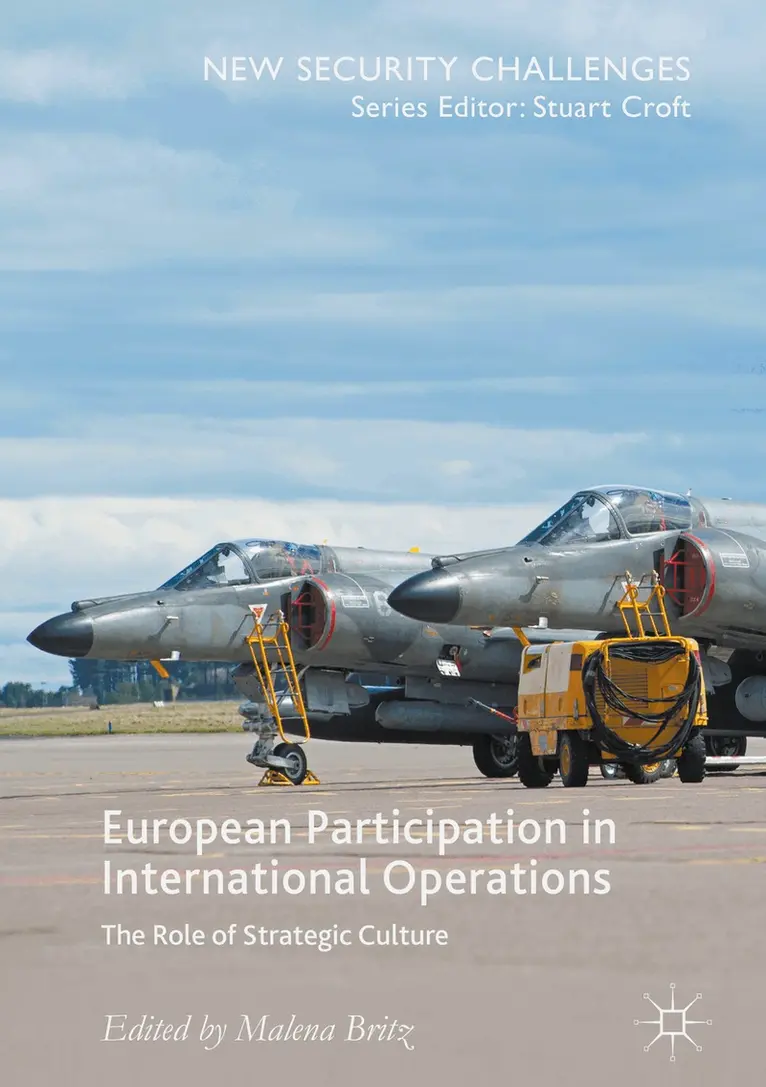
    European Participation in International Operations

    The Role of Strategic Culture

    AvMalena Britz

    Inbunden, Engelska, 2016

    Del i serien New Security Challenges

    1 194 kr

    Beställningsvara. Skickas inom 10-15 vardagar. Fri frakt över 249 kr.

    Beskrivning

    Taking its departure in the concept of strategic culture, this book answers the question of why European countries decide either to participate or not in international military operations. This volume examines strategic culture and its relation to justifications of decisions made by France, Germany, Greece, Italy, Poland and the United Kingdom, with regard to four different operations: Operation Enduring Freedom/ISAF in Afghanistan, Operation Iraqi Freedom in Iraq, Operation Unified Protector in Libya, and EU Navfor/Atalanta outside Somalia. In this work, the authors closely analyse the role of civil-military relations with regard to decisions about participation.What is the role of the armed forces in the political process leading up to the decision? What is their advisory capacity in shaping the mission? Employing a theoretical framework of strategic culture, including aspects of civil military relations, this innovative volume seeks to answer these questions. This text is essential reading for academics, researchers and students of international relations, foreign policy, war studies or civil-military relations.

    Produktinformation

    • Utgivningsdatum:2016-11-22
    • Mått:148 x 210 x 20 mm
    • Vikt:458 g
    • Format:Inbunden
    • Språk:Engelska
    • Serie:New Security Challenges
    • Antal sidor:233
    • Upplaga:16001
    • Förlag:Springer International Publishing AG
    • ISBN:9783319397580

    Utforska kategorier

    • Statsvetenskap och politisk teori inom Samhälle och politik
    • Internationella relationer inom Samhälle och politik

    Mer om författaren

    Malena Britz is Assistant Professor in Political Science at the Swedish Defence University. Her areas of research include different aspects of European security policy, Europeanisation, and Nordic co-operation. She has studied very different aspects of security policy from defence industry policy, development of EU security and defence, and international aspects of civil protection.

    Innehållsförteckning

    • 1. Strategic culture and participation in international military operations.- 2. Assuming Great Power Responsibility: French strategic culture and international military operations.- 3. To Deploy or Not To Deploy a Parliamentary Army? German strategic culture and international military operations.- 4. Keeping a Low Profile: Greek strategic culture and international military operations.- 5.“Just deploy and always call it peacekeeping!” Italian strategic culture and international military operations .- 6.From Enthusiasm to Reluctance: Polishstrategic culture and international military operations.- 7.Continuity or Change?  British strategic culture and international military operations.- Conclusion: the willing, the cautious, and the ambivalent.