• Fri frakt över 249 kr
  • •
  • Snabba leveranser
  • •
  • Billiga böcker
Kundservice

Du är på sajten för privatpersoner.

Företag, bibliotek eller offentlig verksamhet?

Du handlar på classic.bokus.com, där alla dina funktioner finns intakta.
Till classic.bokus.com
Bokus logotyp. Gå till startsidan.
  • Erbjudanden
  • Nyheter
  • Student
  • Topplistor
  • Barn & ungdom
  • Bokus Play
  • E-böcker
  • Pocketböcker
  • Spel & pussel

10% rabatt på allt med kod: NYSTART10 →

Sidfot

Mina sidor

    Hjälp

    • Kundservice
    • Vanliga frågor och svar
    • Frakt och leverans
    • Retur vid ångerrätt
    • Reklamera vara
    • Betalning
    • Köpvillkor
    • Allmänna villkor
    • Information om webbplatsens tillgänglighet

    Om Bokus

    • Om oss
    • Pressrum
    • För studenter
    • För företag
    • För bibliotek och offentlig verksamhet
    • För leverantörer
    • Hållbarhet

    Populärt

    • Aktuella erbjudanden
    • Presentkort
    • Studentlitteratur
    • Nya böcker
    • Topplistor
    • Signerade böcker
    • Engelska böcker

    Inspiration

    • Boktips
    • BookTok
    • Populära bokserier
    • Barnbokskaraktärer
    • Populära författare
    Logotyp för Bokus
    Följ oss på Facebook (extern länk)Följ oss på Instagram (extern länk)Följ oss på YouTube (extern länk)Följ oss på TikTok (extern länk)
    bokus @ CookiesAnpassa cookiesIntegritetspolicyKöpvillkor
    Till Citymail hemsida (extern länk)Till Budbee hemsida (extern länk)Till Postnord hemsida (extern länk)Till Schenker hemsida (extern länk)Till Early Bird hemsida (extern länk)Till Walleys hemsida (extern länk)
    1. Medicin
    2. Andra medicinska specialiteter
    3. Farmakologi

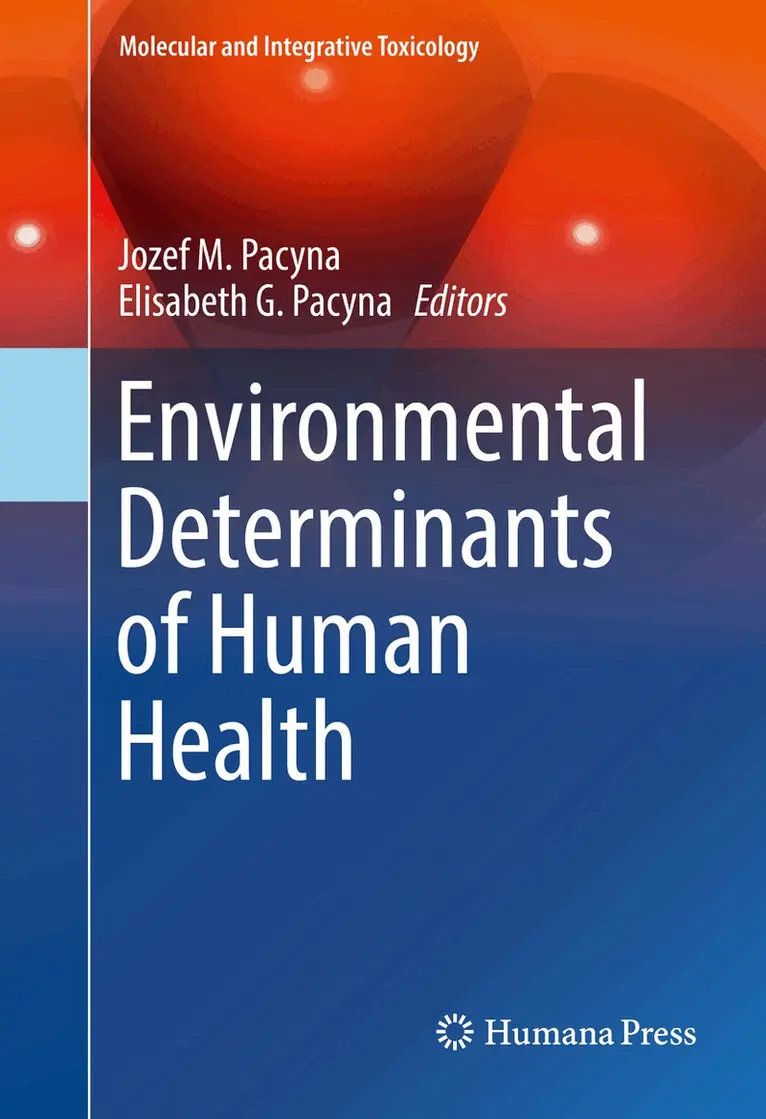
    Environmental Determinants of Human Health

    AvJozef M. Pacyna,Elisabeth G. Pacyna

    Inbunden, Engelska, 2016

    Del i serien Molecular and Integrative Toxicology

    1 674 kr

    Beställningsvara. Skickas inom 10-15 vardagar. Fri frakt över 249 kr.

    Beskrivning

    Polluted air and contaminated food and water are major causes of human health deterioration, but public health policy has long struggled to effectively address these concerns. This timely book--written for a wide audience of policy makers, researchers, and general readers--synthesizes what we already know about environmental hazards, identifies the gaps in our knowledge, and provides a roadmap for reducing human exposure to environmental pollution. With contributions from leading experts, Environmental Determinants of Human Health examines numerous pollutants, both inorganic and organic, in the context of their human health impacts. Individual chapters explore exposure pathways, macroeconomic impacts of human health deterioration, technological and non-technological methods for reducing exposures, monetary and non-monetary benefits from exposure reduction, and risk communication and awareness, including citizen participation approaches.This volume is acrucial text for policy makers requiring scientific justification for the development of new environmental regulations, scientists researching public health and environmental contamination, and members of the public interested in human health issues.

    Produktinformation

    • Utgivningsdatum:2016-10-26
    • Mått:155 x 235 x 21 mm
    • Vikt:594 g
    • Format:Inbunden
    • Språk:Engelska
    • Serie:Molecular and Integrative Toxicology
    • Antal sidor:270
    • Upplaga:16001
    • Förlag:Springer International Publishing AG
    • ISBN:9783319431406

    Utforska kategorier

    • Farmakologi inom Medicin
    • Miljömedicin inom Medicin
    • Samhällsmedicin och preventiv medicin inom Medicin

    Mer om författaren

    Jozef M. Pacyna Jozef M. Pacyna is a Research Director of the Norwegian Institute for Air Research in Kjeller, Norway and Professor of Chemistry at the Gdansk University of Technology, Gdansk, Poland. He was awarded a Visiting Professorship at the University of Michigan (1992-1993), the Chalmers 150th Anniversary Visiting Professor at the Chalmers University of Technology, Gothenburg, Sweden (1994 – 1997), and a 2006 Visiting Professorship at the Yale University. Prof. Pacyna’s expertise is on biogeochemical cycling and fluxes of mercury, other heavy metals, persistent organic pollutants, and radionuclides in the environment. Another field of his expertise is the assessment of environmental and socio-economic impacts of energy production and other anthropogenic sources on climate change and human welfare. He has carried out more than 30 EU projects within these topics. Prof. Pacyna has also been active in the implementation of environmental strategies and policies defined within international agreements on emission and flux reductions, including cost-benefit analysis of this implementation. He provided a scientific justification for the establishment of an UN Convention on reduction of mercury contamination, signed in Minamata in 2013. Prof. Pacyna is the author of more than 450 scientific publications, including more than 120 papers in peer-reviewed journals and more than 30 books and book chapters. His works have been cited more than 7500 times, bringing his citation index H to 40. In 2012 he received Life Achievement Award for recognition of his outstanding contribution to advancing scientific knowledge of heavy metals in the environment, and their impact upon human health.In 2010 Prof. Pacyna received the Bene Merito honorable decoration by the Minister of Foreign Affair in Poland for strengthening position of Poland in the international arena and in 2011 he was presented with the “White Tiger” award, the highest award in the Polish energy sector for outstanding achievements in energy and environment research.Elisabeth G. Pacyna Elisabeth G. Pacyna is a Senior Scientist at the Norwegian Institute for Air research in Kjeller, Norway. She received M.Sc. in industrial economics and Ph.D. in environmental engineering.Scientific experience of Dr. Pacyna is in the field of energy, resources, and the environment interactions. The overall topic of her research is on the development and application of tools for the assessment of socio-economic impacts of energy production on climate change and human welfare. These tools include Life Cycle Assessment (LCA) analysis and various monetary valuation methods used to value environmental benefits from the implementation of various environmental policies. She has carriedout 16 EU projects within these topics. Dr. Pacyna has also participated in several projects for the UNEP Chemicals and Nordic Council of Ministers on socio-economic and ecological impacts of energy production and other anthropogenic sources on the contamination of the environment. She has also participated in projects on development of new measures for reduction of greenhouse gas emissions from coal-fired power plants and improvement of coal combustion efficiency in power plants. Dr. Pacyna is an author/co-author of 4 books and book chapters, 20 articles in peer-reviewed scientific journals, more than 60 presentations at international conferences and several technical reports. Her works have been cited more than 2000 times, bringing his citation index H to 13.

    Innehållsförteckning

    • Sources and Fluxes of harmful metals.- Exposure to environmental hazards and effects on chronic disease.- Human exposure to pollutants and their health endpoints. The Arctic perspective.- Effects of pollutant exposure on human health as studied with selected EU projects.- Organic metal species as risk factor for neurological diseases.- Integrated Assessment of Policies for Reducing Health Impacts Caused by Air Pollution.- Monetary and non-monetary measures of health benefits from exposure reduction.- Capturing the health effects of environmental and industrial policy in a macroeconomic model.- Transition to a Low Carbon Economy; Impacts to Health and the Environment.- Unmasking environmental health Zorros: the need for involvement of real risk communication experts for two-way and problem-solving communication approaches.- Citizen participation approaches in environmental health.- Environment and Health Research Funded by the European Union (EU) Research Framework Programmes: Increasing Scientific Knowledge and Building a Solid Evidence-Base for Policy Making.