Häftad, Engelska, 2017
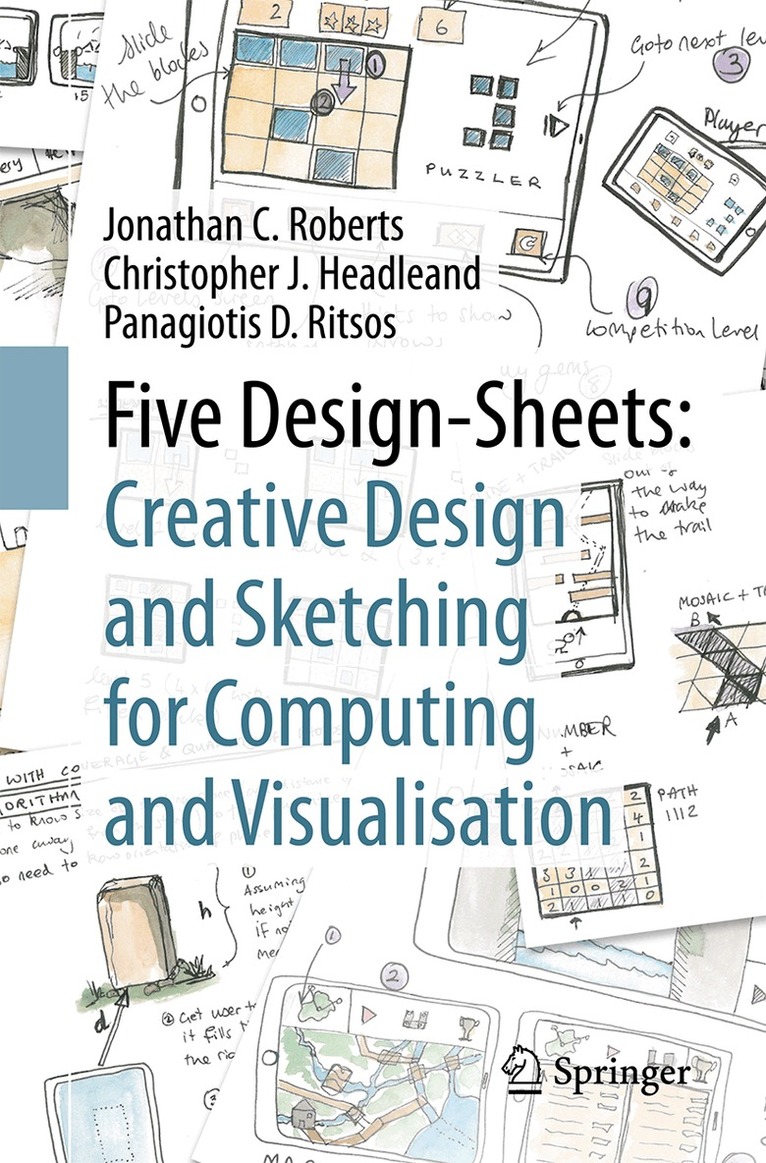
Five Design-Sheets: Creative Design and Sketching for Computing and Visualisation
Av Jonathan C. Roberts, Christopher J. Headleand, Panagiotis D. Ritsos
623 kr
Beställningsvara. Skickas inom 10-15 vardagar. Fri frakt över 249 kr.
Beskrivning
This book describes a structured sketching methodology to help you create alternative design ideas and sketch them on paper. The Five Design-Sheet method acts as a check-list of tasks, to help you think through the problem, create new ideas and to reflect upon the suitability of each idea. To complement the FdS method, we present practical sketching techniques, discuss problem solving, consider professional and ethical issues of designing interfaces, and work through many examples.Five Design-Sheets: Creative Design and Sketching for Computing and Visualization is useful for designers of computer interfaces, or researchers needing to explore alternative solutions in any field. It is written for anyone who is studying on a computing course and needs to design a computing-interface or create a well-structured design chapter for their dissertation, for example. We do acknowledge that throughout this book we focus on the creation of interactive software tools, and usethe case study of building data-visualization tools. We have however, tried to keep the techniques general enough such that it is beneficial for a wide range of people, with different challenges and different situations, and for different applications.
Produktinformation
- Utgivningsdatum: 2017-06-12
- Mått: 155 x 235 x 14 mm
- Vikt: 498 g
- Format: Häftad
- Språk: Engelska
- Antal sidor: 333
- Upplaga: 17001
- Förlag: Springer International Publishing AG
- ISBN: 9783319556260
Utforska kategorier
Betyg & recensioner
0 recensioner
Inga recensioner tillgängliga.