
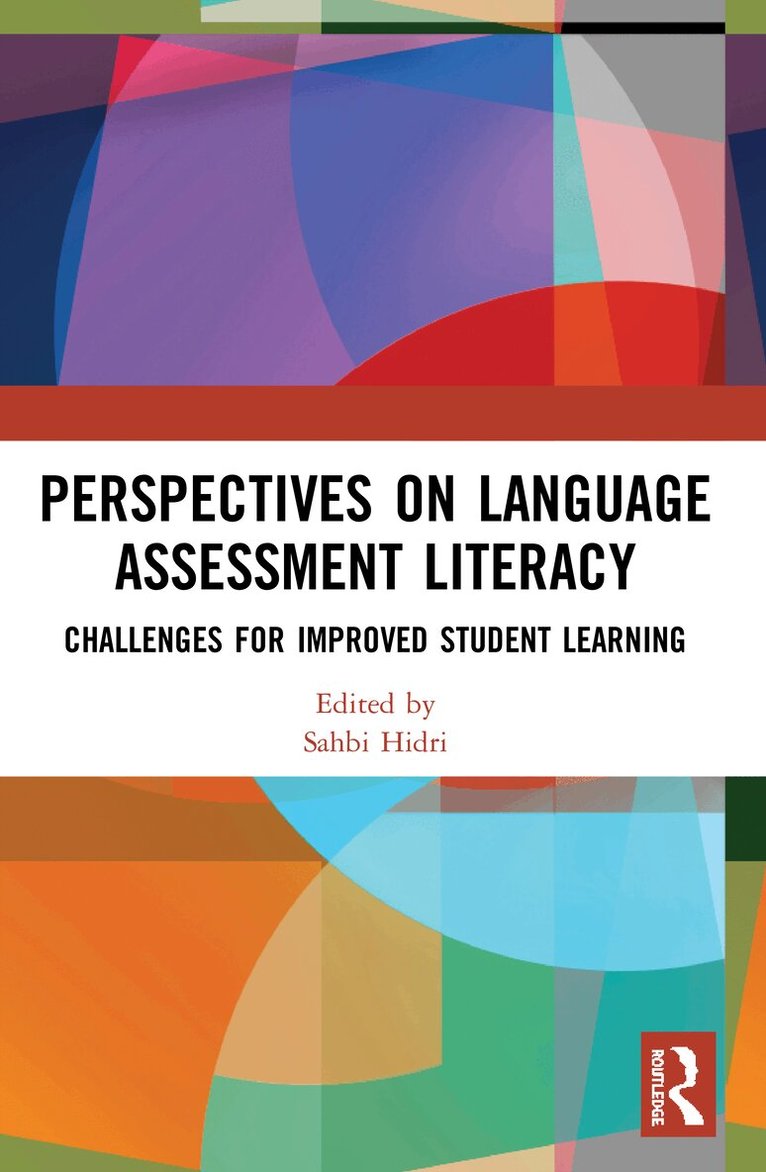
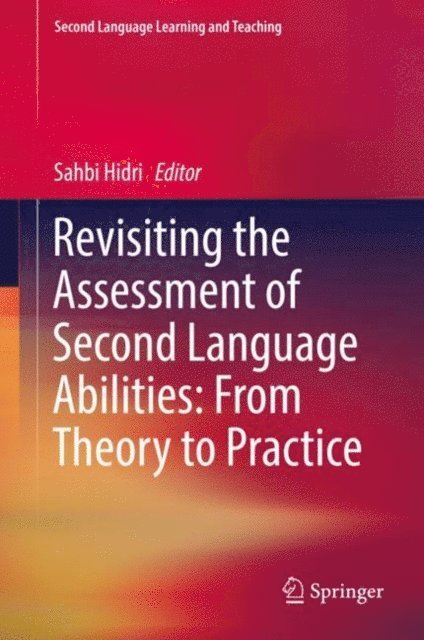
Revisiting the Assessment of Second Language Abilities: From Theory to Practice
1 927 kr
Beställningsvara. Skickas inom 10-15 vardagar. Fri frakt över 249 kr.
Fler format och utgåvor
Beskrivning
This book presents an overview of revisiting the assessment of language abilities. It also showcases how the measurement of such constructs can result in negative or positive washback and how outcomes might be conducive to repercussions that decide on the future of many stakeholders. The 23 chapters were selected among tens of chapters received from different contexts that addressed the issue of revisiting the assessment of language abilities, such as Tunisia, Ukraine, Algeria, Russia, KSA, Sudan, Egypt, Canada, Kurdistan, UK, USA, Iran, Turkey, etc. These contexts have highlighted the necessity to revisit the different constructs which should be assessed with a clear and straightforward foundation on students’ learning objectives and their actual language ability. To do so, most of the chapters present hands-on use of relevant statistical tests that might serve in revisiting the construct definition both theoretically and operationally. Perhaps the sole and intricate question that the authors of these contributions ask is what it means to revisit the assessment of the construct of individualized language ability and how. In addition, the book accentuates the momentousness and significance of reflecting on test fairness and validation as the mainspring and backbone for democratization of assessment. This book appeals to a broad readership, such as English Language Teaching (ELT) practitioners, language teachers, students, testing organizations, policy-makers, test designers, writers of test specifications, testing experts, researchers, program evaluators, especially in the Middle East and North Africa (MENA) as well as other international contexts.
Produktinformation
Utforska kategorier
Innehållsförteckning
Hoppa över listan
Mer från samma författare
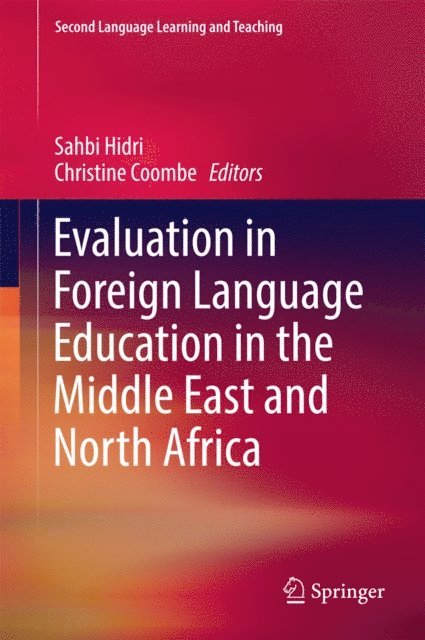
Evaluation in Foreign Language Education in the Middle East and North Africa
Sahbi Hidri, Christine Coombe
Inbunden, 2016
1 135 kr
Evaluation in Foreign Language Education in the Middle East and North Africa
Christine Coombe, Sahbi Hidri
E-bok
20161 470 kr
Revisiting the Assessment of Second Language Abilities: From Theory to Practice
Sahbi Hidri
E-bok
20182 455 kr
Hoppa över listan

Mer från samma serie
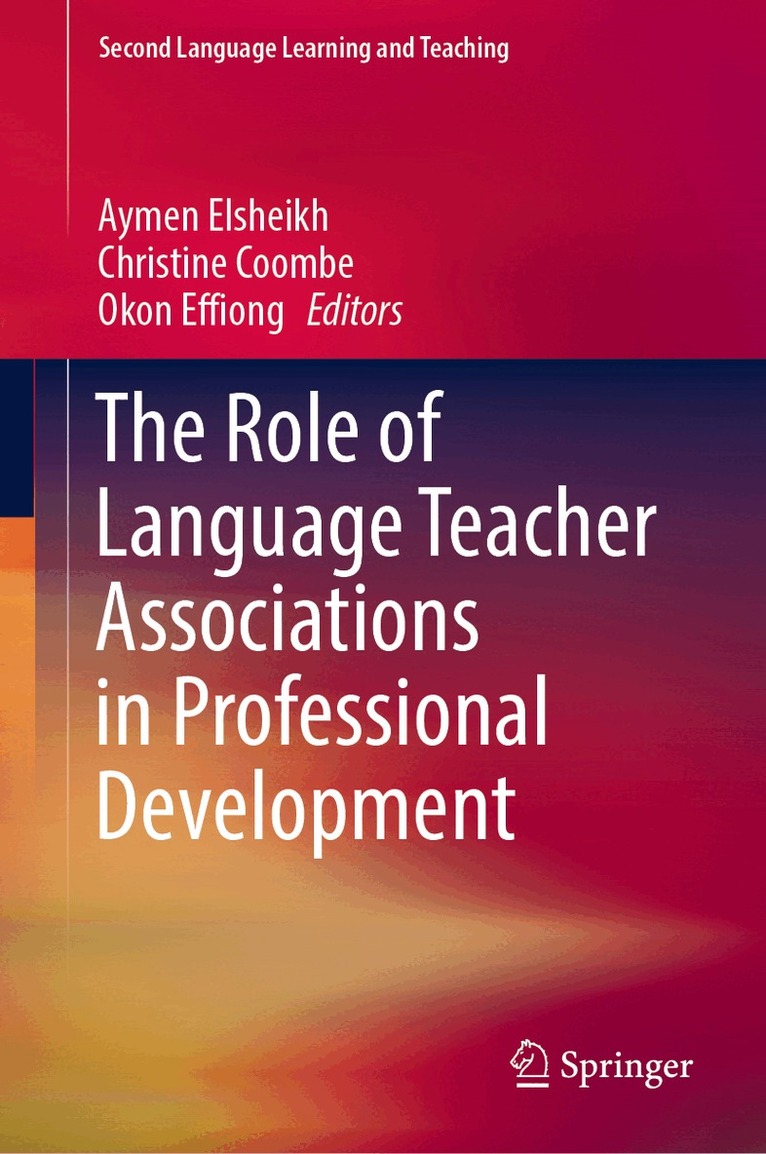
Role of Language Teacher Associations in Professional Development
Aymen Elsheikh, Christine Coombe, Okon Effiong
Inbunden, 2018
1 499 kr
McLuhan’s Galaxies: Science Fiction Film Aesthetics in Light of Marshall McLuhan’s Thought
Artur Skweres
Inbunden, 2019
589 kr
Contacts and Contrasts in Educational Contexts and Translation
Barbara Lewandowska-Tomaszczyk
Inbunden, 2019
555 kr
Contacts and Contrasts in Cultures and Languages
Barbara Lewandowska-Tomaszczyk
Inbunden, 2019
1 214 kr
Directed Motivational Currents in L2
Nourollah Zarrinabadi, Saeed Ketabi, Mansoor Tavakoli
Inbunden, 2019
572 kr
Memory, Identity and Cognition: Explorations in Culture and Communication
Jacek Mianowski, Michał Borodo, Paweł Schreiber
Inbunden, 2019
1 029 kr
Hoppa över listan
Du kanske också är intresserad av

Revisiting the Assessment of Second Language Abilities: From Theory to Practice
Sahbi Hidri
Häftad, 2019
1 927 kr
Revisiting the Assessment of Second Language Abilities: From Theory to Practice
Sahbi Hidri
E-bok
20182 455 kr
Evaluation in Foreign Language Education in the Middle East and North Africa
Sahbi Hidri, Christine Coombe
Häftad, 2018
1 136 kr
Evaluation in Foreign Language Education in the Middle East and North Africa
Sahbi Hidri, Christine Coombe
Inbunden, 2016
1 135 kr
English Language Teaching Research in the Middle East and North Africa
Sahbi Hidri
Inbunden, 2018
1 136 kr