- Nyhet
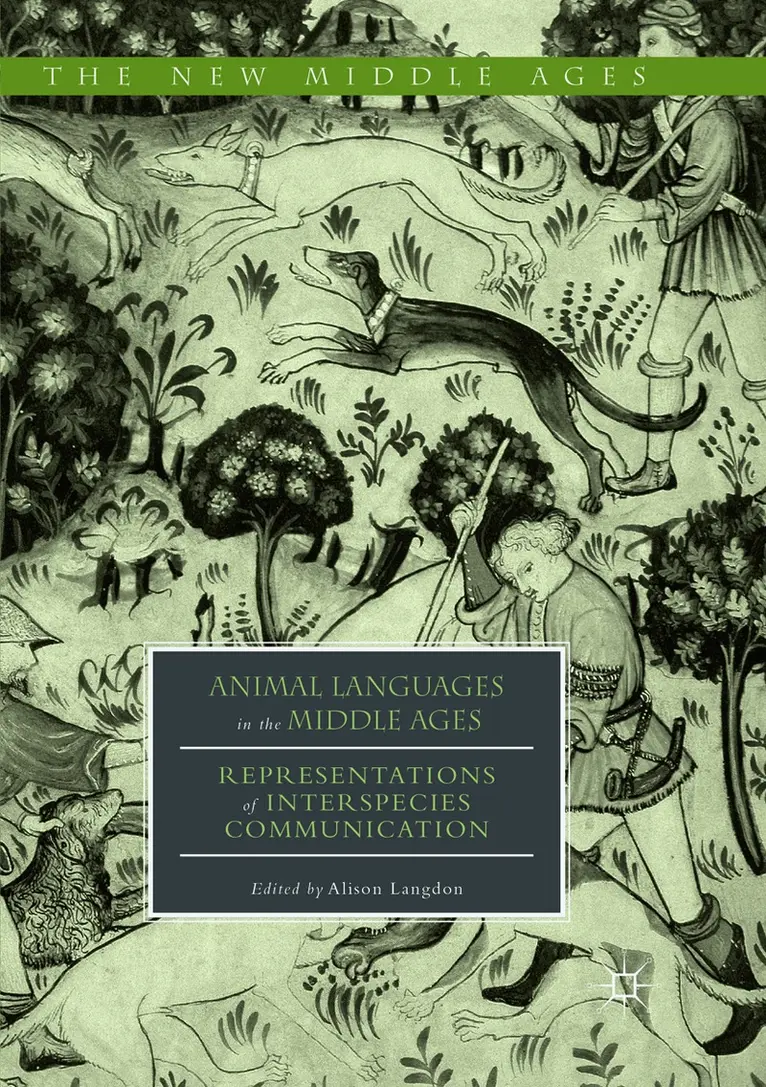
Animal Languages in the Middle Ages
Representations of Interspecies Communication
1 452 kr
Beställningsvara. Skickas inom 10-15 vardagar. Fri frakt över 249 kr.
Du är på sajten för privatpersoner.
1 452 kr
Beställningsvara. Skickas inom 10-15 vardagar. Fri frakt över 249 kr.
Alison Langdon is Associate Professor of English at Western Kentucky University, USA. She is the editor of Postscript to the Middle Ages: Teaching Medieval Studies through Umberto Eco’s The Name of the Rose (2009) and has published articles on the women troubadours, Chaucer and his contemporaries, and canines in medieval literature. Her current projects center on the liminality of human/animal identity in the medieval imagination.
“Both books are solid contributions to the field, both models of the interdisciplinarity of animal studies, its happy capacity for interpretative surprise, and its laudable commitment to thinking ecologically and to decentering human primacy.” (Karl Steel, Speculum, Vol. 95 (3), 2020)“The twelve essays collected in this volume comprise a varied and stimulating contribution to the thriving field of scholarly discourse on medieval ‘animalities’ … . Their general focus is on medieval representations of animal utterances and other non-verbal modes of communication in order to interrogate medieval attitudes to the supposed dichotomy between human and non-human animals.” (David Scott-Macnab, Modern Language Review, Vol. 114 (3), July, 2019)
Du är på sajten för privatpersoner.
1 452 kr
Beställningsvara. Skickas inom 10-15 vardagar. Fri frakt över 249 kr.
Alison Langdon is Associate Professor of English at Western Kentucky University, USA. She is the editor of Postscript to the Middle Ages: Teaching Medieval Studies through Umberto Eco’s The Name of the Rose (2009) and has published articles on the women troubadours, Chaucer and his contemporaries, and canines in medieval literature. Her current projects center on the liminality of human/animal identity in the medieval imagination.
“Both books are solid contributions to the field, both models of the interdisciplinarity of animal studies, its happy capacity for interpretative surprise, and its laudable commitment to thinking ecologically and to decentering human primacy.” (Karl Steel, Speculum, Vol. 95 (3), 2020)“The twelve essays collected in this volume comprise a varied and stimulating contribution to the thriving field of scholarly discourse on medieval ‘animalities’ … . Their general focus is on medieval representations of animal utterances and other non-verbal modes of communication in order to interrogate medieval attitudes to the supposed dichotomy between human and non-human animals.” (David Scott-Macnab, Modern Language Review, Vol. 114 (3), July, 2019)