• Fri frakt över 249 kr
  • •
  • Snabba leveranser
  • •
  • Billiga böcker
Kundservice

Du är på sajten för privatpersoner.

Företag, bibliotek eller offentlig verksamhet?

Du handlar på classic.bokus.com, där alla dina funktioner finns intakta.
Till classic.bokus.com
Bokus logotyp. Gå till startsidan.
  • Erbjudanden
  • Student
  • Topplistor
  • Barn & ungdom
  • Bokus Play
  • E-böcker
  • Ljudböcker
  • Pocketböcker
  • Spel och pussel

Pocketfynda! Hundratals böcker för 49 kr/st →

Sidfot

Mina sidor

    Hjälp

    • Kundservice
    • Vanliga frågor och svar
    • Frakt och leverans
    • Retur vid ångerrätt
    • Reklamera vara
    • Betalning
    • Köpvillkor
    • Allmänna villkor
    • Information om webbplatsens tillgänglighet

    Om Bokus

    • Om oss
    • Pressrum
    • För studenter
    • För företag
    • För bibliotek och offentlig verksamhet
    • För leverantörer
    • Hållbarhet

    Populärt

    • Aktuella erbjudanden
    • Presentkort
    • Studentlitteratur
    • Nya böcker
    • Topplistor
    • Signerade böcker
    • Engelska böcker

    Inspiration

    • Boktips
    • BookTok
    • Barnbokskaraktärer
    • Populära författare
    Logotyp för Bokus
    Följ oss på Facebook (extern länk)Följ oss på Instagram (extern länk)Följ oss på YouTube (extern länk)Följ oss på TikTok (extern länk)
    bokus @ CookiesAnpassa cookiesIntegritetspolicyKöpvillkor
    Till Citymail hemsida (extern länk)Till Budbee hemsida (extern länk)Till Postnord hemsida (extern länk)Till Schenker hemsida (extern länk)Till Early Bird hemsida (extern länk)Till Walleys hemsida (extern länk)
    1. Naturvetenskap och teknik
    2. Matematik och naturvetenskap
    3. Fysik
    4. Klassisk mekanik

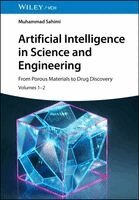
    Artificial Intelligence in Science and Engineering, 2 Volume Set

    From Porous Materials to Drug Discovery

    AvMuhammad Sahimi

    Inbunden, Engelska, 2026

    1 782 kr

    Kommande

    Beskrivning

    Apply AI and ML to solve complex problems across sciences Many problems in physics, engineering, and applied sciences resist traditional modeling approaches. Artificial Intelligence in Science and Engineering: From Porous Materials to Drug Discovery presents AI and ML methods for tackling otherwise unsolvable problems in complex systems. Written by Muhammad Sahimi, who brings over 40 years of research experience to the topic, this reference spans multiple scientific domains. The book covers AI and ML applications in hydrodynamics, porous media characterization, molecular dynamics simulation, and biological phenomena including protein folding. It addresses environmental applications and drug discovery, connecting computational methods with domain-specific challenges in fluid dynamics, materials science, and biology. Readers gain access to methods that model, predict, and optimize processes difficult to approach through conventional techniques. Readers will also find: Detailed treatment of AI and ML approaches applied to complex systems in fluid dynamics and porous media researchCoverage of molecular dynamics applications where machine learning accelerates simulation and prediction of material propertiesMethods for protein folding prediction and drug discovery leveraging current artificial intelligence and computational biology techniquesEnvironmental science applications demonstrating how AI-driven modeling addresses problems resistant to traditional analytical methodsCross-disciplinary frameworks connecting physics, engineering, materials science, and biology through unified computational approachesPhysicists, materials scientists, engineers, computer scientists, and computational biologists will find this volume a substantive reference for applying AI and ML across their research domains. By unifying coverage of diverse complex systems under one framework, the book serves both academics and practitioners working at the intersection of computation and applied science.

    Produktinformation

    • Utgivningsdatum:2026-09-16
    • Mått:170 x 244 x undefined mm
    • Format:Inbunden
    • Språk:Engelska
    • Antal sidor:832
    • Förlag:Wiley-VCH Verlag GmbH
    • ISBN:9783527355068

    Utforska kategorier

    • Klassisk mekanik inom Naturvetenskap och teknik
    • Artificiell intelligens inom Data och IT

    Mer om författaren

    Muhammad Sahimi, PhD, is a professor of chemical engineering and materials science at the University of Southern California. With over 40 years of experience specializing in porous media, heterogeneous materials, and the application of AI and ML methods, he has published more than 400 peer-reviewed articles and four books.

    Innehållsförteckning

    • Contents for Volume 1Preface xvii1 Artificial Intelligence and Complex Systems: What It Can and Cannot Do 11.1 Introduction 11.2 A Glance at History 21.3 Complex Media and Systems 41.4 Three Types of Complex Systems 51.5 Physics-informed and Data-driven Approach to Complex Media and Phenomena 61.6 What Artificial Intelligence Cannot Do 72 Neural Networks and Other Machine-learning Algorithms 92.1 Introduction 92.2 Training of Neural Networks: Backpropagation 112.3 Classification of Learning 152.4 Weak Learners and Boosting Algorithms 212.5 Activation Functions 232.6 Types of Neural Networks 252.7 Regularization of Neural Networks 432.8 Training of Large Neural Networks 442.9 Other Machine-learning Algorithms 452.10 Methods for Minimizing the Loss Function 482.11 Challenges and Future Directions 503 Solving Differential and Partial Differential Equations 593.1 Introduction 593.2 Solving Ordinary Differential Equations 613.3 Solving Partial Differential Equations 623.4 Solving High-dimensional Partial Differential Equations: Deep BSDE Algorithm 663.5 Feynman–Kac Solution for Backward Kolmogorov Equation of Stochastic Processes 693.6 Data-driven Discretization of Partial Differential Equations 723.7 Other Methods 773.8 Space-time Fractional Partial Differential Equations 793.9 Challenges and Future Directions 804 Fluid Mechanics: Single-phase Flow 854.1 Introduction 854.2 The Microscopic Conservation Laws 85Contents for Volume 1 ix4.3 A Glance at History 884.4 Kinematics of Fluid Flow 894.5 Dynamics of Fluid Flow 944.6 Modeling Flow Systems of Type I 964.7 Data-driven Neural Networks for Flow Systems of Type I 994.8 Physics-informed and Data-driven Machine-learning Approach 1094.9 Turbulent Flows 1274.10 Control of a Flow Field 1394.11 Aerodynamic Systems 1414.12 Machine Learning for Accelerating Direct Numerical Simulations 1434.13 Challenges and Future Directions 1435 Fluid Mechanics: Multiphase Flows 1555.1 Introduction 1555.2 Physics-informed Simulation of Two-phase Flows 1565.3 Data-driven Approach to Simulating Two-phase Flows 1705.4 Multiphase Flow in Heterogeneous Porous Materials and Media 1735.5 Challenges and Future Directions 1746 Heat and Mass Transfer Processes 1796.1 Introduction 1796.2 Heat and Mass Transfer Processes 1806.3 Applications of Neural Networks to Heat Transfer Processes 1826.4 Mass Transfer 2246.5 Challenges and Future Directions 2297 Porous Materials and Media 2417.1 Introduction 2417.2 Characterization of Core-scale Porous Media 2437.3 Characterization of Large-scale Porous Media 2587.4 Reconstruction of Porous Media 2617.5 Data-driven Neural Networks for Simulating Single-phase Flow and Transport Processes 2687.6 Physics-informed Neural Networks for Simulating Single-phase Flow and Transport 2807.7 Two-phase Flow 2867.8 Thermo-hydro-mechanical Processes 2987.9 Data-driven Neural Networks for Two-phase Flow 2997.10 Challenges and Future Directions 3028 Density-functional Theory and Molecular Simulation 3138.1 Introduction 3138.2 Quantum Monte Carlo Method 3138.3 First-principle Simulation: Density-functional Theory Calculations 3168.4 Molecular Dynamics Simulation 3268.5 Active Learning 3398.6 Other Aspects of Development of Force Fields by Machine-learning Algorithms 3418.7 Challenges and Future Directions 3439 Membranes for Separation of Fluid Mixtures 3519.1 Introduction 3519.2 Data-driven Neural Networks for Separation Processes 3539.3 Data-driven Approach for Designing and Screening of Membranes' Materials 3749.4 Application of Generative Adversarial Networks to Membrane Separation 3809.5 Data-driven Neural Network for Minimizing Membrane Fouling 3829.6 Physics-informed Modeling of Flow in Membranes 3859.7 Challenges and Future Directions 38610 Catalysis and Reaction Engineering 39310.1 Introduction 39310.2 Data-driven Machine-learning Algorithms for Predicting Catalytic Activity and Yield 39510.3 Data-driven Machine-learning Algorithms for Design and Optimization of New Catalysts 40510.4 Data-driven Neural Networks for Predicting Potential Energy Surface in Catalysis 41410.5 Applications of Behler–Parrinello Generalized Neural-network Representation of High-dimensional Potential Energy Surfaces 42410.6 Machine-learning Approach for Discovering and Designing New Catalysts Using Density Functional Theory Data 42610.7 Machine-learning Algorithms for Identifying Catalytic Reaction Networks 43810.8 Black-box, Grey-box, and Glass-box Methods 44410.9 Challenges and Future Directions 444Contents for Volume 2Preface xiii11 Materials Science 45311.1 Introduction 45311.2 Machine-learning Approach for Designing Polymers and other Macromolecules 45511.3 Machine-learning Algorithms for Crystalline Solids 46511.4 Generative Approach for Inverse Modeling of Material Discovery 49111.5 Materials Interface 50411.6 Challenges and Future Directions 50612 Protein Structure 51912.1 Introduction 51912.2 Molecular Dynamics Simulation 52012.3 Machine Learning for Coarse-grained Force Fields 52212.4 Machine-learning Evolutionary Approach to Predicting Protein Structure 52612.5 Neural Network Approach to Protein Structure 53012.6 Challenges and Future Directions 56313 Drug Discovery 57313.1 Introduction 57313.2 Machine-learning Methods for Quantitative Structure-property Relationships 57513.3 Machine-learning Approach for Design of Antibacterial and Antimicrobial Peptides 57813.4 Recurrent Neural Network Model for Drug Design 58613.5 Design of Proteins for Neutralizing Lethal Snake Venom 58913.6 Drugs for Viral Proteins of SARS-CoV-2 59213.7 Machine Learning for Predicting Drug-target Interactions 59413.8 Challenges and Future Directions 59714 Medical Imaging and Anatomical Diagnosis 60314.1 Introduction 60314.2 Image Classification 606Contents for Volume 2 ix14.3 Detection 60814.4 Segmentation 61014.5 Registration 61414.6 Image Enhancement 61514.7 Extracting Features from a Medical Image 61514.8 Leveraging Textual Reports to Improve Classification of Medical Images 61614.9 Textual Description of Medical Images 61614.10 Anatomical Applications 61914.11 Commonalities of Images of Porous Media and Biological Organs 63914.12 Challenges and Future Directions 64115 Environmental and Climate Sciences 65115.1 Introduction 65115.2 Hydrology 65215.3 Transport of Contaminants in Groundwater 67315.4 Soil Moisture 67715.5 Carbon Dioxide Storage in Porous Formations 68115.6 Climate Models 68815.7 Challenges and Future Directions 70416 Learning Governing Equations for Datasets 71316.1 Introduction 71316.2 Type-II Systems 71516.3 Type-III Systems 74516.4 Kernel Methods 77116.5 Challenges and Future Directions 772References 773Postface 784Index 785