• Fri frakt över 249 kr
  • •
  • Snabba leveranser
  • •
  • Billiga böcker
Kundservice

Du är på sajten för privatpersoner.

Företag, bibliotek eller offentlig verksamhet?

Du handlar på classic.bokus.com, där alla dina funktioner finns intakta.
Till classic.bokus.com
Bokus logotyp. Gå till startsidan.
  • Erbjudanden
  • Student
  • Topplistor
  • Barn & ungdom
  • Bokus Play
  • E-böcker
  • Ljudböcker
  • Pocketböcker
  • Spel och pussel

Skapa nya rutiner – hälsoböcker upp till 50% →

Sidfot

Mina sidor

    Hjälp

    • Kundservice
    • Vanliga frågor och svar
    • Frakt och leverans
    • Retur vid ångerrätt
    • Reklamera vara
    • Betalning
    • Köpvillkor
    • Allmänna villkor
    • Information om webbplatsens tillgänglighet

    Om Bokus

    • Om oss
    • Pressrum
    • För studenter
    • För företag
    • För bibliotek och offentlig verksamhet
    • För leverantörer
    • Hållbarhet

    Populärt

    • Aktuella erbjudanden
    • Presentkort
    • Studentlitteratur
    • Nya böcker
    • Topplistor
    • Signerade böcker
    • Engelska böcker

    Inspiration

    • Boktips
    • BookTok
    • Barnbokskaraktärer
    • Populära författare
    Logotyp för Bokus
    Följ oss på Facebook (extern länk)Följ oss på Instagram (extern länk)Följ oss på YouTube (extern länk)Följ oss på TikTok (extern länk)
    bokus @ CookiesAnpassa cookiesIntegritetspolicyKöpvillkor
    Till Citymail hemsida (extern länk)Till Budbee hemsida (extern länk)Till Postnord hemsida (extern länk)Till Schenker hemsida (extern länk)Till Early Bird hemsida (extern länk)Till Walleys hemsida (extern länk)
    1. Naturvetenskap och teknik
    2. Teknik och industri
    3. Energiteknik

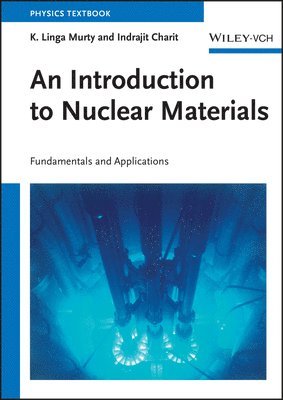
    Introduction to Nuclear Materials

    Fundamentals and Applications

    AvK. Linga Murty,Indrajit Charit

    Häftad, Engelska, 2012

    669 kr

    Tillfälligt slut

    Fler format och utgåvor

    Inbunden

    Kommande

    Inbunden

    Tillf. slut

    Beskrivning

    Covering both fundamental and advanced aspects in an accessible way, this textbook begins with an overview of nuclear reactor systems, helping readers to familiarize themselves with the varied designs. Then the readers are introduced to different possibilities for materials applications in the various sections of nuclear energy systems. Materials selection and life prediction methodologies for nuclear reactors are also presented in relation to creep, corrosion and other degradation mechanisms. An appendix compiles useful property data relevant for nuclear reactor applications.Throughout the book, there is a thorough coverage of various materials science principles, such as physical and mechanical metallurgy, defects and diffusion and radiation effects on materials, with serious efforts made to establish structure-property correlations wherever possible. With its emphasis on the latest developments and outstanding problems in the field, this is both a valuable introduction and a ready reference for beginners and experienced practitioners alike.

    Produktinformation

    • Utgivningsdatum:2012-12-19
    • Mått:170 x 239 x 20 mm
    • Vikt:839 g
    • Format:Häftad
    • Språk:Engelska
    • Antal sidor:398
    • Förlag:Wiley-VCH Verlag GmbH
    • ISBN:9783527407675

    Utforska kategorier

    • Energiteknik inom Naturvetenskap och teknik
    • Fysik inom Naturvetenskap och teknik

    Mer om författaren

    K. Linga Murty has been on the faculty of the Nuclear Engineering department at North Carolina State University since 1981 and has been teaching courses in Nuclear Materials. He received his Ph.D. degree in Applied Physics (Materials) from Cornell University (USA) in 1970. Dr. Murty is the recipient of numerous awards including the American Nuclear Society Mishima Award (1993) and the Metcalfe Medal (1963). He is a fellow of ASM-International, ANS and IIM and has authored or coauthored more than 290 technical papers. Indrajit Charit has been on the faculty of the Chemical and Materials Engineering department at the University of Idaho since 2007. He serves both Materials Science and Engineering and Nuclear Engineering programs. He received his Ph.D. degree in Metallurgical Engineering from the University of Missouri-Rolla (USA) in 2004. His research has been supported by the US Department of Energy’s Nuclear Energy University Programs, Idaho National Laboratory and Center for Advanced Energy Studies.He has published about 60 technical papers.

    Innehållsförteckning

    • Preface XV1 Overview of Nuclear Reactor Systems and Fundamentals 11.1 Introduction 11.2 Types of Nuclear Energy 21.2.1 Nuclear Fission Energy 21.2.2 Nuclear Fusion Energy 21.2.3 Radioisotopic Energy 31.3 Neutron Classification 31.4 Neutron Sources 31.5 Interactions of Neutrons with Matter 31.5.1 Fission Chain Reaction 51.6 Definition of Neutron Flux and Fluence 61.7 Neutron Cross Section 71.7.1 Reactor Flux Spectrum 101.8 Types of Reactors 111.8.1 A Simple Reactor Design 111.8.2 Examples of Nuclear Reactors 121.8.2.1 Generation-I Reactors 131.8.2.2 Generation-II Reactors 151.8.2.3 Generation-III and IIIþ Reactors 221.8.2.4 Generation-IV Reactors 251.9 Materials Selection Criteria 281.9.1 General Considerations 311.9.1.1 General Mechanical Properties 311.9.1.2 Fabricability 321.9.1.3 Dimensional Stability 321.9.1.4 Corrosion Resistance 321.9.1.5 Design 321.9.1.6 Heat Transfer Properties 321.9.1.7 Availability and Cost 331.9.2 Special Considerations 331.9.2.1 Neutronic Properties 331.9.2.2 Susceptibility to Induced Radioactivity 331.9.2.3 Radiation Stability 351.9.3 Application of Materials Selection Criteria to Reactor Components 351.9.3.1 Structural/Fuel Cladding Materials 361.9.3.2 Moderators and Reflectors 361.9.3.3 Control Materials 361.9.3.4 Coolants 361.9.3.5 Shielding Materials 371.10 Summary 37Appendix 1.A 37Additional Reading Materials 402 Fundamental Nature of Materials 432.1 Crystal Structure 432.1.1 Unit Cell 452.1.2 Crystal Structures in Metals 472.1.2.1 Body-Centered Cubic (BCC) Crystal Structure 472.1.2.2 Face-Centered Cubic (FCC) Crystal Structure 492.1.2.3 Hexagonal Close-Packed (HCP) Crystal Structure 492.1.3 Close Packing Geometry 522.1.4 Polymorphism 532.1.5 Miller Indices for Denoting Crystallographic Planes and Directions 542.1.5.1 Miller–Bravais Indices for Hexagonal Close-Packed Crystals 572.1.6 Interstitial Sites in Common Crystal Structures 592.1.7 Crystal Structure of Carbon: Diamond and Graphite 602.1.8 Crystal Structure in Ceramics 622.1.8.1 Rock Salt Structure 632.1.8.2 CsCl Structure 642.1.8.3 Fluorite Structure 652.1.8.4 Zincblende Structure 662.1.8.5 Corundum Structure 662.1.9 Summary 692.2 Crystal Defects 692.2.1 Point Defects 702.2.1.1 Point Defects in Metals/Alloys 702.2.1.2 Point Defects in Ionic Crystals 772.2.2 Line Defects 792.2.3 Surface Defects 842.2.3.1 Grain Boundaries 842.2.3.2 Twin Boundaries 862.2.3.3 Stacking Faults 872.2.3.4 Other Boundaries 882.2.4 Volume Defects 882.2.5 Summary 882.3 Diffusion 892.3.1 Phenomenological Theories of Diffusion 902.3.1.1 Fick’s First Law 902.3.1.2 Fick’s Second Law 912.3.2 Atomic Theories of Diffusion 952.3.3 Atomic Diffusion Mechanisms 972.3.4 Diffusion as a Thermally Activated Process 1012.3.5 Diffusion in Multicomponent Systems 1052.3.6 Diffusion in Different Microstructural Paths 1062.3.6.1 Grain Boundary Diffusion 1062.3.6.2 Dislocation Core Diffusion 1082.3.6.3 Surface Diffusion 1082.3.7 Summary 108Bibliography 1103 Fundamentals of Radiation Damage 1113.1 Displacement Threshold 1143.2 Radiation Damage Models 1183.3 Summary 125Bibliography and Suggestions for Further Reading 126Additional Reading 1264 Dislocation Theory 1274.1 Deformation by Slip in Single Crystals 1274.1.1 Critical Resolved Shear Stress 1304.1.2 Peierls–Nabarro (P–N) Stress 1334.1.3 Slip in Crystals: Accumulation of Plastic Strain 1344.1.4 Determination of Burgers Vector Magnitude 1364.1.5 Dislocation Velocity 1374.2 Other Dislocation Characteristics 1404.2.1 Types of Dislocation Loops 1404.2.1.1 Glide Loop 1414.2.1.2 Prismatic Loop 1414.2.2 Stress Field of Dislocations 1424.2.2.1 Screw Dislocation 1424.2.2.2 Edge Dislocation 1434.2.3 Strain Energy of a Dislocation 1444.2.3.1 Frank’s Rule 1454.2.4 Force on a Dislocation 1474.2.5 Forces between Dislocations 1514.2.6 Intersection of Dislocations 1544.2.7 Origin and Multiplication of Dislocations 1574.2.7.1 Consequences of Dislocation Pileups 1584.3 Dislocations in Different Crystal Structures 1604.3.1 Dislocation Reactions in FCC Lattices 1604.3.1.1 Shockley Partials 1604.3.1.2 Frank Partials 1624.3.1.3 Lomer–Cottrell Barriers 1634.3.2 Dislocation Reactions in BCC Lattices 1654.3.3 Dislocation Reactions in HCP Lattices 1664.3.4 Dislocation Reactions in Ionic Crystals 1664.4 Strengthening (Hardening) Mechanisms 1674.4.1 Strain Hardening 1684.4.2 Grain Size Strengthening 1704.4.3 Solid Solution Strengthening 1724.4.3.1 Elastic Interaction 1734.4.3.2 Modulus Interaction 1734.4.3.3 Long-Range Order Interaction 1734.4.3.4 Stacking Fault Interactions 1734.4.3.5 Electrical Interactions 1734.4.4 Strengthening from Fine Particles 1744.4.4.1 Precipitation Strengthening 1754.4.4.2 Dispersion Strengthening 1774.5 Summary 178Bibliography 180Additional Reading 1805 Properties of Materials 1815.1 Mechanical Properties 1815.1.1 Tensile Properties 1845.1.1.1 Stress–Strain Curves 1845.1.1.2 Effect of Strain Rate on Tensile Properties 1925.1.1.3 Effect of Temperature on Tensile Properties 1935.1.1.4 Anisotropy in Tensile Properties 1955.1.2 Hardness Properties 1965.1.2.1 Macrohardness Testing 1975.1.2.2 Microhardness Testing 1985.1.3 Fracture 2005.1.3.1 Theoretical Cohesive Strength 2015.1.3.2 Metallographic Aspects of Fracture 2025.1.4 Impact Properties 2035.1.4.1 Ductile–Brittle Transition Behavior 2065.1.5 Fracture Toughness 2075.1.5.1 Test Procedure 2095.1.6 Creep Properties 2115.1.6.1 Creep Constitutive Equation 2125.1.6.2 Creep Curve 2155.1.6.3 Stress and Creep Rupture 2165.1.6.4 Creep Mechanisms 2195.1.7 Fatigue Properties 2275.1.7.1 Fatigue Curve 2295.1.7.2 Miners Rule 2345.1.7.3 Crack Growth 2345.1.7.4 Paris Law 2355.1.7.5 Factors Affecting Fatigue Life 2385.1.7.6 Protection Methods against Fatigue 2385.1.8 Creep–Fatigue Interaction 2395.2 Thermophysical Properties 2405.2.1 Specific Heat 2405.2.2 Thermal Expansion 2445.2.3 Thermal Conductivity 2465.2.4 Summary 2495.3 Corrosion 2495.3.1 Corrosion Basics 2495.3.2 Types of Corrosion Couples 2535.3.2.1 Composition Cells 2535.3.2.2 Concentration Cells 2535.3.2.3 Stress Cells 2545.3.3 Summary 259Appendix 5.A 260Appendix 5.B 260Bibliography and Suggestions for Further Reading 265Additional Reading 2666 Radiation Effects on Materials 2676.1 Microstructural Changes 2676.1.1 Cluster Formation 2716.1.2 Extended Defects 2746.1.2.1 Nucleation and Growth of Dislocation Loops 2756.1.2.2 Void/Bubble Formation and Consequent Effects 2756.1.3 Radiation-Induced Segregation 2866.1.4 Radiation-Induced Precipitation or Dissolution 2876.2 Mechanical Properties 2876.2.1 Radiation Hardening 2876.2.1.1 Saturation Radiation Hardening 2926.2.1.2 Radiation Anneal Hardening (RAH) 2936.2.1.3 Channeling: Plastic Instability 2946.2.2 Radiation Embrittlement 2956.2.2.1 Effect of Composition and Fluence 2976.2.2.2 Effect of Irradiation Temperature 2976.2.2.3 Effect of Thermal Annealing 2996.2.3 Helium Embrittlement 3006.2.4 Irradiation Creep 3026.2.5 Radiation Effect on Fatigue Properties 3056.3 Radiation Effects on Physical Properties 3066.3.1 Density 3076.3.2 Elastic Constants 3076.3.3 Thermal Conductivity 3076.3.4 Thermal Expansion Coefficient 3086.4 Radiation Effects on Corrosion Properties 3086.4.1 Metal/Alloy 3086.4.2 Protective Layer 3086.4.3 Corrodent 3096.4.3.1 LWR Environment 3096.4.3.2 Liquid Metal Embrittlement 3136.4.4 Irradiation-Assisted Stress Corrosion Cracking (IASCC) 3136.5 Summary 314Bibliography 3167 Nuclear Fuels 3197.1 Introduction 3197.2 Metallic Fuels 3217.2.1 Metallic Uranium 3217.2.1.1 Extraction of Uranium 3227.2.1.2 Nuclear Properties 3237.2.1.3 Uranium Crystal Structure and Physical Properties 3247.2.1.4 Mechanical Properties 3267.2.1.5 Corrosion Properties 3277.2.1.6 Alloying of Uranium 3287.2.1.7 Fabrication of Uranium 3307.2.1.8 Thermal Cycling Growth in Uranium 3307.2.1.9 Irradiation Properties of Metallic Uranium 3317.2.2 Metallic Plutonium 3357.2.2.1 Crystal Structure and Physical Properties of Plutonium 3367.2.2.2 Fabrication of Plutonium 3387.2.2.3 Mechanical Properties of Plutonium 3387.2.2.4 Corrosion Properties 3397.2.2.5 Alloying of Plutonium 3417.2.3 Metallic Thorium Fuel 3417.2.3.1 Extraction of Thorium and Fabrication 3427.2.3.2 Crystal Structure and Physical Properties of Metallic Thorium 3437.2.3.3 Mechanical Properties 3437.2.3.4 Corrosion Properties of Thorium 3447.2.3.5 Alloying of Thorium 3457.2.3.6 Radiation Effects 3467.2.3.7 Pros and Cons of Thorium-Based Fuel Cycles 3467.3 Ceramic Fuels 3477.3.1 Ceramic Uranium Fuels 3477.3.1.1 Uranium Dioxide (Urania) 3477.3.2 Uranium Carbide 3527.3.3 Uranium Nitride 3537.3.4 Plutonium-Bearing Ceramic Fuels 3547.3.5 Thorium-Bearing Ceramic Fuels 3547.4 Summary 356Bibliography 357Additional Reading 358Appendix A Stress and Strain Tensors 359Appendix B 367Index 375
    Hoppa över listan

    Mer från samma författare

    Indrajit Charit, K. Linga Murty - Introduction to Nuclear Materials, E-bok

    Introduction to Nuclear Materials

    Indrajit Charit, K. Linga Murty

    E-bok
    2013

    947 kr

    Indrajit Charit, K. Linga Murty - Introduction to Nuclear Materials, E-bok

    Introduction to Nuclear Materials

    Indrajit Charit, K. Linga Murty

    E-bok
    2013

    947 kr

    Hoppa över listan

    Du kanske också är intresserad av

    K. Linga Murty, Indrajit Charit - Introduction to Nuclear Materials, Inbunden

    Introduction to Nuclear Materials

    K. Linga Murty, Indrajit Charit

    Inbunden, 2012

    1 452 kr

    K. Linga Murty, Indrajit Charit - Introduction to Nuclear Materials, Inbunden

    Introduction to Nuclear Materials

    K. Linga Murty, Indrajit Charit

    Inbunden, 2027

    1 346 kr

    Indrajit Charit, K. Linga Murty - Introduction to Nuclear Materials, E-bok

    Introduction to Nuclear Materials

    Indrajit Charit, K. Linga Murty

    E-bok
    2013

    947 kr

    Indrajit Charit, K. Linga Murty - Introduction to Nuclear Materials, E-bok

    Introduction to Nuclear Materials

    Indrajit Charit, K. Linga Murty

    E-bok
    2013

    947 kr

    Rajiv S. Mishra, Indrajit Charit, Ravi Sankar Haridas - Mechanical Behavior of Materials, Häftad

    Mechanical Behavior of Materials

    Rajiv S. Mishra, Indrajit Charit, Ravi Sankar Haridas

    Häftad, 2025

    1 035 kr

    Ravi Sankar Haridas, Indrajit Charit, Rajiv S. Mishra - Mechanical Behavior of Materials, E-bok

    Mechanical Behavior of Materials

    Ravi Sankar Haridas, Indrajit Charit, Rajiv S. Mishra

    E-bok
    2025

    1 136 kr

    Peter K. Liaw, Stuart A. Maloy, Yuntian T. Zhu, Indrajit Charit - Mechanical and Creep Behavior of Advanced Materials, E-bok

    Mechanical and Creep Behavior of Advanced Materials

    Peter K. Liaw, Stuart A. Maloy, Yuntian T. Zhu, Indrajit Charit

    E-bok
    2017

    1 570 kr

    Indrajit Charit, Yuntian T. Zhu, Stuart A. Maloy, Peter K. Liaw - Mechanical and Creep Behavior of Advanced Materials, Häftad

    Mechanical and Creep Behavior of Advanced Materials

    Indrajit Charit, Yuntian T. Zhu, Stuart A. Maloy, Peter K. Liaw

    Häftad, 2018

    1 592 kr

    Indrajit Charit, Yuntian T. Zhu, Stuart A. Maloy, Peter K. Liaw - Mechanical and Creep Behavior of Advanced Materials, Inbunden

    Mechanical and Creep Behavior of Advanced Materials

    Indrajit Charit, Yuntian T. Zhu, Stuart A. Maloy, Peter K. Liaw

    Inbunden, 2017

    1 618 kr

    Mats Ahlstedt, Veronica Ahlstedt McCleave - Visselblåsaren, Pocket
    • -51%
    Del 1

    Visselblåsaren

    Mats Ahlstedt, Veronica Ahlstedt McCleave

    Pocket, 2025

    3,5 utav 5 stjärnor. Totalt antal röster:(2)

    49 kr99 kr