• Fri frakt över 249 kr
  • •
  • Snabba leveranser
  • •
  • Billiga böcker
Kundservice

Du är på sajten för privatpersoner.

Företag, bibliotek eller offentlig verksamhet?

Du handlar på classic.bokus.com, där alla dina funktioner finns intakta.
Till classic.bokus.com
Bokus logotyp. Gå till startsidan.
  • Erbjudanden
  • Nyheter
  • Student
  • Topplistor
  • Barn & ungdom
  • Bokus Play
  • E-böcker
  • Pocketböcker
  • Spel & pussel

10% rabatt på allt med kod: NYSTART10 →

Sidfot

Mina sidor

    Hjälp

    • Kundservice
    • Vanliga frågor och svar
    • Frakt och leverans
    • Retur vid ångerrätt
    • Reklamera vara
    • Betalning
    • Köpvillkor
    • Allmänna villkor
    • Information om webbplatsens tillgänglighet

    Om Bokus

    • Om oss
    • Pressrum
    • För studenter
    • För företag
    • För bibliotek och offentlig verksamhet
    • För leverantörer
    • Hållbarhet

    Populärt

    • Aktuella erbjudanden
    • Presentkort
    • Studentlitteratur
    • Nya böcker
    • Topplistor
    • Signerade böcker
    • Engelska böcker

    Inspiration

    • Boktips
    • BookTok
    • Populära bokserier
    • Barnbokskaraktärer
    • Populära författare
    Logotyp för Bokus
    Följ oss på Facebook (extern länk)Följ oss på Instagram (extern länk)Följ oss på YouTube (extern länk)Följ oss på TikTok (extern länk)
    bokus @ CookiesAnpassa cookiesIntegritetspolicyKöpvillkor
    Till Citymail hemsida (extern länk)Till Budbee hemsida (extern länk)Till Postnord hemsida (extern länk)Till Schenker hemsida (extern länk)Till Early Bird hemsida (extern länk)Till Walleys hemsida (extern länk)
    1. Medicin
    2. Klinisk medicin och internmedicin
    3. Sjukdomar och rubbningar
    4. Infektionssjukdomar och smittsamma sjukdomar

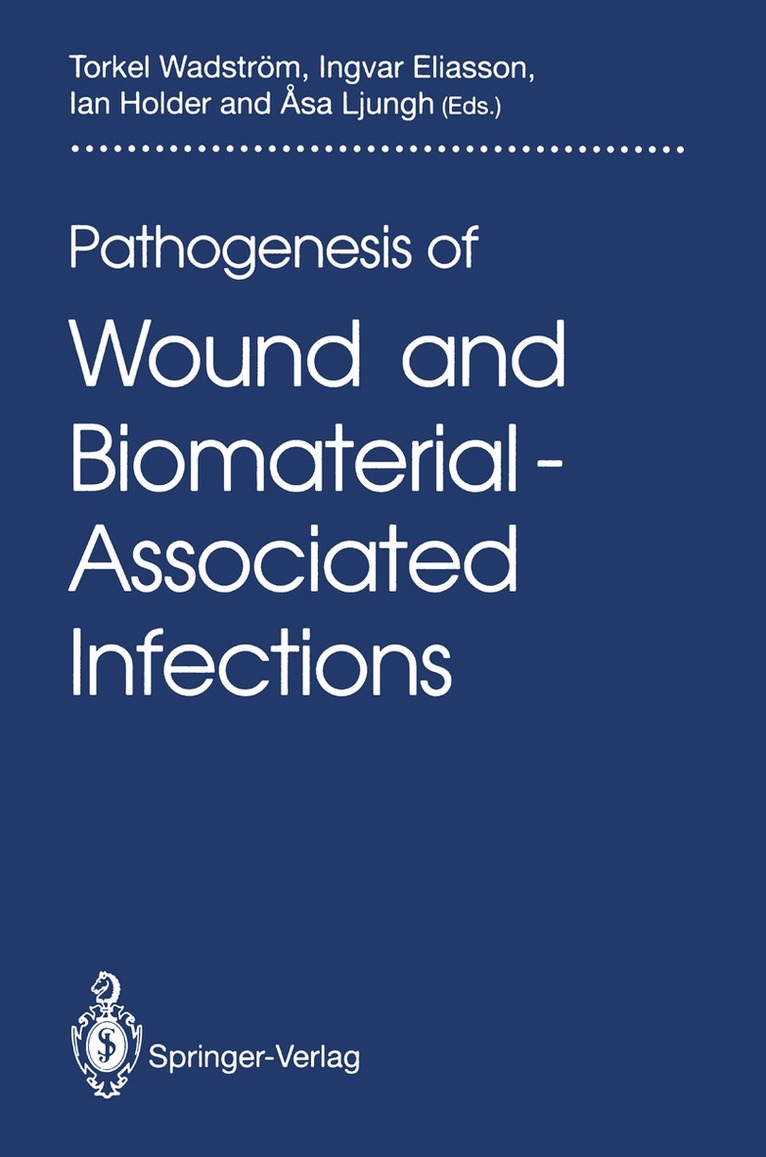
    Pathogenesis of Wound and Biomaterial-Associated Infections

    AvTorkel Wadström,Ingvar Eliasson

    Häftad, Engelska, 1990

    1 119 kr

    Beställningsvara. Skickas inom 10-15 vardagar. Fri frakt över 249 kr.

    Beskrivning

    Despite the recent advances in medical treatment, patients suffering from wounds such as burns or receiving surgical implants are still in great danger of infection. This has called attention to the need for better understanding of infections at the molecular level. Scientists from various disciplines summarize our knowledge today and investigate how methods to avoid wound and biomaterial-associated infections can be developed. These methods include new antibiotics, surgical strategies to prevent infection, and ways to stimulate the immune system and the tissue healing process. Specific topics include: the definition of microbial cell surface determinants important for adhesion to graft; the definition of extracellular bacterial enzymes and toxins involved in tissue breakdown and the local spread of infection; the prevention of the systemic spreading of infection with immunoglobulins and antibiotics; and the problem of multiple antibiotic resistance in most versatile pathogens.

    Produktinformation

    • Utgivningsdatum:1990-09-03
    • Mått:155 x 235 x 31 mm
    • Vikt:855 g
    • Format:Häftad
    • Språk:Engelska
    • Antal sidor:570
    • Förlag:Springer-Verlag Berlin and Heidelberg GmbH & Co. KG
    • ISBN:9783540195962

    Utforska kategorier

    • Infektionssjukdomar och smittsamma sjukdomar inom Medicin
    • Patologi inom Medicin

    Innehållsförteckning

    • Healing, Scarring, and Contractures.- The Effect of Staphylococcus aureus Bacteria and its Products on Wound Healing.- Genetic Studies of Staphylococcus aureus Virulence Factors.- Molecular Biology of Group A Streptococcal M Proteins.- Fibronectin Binding Proteins from Staphylococcus aureus.- Fibrinogen-binding proteins from Staphylococcus aureus.- Osteomyelitis and Staphylococcal Adhesion.- Phagocytosis of Bacteria by Endothelial Cells.- Chromosomal DNA Analyses of Staphylococci.- Microbiology of the Burn Compromised Patient.- Immunomodulating Toxins and Tumor Necrosis Factors.- Immunomodulators — Medicine for the 90-ies ?.- Pathogenesis of skin and wound infections. Animal models.- Toxic Shock Syndrome from Surgical Infections.- Fatty Acid Modifying Enzyme (FAME) and Staphylococcal Abscesses.- Biosynthetic Dressing Materials and their Influence on Wound Healing and Infection.- Clinical and Bacteriological Advantages in the Use of Occlusive Dressings.- Development of a Semi-Synthetic Sugar Paste for Promoting Healing of Infected Wounds.- Fibronectin-Substituted Gels for Treatment of Experimental Wound Infections in a Pig Model.- Evaluation of Wound Healing by Quantifying of Bacteria and Computerized Image Analysis — A Pilot Study in Primary Health Care.- Bacterial Affinity for Hydrophobic Ligands can be Employed in the Treatment of Infected Wounds in Patients.- Krill and Other Enzymes in Enzymatic Wound Debridement.- Computerized Wound Image Analysis.- Biomaterial-Centered Infections: Microbial Adhesion versus Tissue Integration.- Periimplant Infections of the Oral Cavity.- Plasmaprotein Adsorption on Solid Surfaces. Some New Methods.- Bacterial Cell-Surface Hydrophobicity.- What Types of Bonds Are Responsible for the Adhesion of Bacteria and Viruses to Native andArtificial Surfaces?.- Pathogenic Studies on Five Species of Coagulase-Negative Staphylococci: A Mouse Model with a Foreign Body Implant.- Experimental Orthopaedic Infections.- Microvascular Graft Infection in the Rat.- Activity of Various Antibiotics on Production of Virulence Factors by Various Organisms.- Structure and DNA-Sequence Analysis of the Staphylococcal Lantibiotics Epidermin and Gallidermin.- Mupirocin: A New Antibiotic that Reduces Colonisation of Central Venous Cannulae by Skin Organisms.- Coagulase-Negative Staphylococci.- Staphylococcus epidermidis — a Versatile Pathogen.- Epidemiological markers of coagulase-negative staphylococci.- Adherence of Staphylococcus aureus to Hep2 Monolayers and Fibronectin.- Deep Infections Associated with Total Hip Arthroplasties Caused by Coagulase-Negative Staphylococci — Pathogenesis and Microbial Diagnosis.- Fibronectin, Collagen and Vitronectin Binding of Coagulase-Negative Staphylococci.- Role of Fibronectin on Staphylococcal Adherence to Metallic Surfaces Used as Models of Orthopaedic Devices.- Serological Variation in the Fibronectin Binding to Protein-A-Deficient Mutants of Staphylococcus aureus.- Adherence of Staphylococci to Monolayers of Human Mesothelial Cells and their Removal by Phagocytes.- Opsonic Requirements of Coagulase-Negative Staphylococci in Suspension and as a Biofilm: Implications for Host Defences.- Microbiology of Infection in Prosthetic Devices.- Prevention of Bacterial Growth Under Commercial Catheter Dressings.- Possible Mechanisms of Damage Which Predispose Heart Valves to Endocarditis.- Phenotypic Variation in the Pathogenesis of Experimental Endocarditis Caused by Staphylococcus epidermidis.- Pathogenesis of Experimental Prosthetic Endocarditis: Effect of Platelet-AssociatedSubstances on Bacterial Survival and Growth.- Fibrinolytic Treatment with Tissue-Type Plasminogen Activator (t-PA) of Streptococcus Sanguis Endocarditis.- Improved Disinfection and Maintenance of Human Heart Valve Allografts.- Hypothetical Model of Phenotypic Variation in Staphylococci.- Phenotypic Changes in Staphylococcal Cell Surface Characteristics Associated with Growth in Human Peritoneal Dialysis Fluid.- Slime Production by Coagulase Negative Staphylococci Causing Single and Recurrent Episodes of Peritonitis.- Etiology and Microbial Pathogenesis of Acute and Late Onset Vascular Graft Infections.- Experimental Bacteremic Vascular Graft Infection with Staphylococcus aureus. Comparative Colonization of Two Graft Materials and Prophylaxis of Late Infection.- Pathogenesis of Infections Caused by Staphylococcus epidermidis.- Gentamicin Release In Vivo from Vacuum Mixed Low and High Viscosity Antibiotic Containing Bone Cement.- The Development of Irgasan-Impregnated Intravenous Cannulae.- The Pathogenesis of Catheter-related Infection in Central Venous Catheters using Gauze versus Transparent Dressings.- In-Vitro Tests to Predict the Efficacy of Antibiotics in a Foreign-Body Infection Animal Model.- Wound Contamination Correlates with Postsurgical Infection Rates: A New Assessment Technique.- Capsular Polysaccharides of Staphylococcus aureus.- The Serodiagnosis of Deep Staphylococcal and Candida Infections.- Concluding Remarks.- Authors’ Index.