• Fri frakt över 249 kr
  • •
  • Snabba leveranser
  • •
  • Billiga böcker
Kundservice

Du är på sajten för privatpersoner.

Företag, bibliotek eller offentlig verksamhet?

Du handlar på classic.bokus.com, där alla dina funktioner finns intakta.
Till classic.bokus.com
Bokus logotyp. Gå till startsidan.
  • Erbjudanden
  • Nyheter
  • Student
  • Topplistor
  • Barn & ungdom
  • Bokus Play
  • E-böcker
  • Pocketböcker
  • Spel & pussel

10% rabatt på allt med kod NYSTART10 →

Sidfot

Mina sidor

    Hjälp

    • Kundservice
    • Vanliga frågor och svar
    • Frakt och leverans
    • Retur vid ångerrätt
    • Reklamera vara
    • Betalning
    • Köpvillkor
    • Allmänna villkor
    • Information om webbplatsens tillgänglighet

    Om Bokus

    • Om oss
    • Pressrum
    • För studenter
    • För företag
    • För bibliotek och offentlig verksamhet
    • För leverantörer
    • Hållbarhet

    Populärt

    • Aktuella erbjudanden
    • Presentkort
    • Studentlitteratur
    • Nya böcker
    • Topplistor
    • Signerade böcker
    • Engelska böcker

    Inspiration

    • Boktips
    • BookTok
    • Populära bokserier
    • Barnbokskaraktärer
    • Populära författare
    Logotyp för Bokus
    Följ oss på Facebook (extern länk)Följ oss på Instagram (extern länk)Följ oss på YouTube (extern länk)Följ oss på TikTok (extern länk)
    bokus @ CookiesAnpassa cookiesIntegritetspolicyKöpvillkor
    Till Citymail hemsida (extern länk)Till Budbee hemsida (extern länk)Till Postnord hemsida (extern länk)Till Schenker hemsida (extern länk)Till Early Bird hemsida (extern länk)Till Walleys hemsida (extern länk)
    1. Data och IT
    2. Systemvetenskap och AI

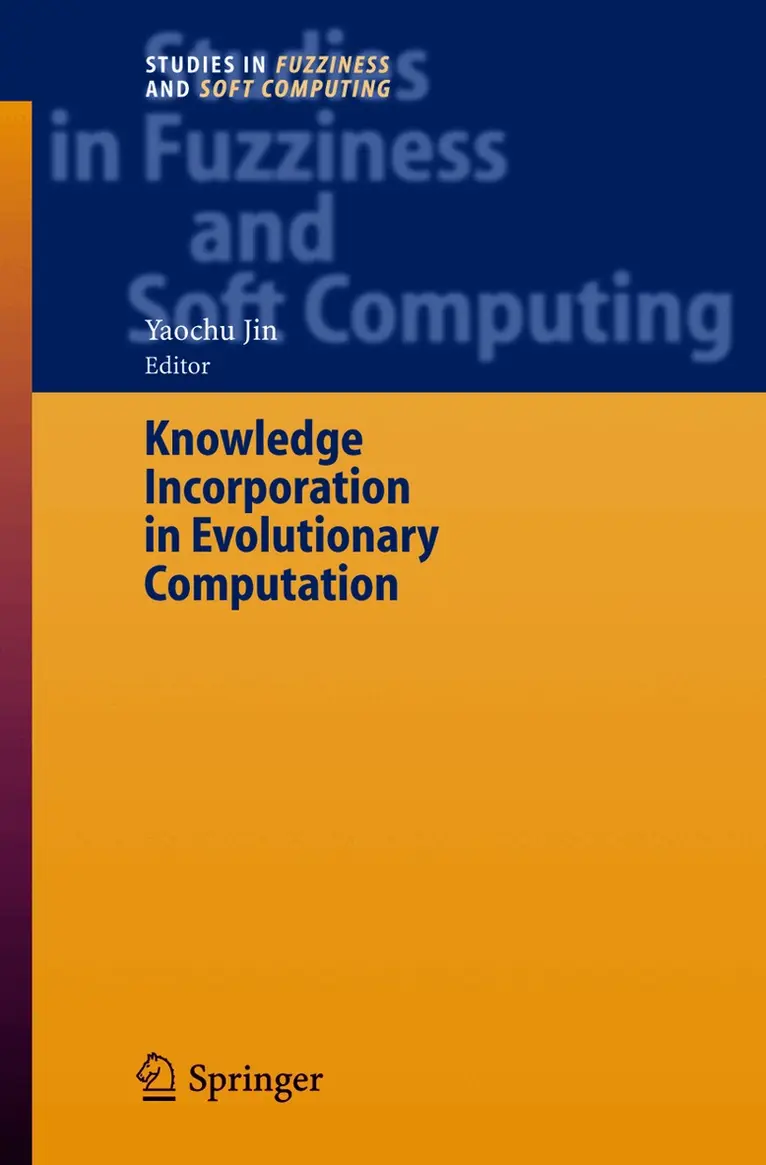
    Knowledge Incorporation in Evolutionary Computation

    AvYaochu Jin

    Inbunden, Engelska, 2004

    Del 167 i serien Studies in Fuzziness and Soft Computing

    2 227 kr

    Beställningsvara. Skickas inom 10-15 vardagar. Fri frakt över 249 kr.

    Beskrivning

    Incorporation of a priori knowledge, such as expert knowledge, meta-heuristics and human preferences, as well as domain knowledge acquired during evolu­ tionary search, into evolutionary algorithms has received increasing interest in the recent years. It has been shown from various motivations that knowl­ edge incorporation into evolutionary search is able to significantly improve search efficiency. However, results on knowledge incorporation in evolution­ ary computation have been scattered in a wide range of research areas and a systematic handling of this important topic in evolutionary computation still lacks. This edited book is a first attempt to put together the state-of-art and re­ cent advances on knowledge incorporation in evolutionary computation within a unified framework. Existing methods for knowledge incorporation are di­ vided into the following five categories according to the functionality of the incorporated knowledge in the evolutionary algorithms. 1. Knowledge incorporation in representation, population initialization, - combination and mutation. 2. Knowledge incorporation in selection and reproduction. 3. Knowledge incorporation in fitness evaluations. 4. Knowledge incorporation through life-time learning and human-computer interactions. 5. Incorporation of human preferences in multi-objective evolutionary com­ putation. The intended readers of this book are graduate students, researchers and practitioners in all fields of science and engineering who are interested in evolutionary computation. The book is divided into six parts. Part I contains one introductory chapter titled "A selected introduction to evolutionary computation" by Yao, which presents a concise but insightful introduction to evolutionary computation.

    Produktinformation

    • Utgivningsdatum:2004-10-20
    • Mått:155 x 235 x 35 mm
    • Vikt:1 004 g
    • Format:Inbunden
    • Språk:Engelska
    • Serie:Studies in Fuzziness and Soft Computing
    • Antal sidor:548
    • Upplaga:2005
    • Förlag:Springer-Verlag Berlin and Heidelberg GmbH & Co. KG
    • ISBN:9783540229025

    Utforska kategorier

    • Systemvetenskap och AI inom Data och IT

    Innehållsförteckning

    • I Introduction.- A Selected Introduction to Evolutionary Computation.- II Knowledge Incorporation in Initialization, Recombination and Mutation.- The Use of Collective Memory in Genetic Programming.- A Cultural Algorithm for Solving the Job Shop Scheduling Problem.- Case-Initialized Genetic Algorithms for Knowledge Extraction and Incorporation.- Using Cultural Algorithms to Evolve Strategies in A Complex Agent-based System.- Methods for Using Surrogate Models to Speed Up Genetic Algorithm Optimization: Informed Operators and Genetic Engineering.- Fuzzy Knowledge Incorporation in Crossover and Mutation.- III Knowledge Incorporation in Selection and Reproduction.- Learning Probabilistic Models for Enhanced Evolutionary Computation.- Probabilistic Models for Linkage Learning in Forest Management.- Performance-Based Computation of Chromosome Lifetimes in Genetic Algorithms.- Genetic Algorithm and Case-Based Reasoning Applied in Production Scheduling.- Knowledge-Based Evolutionary Search for Inductive Concept Learning.- An Evolutionary Algorithm with Tabu Restriction and Heuristic Reasoning for Multiobjective Optimization.- IV Knowledge Incorporation in Fitness Evaluations.- Neural Networks for Fitness Approximation in Evolutionary Optimization.- Surrogate-Assisted Evolutionary Optimization Frameworks for High-Fidelity Engineering Design Problems.- Model Assisted Evolution Strategies.- V Knowledge Incorporation through Life-time Learning and Human-Computer Interactions.- Knowledge Incorporation Through Lifetime Learning.- Local Search Direction for Multi-Objective Optimization Using Memetic EMO Algorithms.- Fashion Design Using Interactive Genetic Algorithm with Knowledge-based Encoding.- Interactive Evolutionary Design.- VI Preference Incorporation in Multi-objective Evolutionary Computation.- Integrating User Preferences into Evolutionary Multi-Objective Optimization.- Human Preferences and their Applications in Evolutionary Multi—Objective Optimization.- An Interactive Fuzzy Satisficing Method for Multi-objective Integer Programming Problems through Genetic Algorithms.- Interactive Preference Incorporation in Evolutionary Engineering Design.