• Fri frakt över 249 kr
  • •
  • Snabba leveranser
  • •
  • Billiga böcker
Kundservice

Du är på sajten för privatpersoner.

Företag, bibliotek eller offentlig verksamhet?

Du handlar på classic.bokus.com, där alla dina funktioner finns intakta.
Till classic.bokus.com
Bokus logotyp. Gå till startsidan.
  • Erbjudanden
  • Student
  • Topplistor
  • Barn & ungdom
  • Bokus Play
  • E-böcker
  • Ljudböcker
  • Pocketböcker
  • Spel och pussel

5% studentrabatt – använd koden KURSBOK27 →

Sidfot

Mina sidor

    Hjälp

    • Kundservice
    • Vanliga frågor och svar
    • Frakt och leverans
    • Retur vid ångerrätt
    • Reklamera vara
    • Betalning
    • Köpvillkor
    • Allmänna villkor
    • Information om webbplatsens tillgänglighet

    Om Bokus

    • Om oss
    • Pressrum
    • För studenter
    • För företag
    • För bibliotek och offentlig verksamhet
    • För leverantörer
    • Hållbarhet

    Populärt

    • Aktuella erbjudanden
    • Presentkort
    • Studentlitteratur
    • Nya böcker
    • Topplistor
    • Signerade böcker
    • Engelska böcker

    Inspiration

    • Boktips
    • BookTok
    • Barnbokskaraktärer
    • Populära författare
    Logotyp för Bokus
    Följ oss på Facebook (extern länk)Följ oss på Instagram (extern länk)Följ oss på YouTube (extern länk)Följ oss på TikTok (extern länk)
    bokus @ CookiesAnpassa cookiesIntegritetspolicyKöpvillkor
    Till Citymail hemsida (extern länk)Till Budbee hemsida (extern länk)Till Postnord hemsida (extern länk)Till Schenker hemsida (extern länk)Till Early Bird hemsida (extern länk)Till Walleys hemsida (extern länk)
    1. Naturvetenskap och teknik
    2. Teknik och industri
    3. Elektronik och kommunikationer

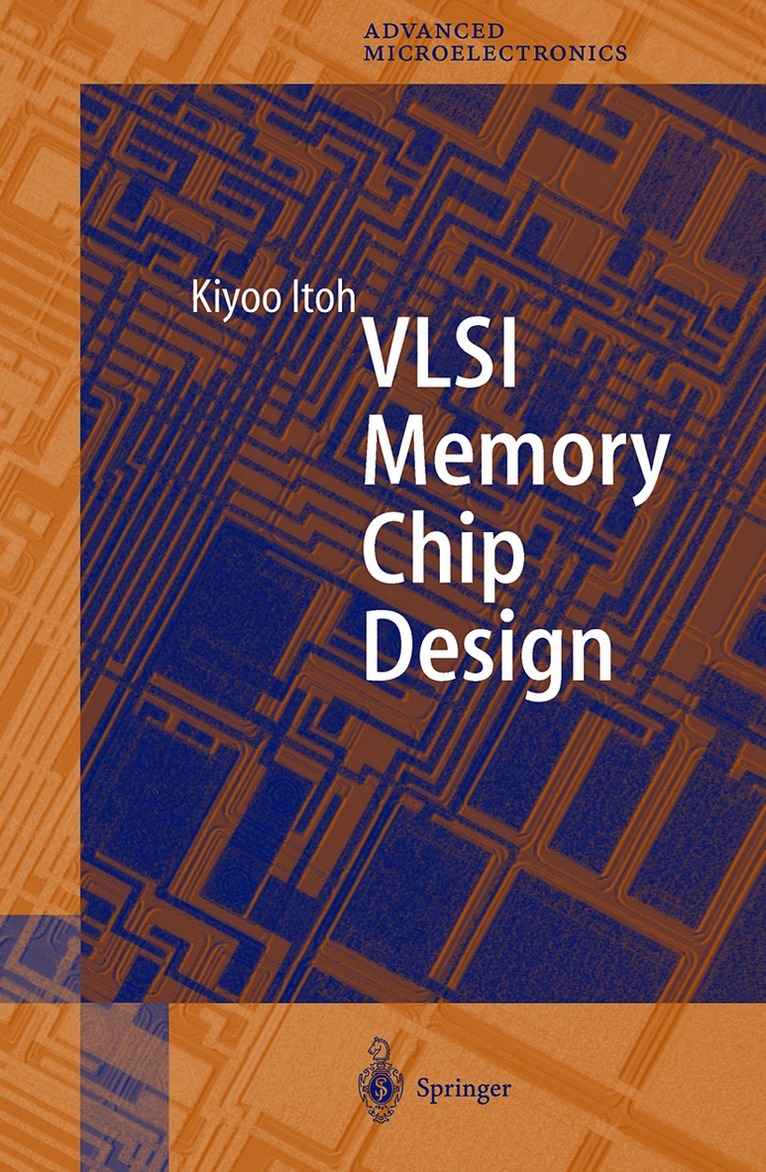
    VLSI Memory Chip Design

    AvKiyoo Itoh

    Inbunden, Engelska, 2001

    Del i serien Springer Series in Advanced Microelectronics

    2 364 kr

    Beställningsvara. Skickas inom 10-15 vardagar. Fri frakt över 249 kr.

    Fler format och utgåvor

    Häftad

    2 209 kr

    E-bok

    2 359 kr

    Beskrivning

    The VLSI memory era truly began when the first production of semiconduc­ tor memory was announced by IBM and Intel in 1970. The announcement had a profound impact on my research at Hitachi Ltd. , and I was forced to change fields: from magnetic thin film to semiconductor memory. This change was so exceptionally sudden and difficult, I feIt like a victim of fate. Looking back, however, I realize how fortunate I was. I have witnessed an unprecedented increase in memory capacity (DRAM, for example, has had a 6-order increase in the last three decades - from the 1-Kb level in 1970 to the 1-Gb level today). I have contributed to this progress with full involvement in memory-chip development over my career. Such rapid progress would have been impossible without many of the inventions and innovative technologies, and without the effort of many talented people. Unfortunately, few systematic books on memory-chip design have been written by experts. Tliis is a result of two factors: the difficulty of involving university professors because of rapidly changing technology requiring huge investments and development resources, and a shortage of time on the part of chip designers in industry due to severe competition in the memory-chip business. Therefore, LSI memory-chip design has been isolated from the outside, preventing a deeper understanding of the technology. This book is based on my 30-year memory-chip (particularly DRAM) design career.

    Produktinformation

    • Utgivningsdatum:2001-03-13
    • Mått:155 x 235 x undefined mm
    • Format:Inbunden
    • Språk:Engelska
    • Serie:Springer Series in Advanced Microelectronics
    • Antal sidor:495
    • Förlag:Springer-Verlag Berlin and Heidelberg GmbH & Co. KG
    • ISBN:9783540678205

    Utforska kategorier

    • Elektronik och kommunikationer inom Naturvetenskap och teknik
    • Systemvetenskap och AI inom Data och IT

    Innehållsförteckning

    • 1. An Introduction to Memory Chip Design.- 2. The Basics of RAM Design and Technology.- 3. DRAM Circuits.- 4. High Signal-to-Noise Ratio DRAM Design and Technology.- 5. On-Chip Voltage Generators.- 6. High-Performance Subsystem Memories.- 7. Low-Power Memory Circuits.- 8. Ultra-Low-Voltage Memory Circuits.- References.