• Fri frakt över 249 kr
  • •
  • Snabba leveranser
  • •
  • Billiga böcker
Kundservice

Du är på sajten för privatpersoner.

Företag, bibliotek eller offentlig verksamhet?

Du handlar på classic.bokus.com, där alla dina funktioner finns intakta.
Till classic.bokus.com
Bokus logotyp. Gå till startsidan.
  • Erbjudanden
  • Nyheter
  • Student
  • Topplistor
  • Barn & ungdom
  • Bokus Play
  • E-böcker
  • Pocketböcker
  • Spel & pussel

10% rabatt på allt med kod: NYSTART10 →

Sidfot

Mina sidor

    Hjälp

    • Kundservice
    • Vanliga frågor och svar
    • Frakt och leverans
    • Retur vid ångerrätt
    • Reklamera vara
    • Betalning
    • Köpvillkor
    • Allmänna villkor
    • Information om webbplatsens tillgänglighet

    Om Bokus

    • Om oss
    • Pressrum
    • För studenter
    • För företag
    • För bibliotek och offentlig verksamhet
    • För leverantörer
    • Hållbarhet

    Populärt

    • Aktuella erbjudanden
    • Presentkort
    • Studentlitteratur
    • Nya böcker
    • Topplistor
    • Signerade böcker
    • Engelska böcker

    Inspiration

    • Boktips
    • BookTok
    • Populära bokserier
    • Barnbokskaraktärer
    • Populära författare
    Logotyp för Bokus
    Följ oss på Facebook (extern länk)Följ oss på Instagram (extern länk)Följ oss på YouTube (extern länk)Följ oss på TikTok (extern länk)
    bokus @ CookiesAnpassa cookiesIntegritetspolicyKöpvillkor
    Till Citymail hemsida (extern länk)Till Budbee hemsida (extern länk)Till Postnord hemsida (extern länk)Till Schenker hemsida (extern länk)Till Early Bird hemsida (extern länk)Till Walleys hemsida (extern länk)
    1. Data och IT
    2. Systemvetenskap och AI

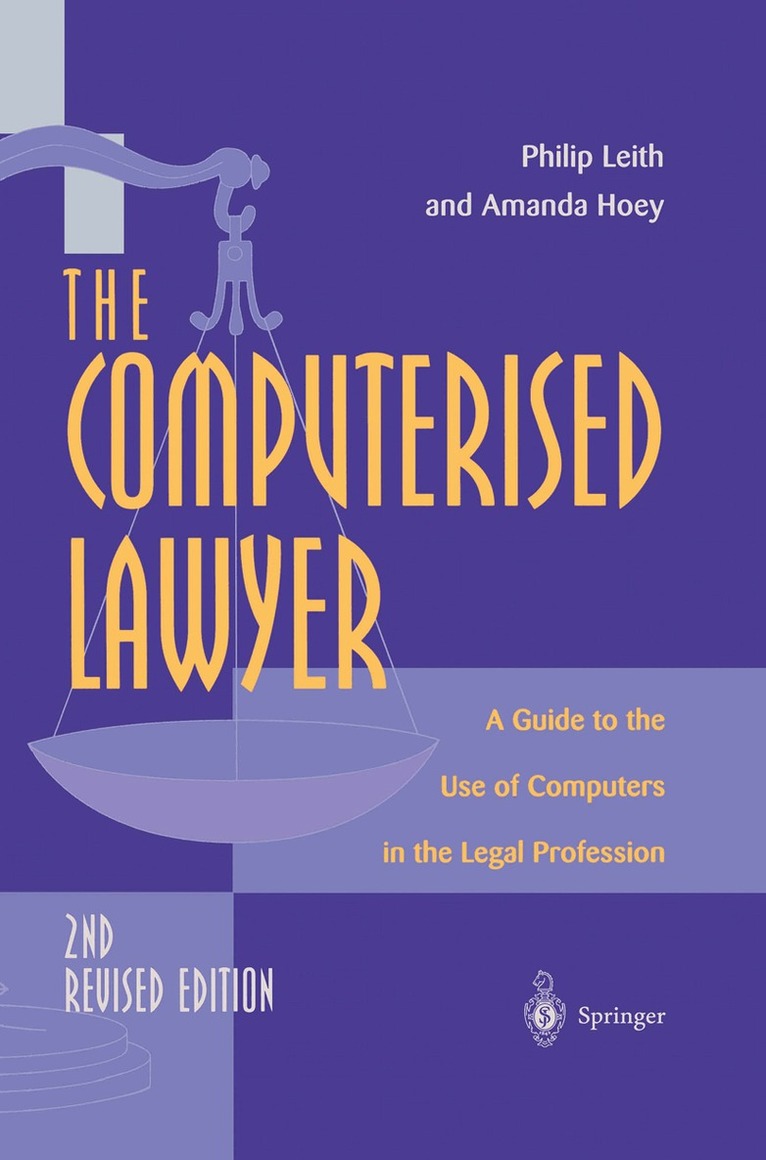
    Computerised Lawyer

    A Guide to the Use of Computers in the Legal Profession

    AvPhilip Leith,Amanda Hoey

    Häftad, Engelska, 1997

    503 kr

    Beställningsvara. Skickas inom 10-15 vardagar. Fri frakt över 249 kr.

    Fler format och utgåvor

    E-bok

    1 046 kr

    Beskrivning

    Thesecondeditionofthis workdemonstrates how substantiallythe field ofcomputers and law has moved. In the first edition, some 78 pages were givenover to the description ofhardwareand software description - almost an 'introduction to computing' for lawyers. Now, in this edition, the general expertise which exists amongst lawyers and the availability ofgood, easily assimilated information concerning the new technologies allows us to minimise this kind of material and move over to more substantive issues. Students no longer have to be told where the 'return' key is, and lawyers are aware of, for example, practice management software. Not only is the general level of understanding greater, but the computer itself has substantiallydeveloped, partlythroughbecomingmore power- ful for lesscost, and partly through the communications revolution known as the 'Internet'. Thishas allowed us to develop areas ofthe first edition which were not looked at due to space reasons: the result is acompletelydifferentbook. The preface to the first introduction made mention of the nega- tive view whichlaw teachers generallyhad ofthe role ofcomputers and law within the curriculum.This has changed drastically and it isnow almost universally the case that law schoolsencourage com- puter literacy amongst students and almost all staff are computer literate. This student literacy is seen as a skill for a future career, as well as a skill required by the law student during their education.

    Produktinformation

    • Utgivningsdatum:1997-11-26
    • Mått:155 x 235 x 21 mm
    • Vikt:569 g
    • Format:Häftad
    • Språk:Engelska
    • Antal sidor:361
    • Upplaga:2
    • Förlag:Springer-Verlag Berlin and Heidelberg GmbH & Co. KG
    • ISBN:9783540761419

    Utforska kategorier

    • Systemvetenskap och AI inom Data och IT
    • Juristyrken inom Juridik

    Innehållsförteckning

    • 1 An introduction to the PC.- 2 Handling legal information.- 3 Primary legal information.- 4 The legal information marketplace.- 5 Technology and the criminal justice system.- 6 Management: the law office.- 7 Management: the court.- 8 Advocacy.- 9 Public access to law and legal information.- 10 Legal education.- 11 From codification to logical dialectic.- 12 Artificial intelligence.- 13 Information and law.- References.