E-bok, Engelska, 2008
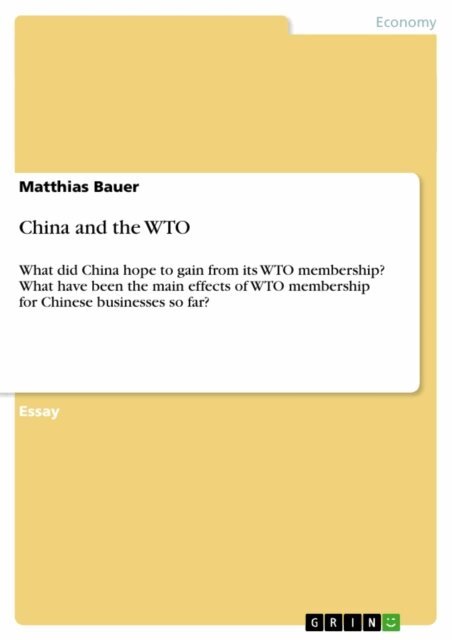
China and the WTO
196 kr
Läs direkt i Bokus Reader – eller ladda ned till din enhet (PDF kräver ofta zoom och scroll på små skärmar).
Beskrivning
Essay from the year 2007 in the subject Business economics - General, grade: 1,3, University of Hull (Business School ), course: International Business, language: English, abstract: After the formal acceptance of China to the World Trade Organization (WTO) on 11 December in 2001, the majority of Chinese and Western press praised the mammoth progress in the ambition to worldwide international free trade (Solinger, 2003). Mike Moore, the former Director-General of the WTO, proclaimed the advantages of China's access to the WTO in an acutely optimistic way: "e;The benefits for China are clear. Opening its markets to foreign trade and investment will make it richer."e; (Moore, 2000). The Chinese government also perceived the potential advantages for domestic economy. On the one hand foreign trading partners would enlarge their business activi-ties in China, if China's authorities and businesses would operate within agreed rules and standards. Thus the increasing trade revenues could stimulate economic growth and development. On the other hand China could increase its political power by verifying to be a member of the community of the great trading nations which further would encour-age the Chinese as well as the Asian influence on world's policy on trade (Holton; Lin, 1998). The entry to the WTO exerts great impact on China s businesses; small and medium sized firms as well as on state-owned enterprises. The Chinese companies more and more become element of international added value chains. International competition influences the efficiency of companies and privatization not stops in front of the doors of state companies. The paper will present what it took China to join the WTO and point out the main effects for the Chinese manufacture, financial and agriculture sector.
Produktinformation
- Utgivningsdatum: 2008-04-21
- Språk: Engelska
- Filformat: PDF
- Kopieringsskydd: LCP
- ISBN: 9783638038447
- Förlag: GRIN Verlag
Utforska kategorier
Betyg & recensioner
0 recensioner
Inga recensioner tillgängliga.