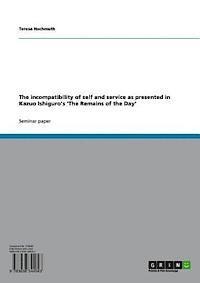
E-bok, Engelska, 2005
incompatibility of self and service as presented in Kazuo Ishiguro's 'The Remains of the Day'
188 kr
Läs direkt i Bokus Reader – eller ladda ned till din enhet (PDF kräver ofta zoom och scroll på små skärmar).
Beskrivning
Seminar paper from the year 2003 in the subject English Language and Literature Studies - Literature, grade: 1,3 (A), , language: English, abstract: Next, as we’re Servants, Masters at our HandsExpect Obedience to all just Commands;[…] Purchas’d by annual Wages, Cloaths and Meat,Theirs is our Time, our Hands, our Head, our Feet:We think, design and act at their Command,And, as their Pleasure varies, walk or stand […].’1This stanza of the poem ‘Servitude’, written by footman Robert Dodsley in 1728 incorporates the common image of the ideal servant at that time – and this may seem rather shocking to a reader at the beginning of the 21st century. Nowadays, handing over such a large part of an individual’s personal freedom to a ‘master’ seems very problematic or even unthinkable. Especially to let one’s ‘Head’ be ‘purchas’d’ and to think at another person’s ‘Command’, that is to give up one’s freedom of thought, contradicts basic human rights, which are highly valued in today’s society. It becomes clear that servitude implies more than just dusting portraits, polishing silver and setting tables - namely restrictions of individual rights, of personal life and consequently of the servant’s sense of self. This topic has recently not only been discussed within historical and sociological research but also treated in film and literature, examples being Robert Altman’s Gosford Park, Alias Grace by Margaret Atwood, Marianne Frederiksson’s Hannah’s Daughter and Margaret Foster’s Lady’s Maid.The butler Stevens is the protagonist in Kazuo Ishiguro’s novel The Remains of the Day. He tells about his service in a distinguished English manor, Darlington Hall, during the first half of the 20th century. Stevens’s life in servitude is characterised by the complete lack of a personal realm. By examining the character Stevens, I want to determine which effects this incompatibility of self and service has on the individual. To begin with, I will briefly sketch the image of the ideal servant, as described by Stevens. By explaining the core values he is expected to incorporate I aim at determining where this incompatibility stems from in the first place. Following, the consequences this concept of domestic service has on the servant’s social relationships (both to his fellow servants, family, friends and to his master) will be analysed. Finally, I want to establish what impact it has on the servant himself, his sense of self and his personal identity.
Produktinformation
- Utgivningsdatum: 2005-01-27
- Språk: Engelska
- Filformat: PDF
- Kopieringsskydd: LCP
- ISBN: 9783638344043
- Förlag: GRIN Verlag
Utforska kategorier
Betyg & recensioner
0 recensioner
Inga recensioner tillgängliga.