• Fri frakt över 249 kr
  • •
  • Snabba leveranser
  • •
  • Billiga böcker
Kundservice

Du är på sajten för privatpersoner.

Företag, bibliotek eller offentlig verksamhet?

Du handlar på classic.bokus.com, där alla dina funktioner finns intakta.
Till classic.bokus.com
Bokus logotyp. Gå till startsidan.
  • Erbjudanden
  • Student
  • Topplistor
  • Barn & ungdom
  • Bokus Play
  • E-böcker
  • Ljudböcker
  • Pocketböcker
  • Spel och pussel

5% studentrabatt – använd koden KURSBOK27 →

Sidfot

Mina sidor

    Hjälp

    • Kundservice
    • Vanliga frågor och svar
    • Frakt och leverans
    • Retur vid ångerrätt
    • Reklamera vara
    • Betalning
    • Köpvillkor
    • Allmänna villkor
    • Information om webbplatsens tillgänglighet

    Om Bokus

    • Om oss
    • Pressrum
    • För studenter
    • För företag
    • För bibliotek och offentlig verksamhet
    • För leverantörer
    • Hållbarhet

    Populärt

    • Aktuella erbjudanden
    • Presentkort
    • Studentlitteratur
    • Nya böcker
    • Topplistor
    • Signerade böcker
    • Engelska böcker

    Inspiration

    • Boktips
    • BookTok
    • Barnbokskaraktärer
    • Populära författare
    Logotyp för Bokus
    Följ oss på Facebook (extern länk)Följ oss på Instagram (extern länk)Följ oss på YouTube (extern länk)Följ oss på TikTok (extern länk)
    bokus @ CookiesAnpassa cookiesIntegritetspolicyKöpvillkor
    Till Citymail hemsida (extern länk)Till Budbee hemsida (extern länk)Till Postnord hemsida (extern länk)Till Schenker hemsida (extern länk)Till Early Bird hemsida (extern länk)Till Walleys hemsida (extern länk)
    1. Data och IT
    2. Systemvetenskap och AI

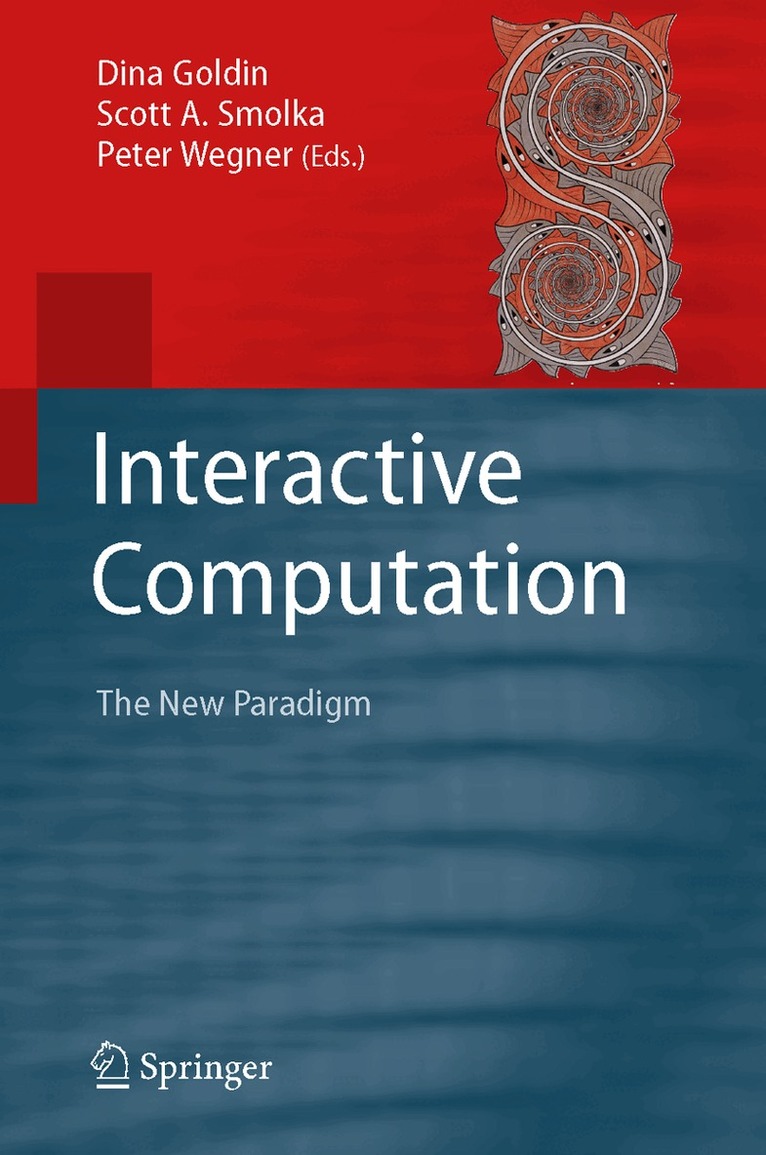
    Interactive Computation

    The New Paradigm

    AvDina Goldin,Scott A. Smolka

    Häftad, Engelska, 2010

    1 662 kr

    Beställningsvara. Skickas inom 10-15 vardagar. Fri frakt över 249 kr.

    Beskrivning

    The interaction paradigm provides a new conceptualization of computational phenomena that emphasizes interaction rather than algorithms, thus reflecting the shift in technology from number-crunching on mainframes to distributed intelligent networks with graphical user interfaces. Editors Goldin, Smolka and Wegner have structured 18 contributions from distinguished researchers into four sections: "Introduction", consisting of three chapters that explore and summarize the fundamentals of interactive computation; "Theory" with six chapters, each discussing a specific aspect of interaction; "Applications" showing in five chapters how this principle is applied in various subdisciplines of computer science; and "New Directions" presenting four multidisciplinary applications beyond computer science. The book challenges traditional Turing machine-based answers to fundamental questions relating to problem solving and the scope of computation. Assuming the reader has only an undergraduate-level background in computer science, it serves as an introduction to this increasingly important discipline.

    Produktinformation

    • Utgivningsdatum:2010-10-14
    • Mått:155 x 235 x 28 mm
    • Vikt:756 g
    • Format:Häftad
    • Språk:Engelska
    • Antal sidor:487
    • Förlag:Springer-Verlag Berlin and Heidelberg GmbH & Co. KG
    • ISBN:9783642071027

    Utforska kategorier

    • Systemvetenskap och AI inom Data och IT
    • Människa – datorinteraktion inom Data och IT
    • Programmeringsböcker inom Data och IT

    Mer om författaren

    Dina Goldin is an adjunct faculty member in the computer science department at Brown University. Her work on models of interactive computation has been published in leading journals. She is the Information Director and member of editorial board of ACM Computing Reviews, and a senior member of the IEEE. She is also co-organizer of a new series of bi-annual workshops on the foundations of interactive computing (FInCo), founded in 2005. Scott Smolka is a professor of computer science at Stony Brook University. His research interests include concurrency theory, model checking, and systems biology, and he has over 100 refereed publications in these areas. He is on the editorial board of Software Tools for Technology, Formal Methods in System Design, and Transactions on Computational Logic. He is also co-founder and president of Reactive Systems, Inc., which makes the Reactis tool suite for the automated testing and validation of embedded control software. Peter Wegner is professor emeritus of computer science at Brown University. During his distinguished career, Peter has written or edited over a dozen books in the areas of programming languages and software engineering, and has held a number of leading editorial positions. He was awarded the Austrian Medal of Honor (Ehrenkreuz) for his scientific contributions, and an ACM Distinguished Service Award for leadership in charting research directions for computer science.

    Recensioner i media

    From the reviews: "It is interesting that a book on interactive computation is constructed as a large cooperative effort involving 31 contributors; three of them also performed the editing task. ... Each section appears to be self contained--one may read in detail a chapter of personal interest in the middle of the book without having reference other material in the book. Each chapter has an excellent self-contained collection of references. ... Summing Up: Recommended. Upper-division undergraduates through professionals." (J. Beidler, CHOICE, Vol. 44 (9), May, 2007)

    Innehållsförteckning

    • Turing, Computing and Communication.- Computing and Interaction.- Principles of Interactive Computation.- Theory.- A Theory of System Interaction: Components, Interfaces, and Services.- Verification of Open Systems.- A Theory of Interactive Computation.- Online Algorithms.- Interactive Algorithms 2005 with Added Appendix.- Computability Logic: A Formal Theory of Interaction.- Applications.- Human-Computer Interaction.- Modeling Web Interactions and Errors.- Composition of Interacting Computations.- From Information-Centric to Experiential Environments.- Modeling and Simulation of Large Biological, Information and Socio-Technical Systems: An Interaction Based Approach.- New Directions.- The Multidisciplinary Patterns of Interaction from Sciences to Computer Science.- Coordination.- Social Interaction, Knowledge, and Social Software.- Interaction, Computation, and Education.