• Fri frakt över 249 kr
  • •
  • Snabba leveranser
  • •
  • Billiga böcker
Kundservice

Du är på sajten för privatpersoner.

Företag, bibliotek eller offentlig verksamhet?

Du handlar på classic.bokus.com, där alla dina funktioner finns intakta.
Till classic.bokus.com
Bokus logotyp. Gå till startsidan.
  • Erbjudanden
  • Nyheter
  • Student
  • Topplistor
  • Barn & ungdom
  • Bokus Play
  • E-böcker
  • Pocketböcker
  • Spel & pussel

10% rabatt på allt med kod NYSTART10 →

Sidfot

Mina sidor

    Hjälp

    • Kundservice
    • Vanliga frågor och svar
    • Frakt och leverans
    • Retur vid ångerrätt
    • Reklamera vara
    • Betalning
    • Köpvillkor
    • Allmänna villkor
    • Information om webbplatsens tillgänglighet

    Om Bokus

    • Om oss
    • Pressrum
    • För studenter
    • För företag
    • För bibliotek och offentlig verksamhet
    • För leverantörer
    • Hållbarhet

    Populärt

    • Aktuella erbjudanden
    • Presentkort
    • Studentlitteratur
    • Nya böcker
    • Topplistor
    • Signerade böcker
    • Engelska böcker

    Inspiration

    • Boktips
    • BookTok
    • Populära bokserier
    • Barnbokskaraktärer
    • Populära författare
    Logotyp för Bokus
    Följ oss på Facebook (extern länk)Följ oss på Instagram (extern länk)Följ oss på YouTube (extern länk)Följ oss på TikTok (extern länk)
    bokus @ CookiesAnpassa cookiesIntegritetspolicyKöpvillkor
    Till Citymail hemsida (extern länk)Till Budbee hemsida (extern länk)Till Postnord hemsida (extern länk)Till Schenker hemsida (extern länk)Till Early Bird hemsida (extern länk)Till Walleys hemsida (extern länk)
    1. Psykologi och pedagogik
    2. Psykologi

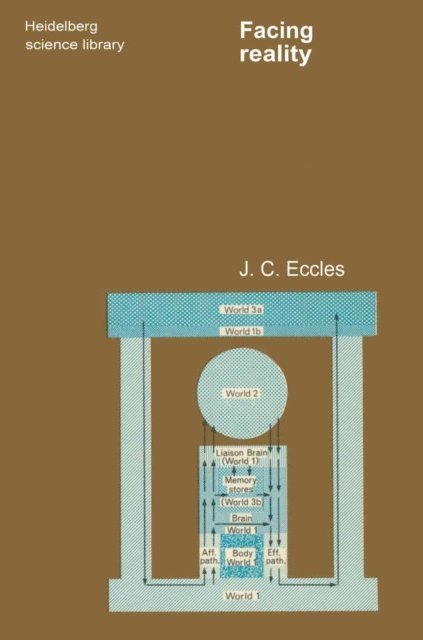
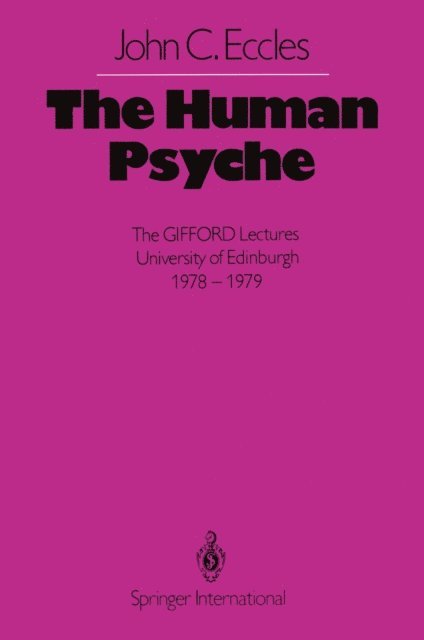
    Human Mystery

    The GIFFORD Lectures University of Edinburgh 1977–1978

    AvJ. C. Eccles

    Häftad, Engelska, 2012

    530 kr

    Beställningsvara. Skickas inom 10-15 vardagar. Fri frakt över 249 kr.

    Beskrivning

    Under the terms of the endowment by Lord Gifford, the Gifford Lectures have been an annual event in the University of Edin­ burgh since 1887, and also in three other Scottish universities. According to the will of Lord Gifford they were set up " ... to promote and diffuse the study of Natural Theology in the widest sense of that term - in other words, the knowledge of God". The assignment is for ten lectures, and I delivered them from 20 February, to 13 March, 1978. I chose the theme of the Human Mystery because I believe that it is vitally important to emphasize the great mysteries that confront us when, as scientists, we try to understand the natural world including ourselves. There has been a regrettable tendency of many scientists to claim that science is so powerful and all pervasive that in the not too distant future it will provide an explantation in principle of all phenomena in the world of nature including man, even of human consciousness in all its manifesta­ tions. When that is accomplished scientific materialism will then be in the position of being an unchallengable dogma accounting for all experience.
    Produktinformation

    • Utgivningsdatum:2012-04-09
    • Mått:155 x 235 x 16 mm
    • Vikt:429 g
    • Format:Häftad
    • Språk:Engelska
    • Antal sidor:258
    • Förlag:Springer-Verlag Berlin and Heidelberg GmbH & Co. KG
    • ISBN:9783642492518

    Utforska kategorier

    • Psykologi inom Psykologi och pedagogik

    Innehållsförteckning

    • Lecture 1 The Theme of Natural Theology: How the Challenge Will Be Met.- Synopsis and Introduction.- 1.1 Sherrington’s Gifford Lectures.- 1.2 Subsequent Contributions on the General Theme of Sherrington’s Lectures.- 1.3 Development of the Theme for the Present Lectures.- 1.4 Philosophical Basis of the Present Lectures.- Lecture 2 Origin and Evolution of the Universe.- Synopsis and Introduction.- 2.1 The Big Bang.- 2.2 Formation of Galaxies and Life Histories ofStars.- 2.3 Cooking of the Elements.- 2.4 Galaxies in Space.- 2.5 Future of the Universe and Gravitational Collapse.- 2.6 The Question of Genesis.- Lecture 3 Planetary System and Planet Earth.- Synopsis.- 3.1 The Solar System.- 3.2 Frequency of Planetary Systems.- 3.3 Fitness of Other Planets for Supporting Life.- 3.4 Conclusions.- Lecture 4 Origin of Life and Biological Evolution.- Synopsis.- 4.1 What is Known to Have Happened: The Fossil Record.- 4.2 Explantations of Fossil Records by Evolutionary Theories.- 4.3 General Considerations.- 4.4 Extraterrestrial Life?.- Lecture 5 Human Evolution: The Story of Cerebral Development.- Synopsis and Introduction.- 5.1 What is Known to Have Happened: The Fossil Record.- 5.2 Evaluation of Human Cerebral Development.- 5.3 Selection Pressures and the Pre-Eminence of Linguistic Development.- 5.4 Theory of Biological Evolution.- Lecture 6 Cultural Evolution With Language and Values: The Human Person.- Synopsis.- 6.1 The World of Culture (World 3).- 6.2 Evolution of Culture.- 6.3 Cultural Evolution and World 3.- 6.4 World 2: The World of Self-Consciousness.- 6.5 Relationship of Biological Evolution to Cultural Evolution.- 6.6 Values - Altruism.- 6.7 The Future for Biological and Cultural Evolution.- Lecture 7 From the General to the Particular: The Creation of a Self.-Synopsis and Introduction.- 7.1 Building of the Structure.- 7.2 Development of the Functional Performance of the Human Brain.- 7.3 Participation in Culture: The Influence ofWorld3.- 7.4 Interaction of Worlds 2 and 3 in the Creation of the Self.- Lecture 8 Structure of the Neocortex: Conscious Perception.- Synopsis.- 8.1 Structure of the Neocortex.- 8.2 Conscious Perception.- Lecture 9 Learning and Memory.- Synopsis and Introduction.- 9.1 Structural and Functional Changes Possibly Related to Memory.- 9.2 Role of the Self-Conscious Mind in Short-Term Memory.- 9.3 Neural Pathways Concerned in Laying Down Long-Term Memories.- 9.4 Memory Retrieval.- 9.5 Duration of Memories.- 9.6 Retrograde Amnesia.- 9.7 Conclusions.- Lecture 10 The Mind-Brain Problem: Experimental Evidence and Hypothesis.- Synopsis and Introduction.- 10.1 Dualist-Interactionist Hypothesis.- 10.2 Radical Dualist-Interactionist Theory of Brain and the Self-Conscious Mind.- 10.3 Hypothesis of Cortical Modules and the Self-Conscious Mind.- 10.4 Conclusions.- Epilogue.- References.