
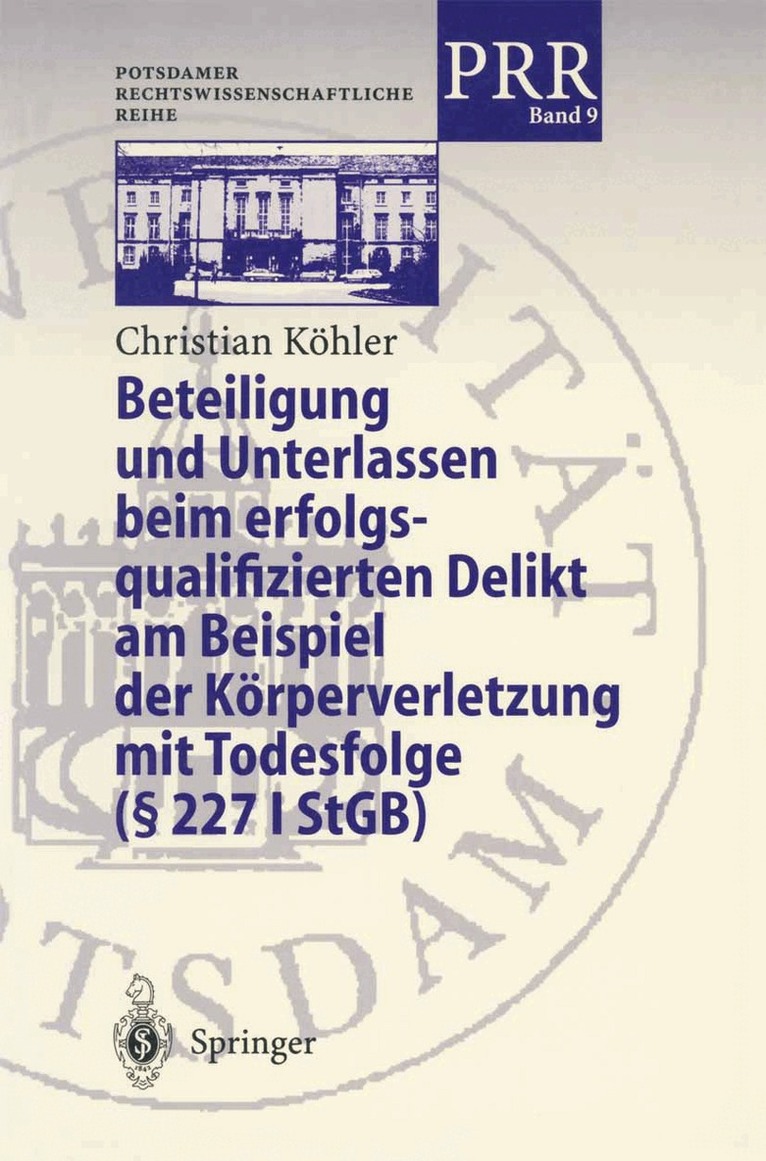
Legal Protection against Breaches of Duty on the Part of the German Works Council — A Fata Morgana?
1 014 kr
Beställningsvara. Skickas inom 10-15 vardagar. Fri frakt över 249 kr.
Fler format och utgåvor
Beskrivning
In the working world, the weal and woe of the largely defenseless individual is vested in the hands of the collective powers. The trust placed in these powers stands in stark contrast to the widespread distrust of the democratic constitutional state. While legal protection vis-a-vis the state has been extended in a very so phisticated and flexible manner, often to an extreme degree, the question of how the employee and the employer can be protected against breaches of duty on the part of the works council (Betriebsrat) under the German industrial govemance laws has yet to be resolved. This is a highly relevant issue of great social and po litical explosiveness. The question is how much latitude the collective powers should have to act according to their own discretion without being compelled to answer not only to the employees, but also to the employers as weIL In light ofthe legal protection that has been developed for the past hundred years and more, and particularly the continued expansion of the individual's legal protection vis-a-vis the state powers since the Basic Law (Grundgesetz) entered into force, the control held by the intennediary powers, and thus also the works council, appears almost anachronistic. In the past ten years this deficiency in the legal protection provided under the industrial govemance laws has increasingly forced its way into the line ofvision ofthe Gennan labor law scholars.
Produktinformation
Utforska kategorier
Innehållsförteckning
Hoppa över listan

Mer från samma serie
Del 12
Beendigung des Beamtenverhältnisses und Übertragbarkeit anderer Ämter bei Dienstunfähigkeit
Dietrich Plöckhahn
Häftad, 1999
807 kr
Beteiligung und Unterlassen beim erfolgsqualifizierten Delikt am Beispiel der Körperverletzung mit Todesfolge (§ 2271 StGB)
Christian Köhler
Häftad, 2000
665 kr
Hoppa över listan

Du kanske också är intresserad av

Legal Protection against Breaches of Duty on the Part of the German Works Council — A Fata Morgana?
Detlev W. Belling
Inbunden, 2000
1 014 kr
Legal Protection against Breaches of Duty on the Part of the German Works Council - A Fata Morgana?
Detlev W. Belling
E-bok
20131 313 kr
Del 20
Vom Individuellen Zum Kollektiven Verbraucherschutz
Dieter C Umbach, Daniel Dettling
Häftad, 2004
469 kr
Del 14
Del 17
Beteiligungsrechte Der Personalvertretung Bei Der Einstellung Und Kuendigung Von Wissenschaftlichen Mitarbeitern an Universitaeten
Bettina Wehrisch, Dieter C Umbach
Häftad, 2003
525 kr
Del 13