• Fri frakt över 249 kr
  • •
  • Snabba leveranser
  • •
  • Billiga böcker
Kundservice

Du är på sajten för privatpersoner.

Företag, bibliotek eller offentlig verksamhet?

Du handlar på classic.bokus.com, där alla dina funktioner finns intakta.
Till classic.bokus.com
Bokus logotyp. Gå till startsidan.
  • Erbjudanden
  • Nyheter
  • Student
  • Topplistor
  • Barn & ungdom
  • Bokus Play
  • E-böcker
  • Pocketböcker
  • Spel & pussel

10% rabatt på allt med kod NYSTART10 →

Sidfot

Mina sidor

    Hjälp

    • Kundservice
    • Vanliga frågor och svar
    • Frakt och leverans
    • Retur vid ångerrätt
    • Reklamera vara
    • Betalning
    • Köpvillkor
    • Allmänna villkor
    • Information om webbplatsens tillgänglighet

    Om Bokus

    • Om oss
    • Pressrum
    • För studenter
    • För företag
    • För bibliotek och offentlig verksamhet
    • För leverantörer
    • Hållbarhet

    Populärt

    • Aktuella erbjudanden
    • Presentkort
    • Studentlitteratur
    • Nya böcker
    • Topplistor
    • Signerade böcker
    • Engelska böcker

    Inspiration

    • Boktips
    • BookTok
    • Populära bokserier
    • Barnbokskaraktärer
    • Populära författare
    Logotyp för Bokus
    Följ oss på Facebook (extern länk)Följ oss på Instagram (extern länk)Följ oss på YouTube (extern länk)Följ oss på TikTok (extern länk)
    bokus @ CookiesAnpassa cookiesIntegritetspolicyKöpvillkor
    Till Citymail hemsida (extern länk)Till Budbee hemsida (extern länk)Till Postnord hemsida (extern länk)Till Schenker hemsida (extern länk)Till Early Bird hemsida (extern länk)Till Walleys hemsida (extern länk)
    1. Naturvetenskap och teknik
    2. Matematik och naturvetenskap
    3. Kemi

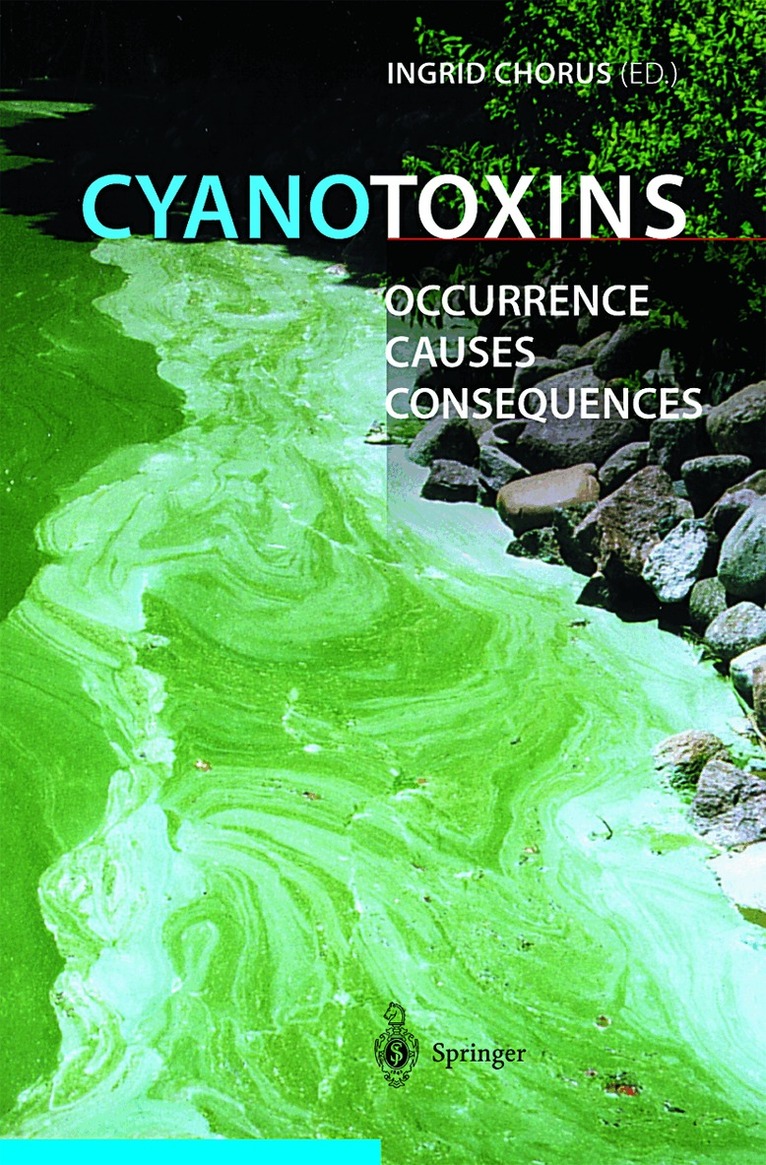
    Cyanotoxins

    Occurrence, Causes, Consequences

    AvIngrid Chorus

    Häftad, Engelska, 2011

    1 086 kr

    Beställningsvara. Skickas inom 10-15 vardagar. Fri frakt över 249 kr.

    Beskrivning

    Toxic cyanobacteria are increasingly recognised as a potential hazard in water for human use. The recent availability of methods for quantitative screening is leading to a surge of research on their occurrence. This book presents a novel compilation of extensive screening results showing the cyanotoxin levels that may be expected when certain taxa dominate. These results indicate cyanotoxins to be the most widespread among the chemicals of concern in water used for drinking and recreation. It further combines field data with results from laboratory culture experiments to suggest a unifying view of how environmental factors control the cyanotoxin levels in natural waters. A practical section is dedicated to the exposure of humans through drinking-water and recreation.

    Produktinformation

    • Utgivningsdatum:2011-09-18
    • Mått:155 x 235 x 21 mm
    • Vikt:575 g
    • Format:Häftad
    • Språk:Engelska
    • Antal sidor:357
    • Förlag:Springer-Verlag Berlin and Heidelberg GmbH & Co. KG
    • ISBN:9783642640049

    Utforska kategorier

    • Kemi inom Naturvetenskap och teknik
    • Biologi inom Naturvetenskap och teknik

    Innehållsförteckning

    • 1 Introduction: Cyanotoxins — Research for Environmental Safety and Human Health.- 2 Cyanotoxin Occurrence in Freshwaters.- 2.1 Cyanotoxin Occurrence in Germany.- 2.2 Comparison of Cyanotoxin Occurrence in Different Countries.- 2.3 Release and Persistence of Microcystins in Natural Waters.- 3 Factors Controlling Cellular Microcystin Content.- 3.1 Effects of Light and Nutrient Supply on Growth and Microcystin Content of Different Strains of Microcystis aeruginosa.- 3.2 Light-Limited Growth and Microcystin Content of Planktothrix agardhii and Microcystis aeruginosa in Turbidostats.- 3.3 Importance of Energy Charge for Microcystin Production.- 3.4 Characterization of Microcystin Synthetase Genes in Microcystis aeruginosa.- 4 Factors Affecting Cyanotoxin Concentrations in Natural Populations.- 4.1 Microcystin Variants in Microcystis and Planktothrix Dominated Field Samples.- 4.2 Isolation and Characterization of Colony-Forming Microcystis aeruginosa Strains.- 4.3 Environmental Factors an Microcystin Levels in Waterbodies.- 5 Cyanobacterial Toxicity and Human Exposure.- 5.1 Cyanotoxins and Human Health — Overview.- 5.2 Recreational Exposure to Cyanotoxins.- 5.3 Cyanotoxins in Drinking-Water Supplies.- 6 Effects of Microcystis spp. and Selected Cyanotoxins on Freshwater Organisms.- 6.1 Effects of Cyanotoxins on Early Life Stages of Fish and Amphibians.- 6.2 Uptake, Enzyme Effects and Metabolism of Microcystin-LR in Aquatic Organisms.- 6.3 Changes of Fish Behaviour Affected by Microcystin-LR.- 6.4 Responses of Daphnia galeata fed with Microcystis strains with and without Microcystins.- 7 Toxic Effects and Substances in Cyanobacteria other than Microcystins, Anatoxin-a and Saxitoxins.- 7.1 Peptides and Depsipeptides Produced by Cyanobacteria.- 7.2 Significance ofUnidentified Toxic Compounds and Approaches to their Identification.- 7.3 New Cyanobacterial Substances with Bioactive Properties.- 8 Contributions to Toxicity Testing and Toxin Analysis.- 8.1 Testing Cyanobacterial Toxicity with Primary Rat Hepatocyte and Cell-Line Assays.- 8.2 Can the Primary Rat Hepatocyte Assay Replace the Mouse Assay for Microcystin Testing? Validation with “Historic” Samples from the First Survey on Cyanobacterial Toxicity in Germany.- 8.3 Comparative Evaluation of Methods for Assessing Microcystin Concentrations with a Variety of Field Samples.- 8.4 A Fish-Embryo Bioassay for the Assessment of Cyanobacterial Toxicity.- 8.5 Rapid Typing and Structure Determination of Cyanobacterial Peptides Using MALDI-TOF Mass Spectrometry.- 9 Routine Analytical Methods Applied in the German Cyanotox Project.- 9.1 Microcystin Analysis.- 9.2 Cell Counting, Determination of Biovolume and Chlorophyll-a.