• Fri frakt över 249 kr
  • •
  • Snabba leveranser
  • •
  • Billiga böcker
Kundservice

Du är på sajten för privatpersoner.

Företag, bibliotek eller offentlig verksamhet?

Du handlar på classic.bokus.com, där alla dina funktioner finns intakta.
Till classic.bokus.com
Bokus logotyp. Gå till startsidan.
  • Erbjudanden
  • Nyheter
  • Student
  • Topplistor
  • Barn & ungdom
  • Bokus Play
  • E-böcker
  • Pocketböcker
  • Spel & pussel

Må bättre, för mindre! Upp till 50% rabatt på hälsoböcker

Sidfot

Mina sidor

    Hjälp

    • Kundservice
    • Vanliga frågor och svar
    • Frakt och leverans
    • Retur vid ångerrätt
    • Reklamera vara
    • Betalning
    • Köpvillkor
    • Allmänna villkor
    • Information om webbplatsens tillgänglighet

    Om Bokus

    • Om oss
    • Pressrum
    • För studenter
    • För företag
    • För bibliotek och offentlig verksamhet
    • För leverantörer
    • Hållbarhet

    Populärt

    • Aktuella erbjudanden
    • Presentkort
    • Studentlitteratur
    • Nya böcker
    • Topplistor
    • Signerade böcker
    • Engelska böcker

    Inspiration

    • Boktips
    • BookTok
    • Populära bokserier
    • Barnbokskaraktärer
    • Populära författare
    Logotyp för Bokus
    Följ oss på Facebook (extern länk)Följ oss på Instagram (extern länk)Följ oss på YouTube (extern länk)Följ oss på TikTok (extern länk)
    bokus @ CookiesAnpassa cookiesIntegritetspolicyKöpvillkor
    Till Citymail hemsida (extern länk)Till Budbee hemsida (extern länk)Till Postnord hemsida (extern länk)Till Schenker hemsida (extern länk)Till Early Bird hemsida (extern länk)Till Walleys hemsida (extern länk)
    1. Ekonomi och Ledarskap
    2. Nationalekonomi
    3. Internationell ekonomi

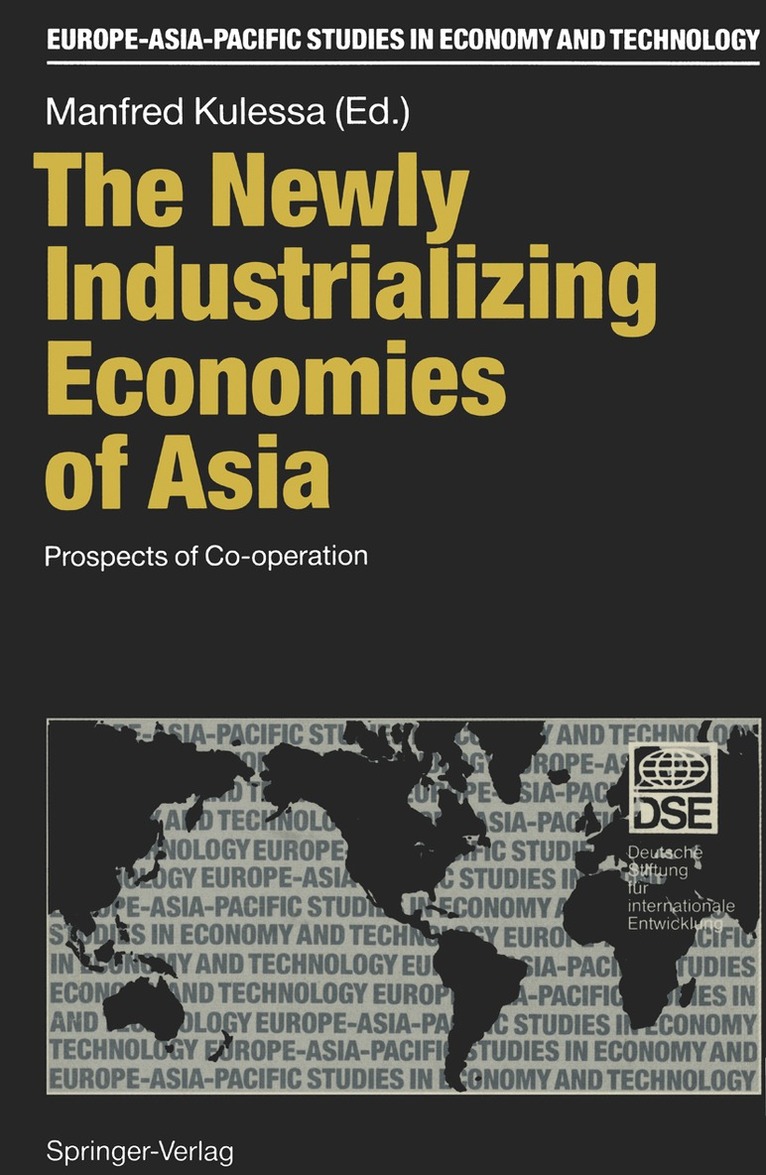
    Newly Industrializing Economies of Asia

    Prospects of Co-operation

    AvManfred Kulessa,Manfred Kulessa

    Häftad, Engelska, 2012

    Del i serien Europe-Asia-Pacific Studies in Economy and Technology

    1 119 kr

    Beställningsvara. Skickas inom 10-15 vardagar. Fri frakt över 249 kr.

    Beskrivning

    Where development is concerned, our language and perhaps our way of thinking often ap­ pear somewhat distorted. If anything, the Asian economies with their most impressive and dynamic growth should logically be called developing countries. Instead, we call them threshold countries, newly industrializing countries (NICs) or newly industrializing eco­ nomies (NIEs), the latter term taking into account the Chinese argument that Hong Kong and Taiwan should not be considered countries. During the eighties, when Latin American NICs became the main victims of the debt crisis, the NIEs of East Asia (EANIEs), the little tigers or dragons, presented most impres­ sive examples of growth through orientation to world trade, fitting well into the Japanese 'flying-geese' concept. Naturally, questions were raised as to the reasons for this success, the lessons other countries could draw from it, and the outlook for the future. At the same time, the establis­ hed industrial countries wanted to know what NIE competition might mean for them. In 1988, the OECD published a study entitled "The NIEs -Challenge and Opportunity for OECD Industries". The NIBs had become a fashionable object of research and debate. In Western Europe, where countries are preparing for a period offurtherintegration and East-West cooperation, it seems worth-while to also consider the role ofthe EANIEs and the options for cooperation they represent. Moreover, the NIEs themselves are following development in Europe with some concern and are trying to adjust to the new situation as it emerges.

    Produktinformation

    • Utgivningsdatum:2012-01-19
    • Mått:170 x 242 x 21 mm
    • Vikt:643 g
    • Format:Häftad
    • Språk:Engelska
    • Serie:Europe-Asia-Pacific Studies in Economy and Technology
    • Antal sidor:360
    • Förlag:Springer-Verlag Berlin and Heidelberg GmbH & Co. KG
    • ISBN:9783642757075

    Utforska kategorier

    • Internationell ekonomi inom Ekonomi och Ledarskap

    Innehållsförteckning

    • Summary Report.- One The Asian NIEs and the Asia-Pacific Region.- Country Issues.- Korea: A Newly Industrializing Economy Market Opening, Internationalization and International Cooperation.- Korea 2000: Economic and Social Targets and Development Strategies.- Korea’s Long-Term Trade Prospects and Policies to the Year 2000.- Taiwan: Claims and Strategies towards Europe.- The Case for Taiwan’s Role in the OECD.- The Significance of Taiwan’s Rejoining GATT.- The Hong Kong Economy in a Changing International Economic Environment.- Regional Issues.- Some Reflections on Prospects for Regional Co-operation in the Asian-Pacific Region.- ASEAN Reality and Perspective.- NIE-Japanese Strategic Interdependence in the Pacific Basin.- The East Asian NICs and South Asia Reality.- Thailand and the So-Called NIEs.- Market Forces in the Asian NIEs.- State Intervention, State Involvement and Market Forces — Singapore and South Korea.- The Development of Small and Medium-Sized Enterprises in the Asian NIEs — Business Opportunities for Western Europe?.- Two The Relations between the Asian NIEs and Europe in a Worldwide Perspective.- The NIEs and Major World Economic Issues.- A World Scenario: The Emergence of Three Main Trading Zones The European Community/Japan — East Asia — Pacific/USA — Canada.- The Concept of the International Division of Labour and Principles of Cooperation.- Technology and Global Competition: The Challenge ahead for the NIEs.- NIEs as Models for Establishing a Highly Competitive Industrial Base: What Lessons to Learn?.- The NIEs and Europe.- Europe 1992 and the NIEs.- Recent Trade Patterns between NIEs and Western Europe.- The NIEs Viewed from the German and European Perspectives.- The Ability of the German Economy to Face Opportunities and Challengesof Emerging NIEs.- Recommendations for a European Policy towards the Asian NIEs.- Annexes.- Statistical Country Profiles by Harald Mücke.- Programme of the International Round Table Meeting.- List of Participants and Authors.