• Fri frakt över 249 kr
  • •
  • Snabba leveranser
  • •
  • Billiga böcker
Kundservice

Du är på sajten för privatpersoner.

Företag, bibliotek eller offentlig verksamhet?

Du handlar på classic.bokus.com, där alla dina funktioner finns intakta.
Till classic.bokus.com
Bokus logotyp. Gå till startsidan.
  • Erbjudanden
  • Nyheter
  • Student
  • Topplistor
  • Barn & ungdom
  • Bokus Play
  • E-böcker
  • Pocketböcker
  • Spel & pussel

10% rabatt på allt med kod NYSTART10 →

Sidfot

Mina sidor

    Hjälp

    • Kundservice
    • Vanliga frågor och svar
    • Frakt och leverans
    • Retur vid ångerrätt
    • Reklamera vara
    • Betalning
    • Köpvillkor
    • Allmänna villkor
    • Information om webbplatsens tillgänglighet

    Om Bokus

    • Om oss
    • Pressrum
    • För studenter
    • För företag
    • För bibliotek och offentlig verksamhet
    • För leverantörer
    • Hållbarhet

    Populärt

    • Aktuella erbjudanden
    • Presentkort
    • Studentlitteratur
    • Nya böcker
    • Topplistor
    • Signerade böcker
    • Engelska böcker

    Inspiration

    • Boktips
    • BookTok
    • Populära bokserier
    • Barnbokskaraktärer
    • Populära författare
    Logotyp för Bokus
    Följ oss på Facebook (extern länk)Följ oss på Instagram (extern länk)Följ oss på YouTube (extern länk)Följ oss på TikTok (extern länk)
    bokus @ CookiesAnpassa cookiesIntegritetspolicyKöpvillkor
    Till Citymail hemsida (extern länk)Till Budbee hemsida (extern länk)Till Postnord hemsida (extern länk)Till Schenker hemsida (extern länk)Till Early Bird hemsida (extern länk)Till Walleys hemsida (extern länk)
    1. Kultur
    2. Arkitektur

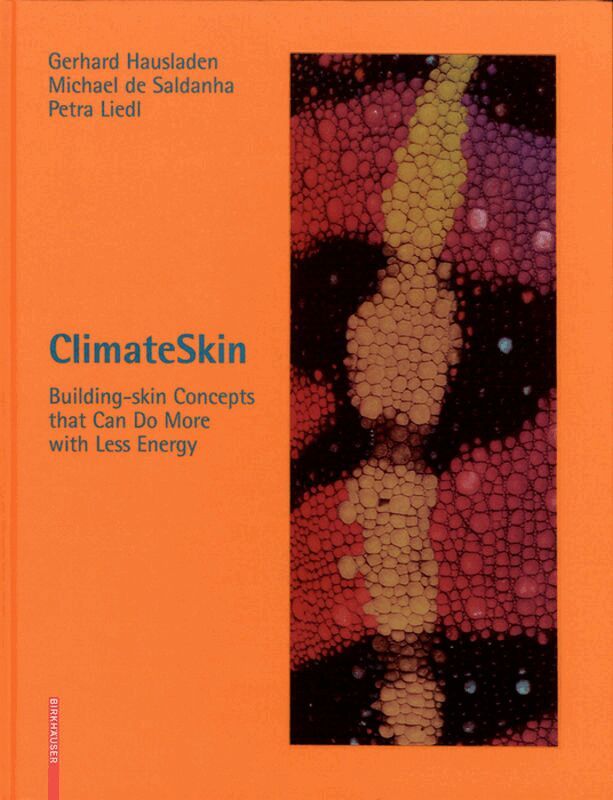
    ClimateSkin

    Building-skin Concepts that Can Do More with Less Energy

    AvGerhard Hausladen,Michael Saldanha

    Inbunden, Engelska, 2008

    243 kr

    Tillfälligt slut

    Beskrivning

    The facade plays a critical role in the conception of energy- and climate-optimized buildings: it is the building’s skin and functions as an interface between interior and exterior space. It provides thermal and sound insulation and ventilation, and controls and guides the entrance of daylight into the building. Climate Skin offers concrete planning advice for architects and engineers who wish to exploit not only the architectural potential of facades but also their energy and climate-control possibilities, treating the building envelope as an essential component within a complete climate-control and technology solution. It provides a solid foundation of knowledge that equips the reader to make competent technical and economic evaluations of building envelopes. For everyone concerned with facades, Climate Skin is a comprehensive planning handbook and reference work that covers all of the relevant technical and physical aspects of the design and detailed planning of energy-efficient facades.

    Produktinformation

    • Utgivningsdatum:2008-02-01
    • Mått:230 x 297 x 19 mm
    • Vikt:1 256 g
    • Format:Inbunden
    • Språk:Engelska
    • Antal sidor:191
    • Förlag:Birkhauser
    • ISBN:9783764377250

    Utforska kategorier

    • Arkitektur inom Kultur
    • Byggnadsteknik inom Naturvetenskap och teknik

    Mer om författaren

    Prof. Gerhard Hausladen ist Ordinarius des Lehrstuhls für Bauklimatik und Haustechnik an der Technischen Universität München und Inhaber eines Büros für Klima- und Haustechnik. Michael de Saldanha und Petra Liedl sind Mitarbeiter am Lehrstuhl. Alle lehren darüber hinaus auch am Zentrum für Umweltbewusstes Bauen in Kassel und an der Hochschule Krems in Österreich.

    Innehållsförteckning

    • Foreword EssaySkins Facade functions The facade in winter The facade in summer Ventilation Natural light Facade concepts Facade principles Facade typologies Facade technologies Insulation Glass Translucent insulation material Vacuum insulation panels Latent heat storage – PCM Solar control Light deflection Photovoltaics Facade interactions The facade as an interface Light-facade-room climate-technology Planning rules Appendix Requirements Definitions Material properties Physical concepts and units Boundary conditions for all simulations Bibliography Index Authors Illustration credits