• Fri frakt över 249 kr
  • •
  • Snabba leveranser
  • •
  • Billiga böcker
Kundservice

Du är på sajten för privatpersoner.

Företag, bibliotek eller offentlig verksamhet?

Du handlar på classic.bokus.com, där alla dina funktioner finns intakta.
Till classic.bokus.com
Bokus logotyp. Gå till startsidan.
  • Erbjudanden
  • Nyheter
  • Student
  • Topplistor
  • Barn & ungdom
  • Bokus Play
  • E-böcker
  • Pocketböcker
  • Spel & pussel

Må bättre, för mindre! Upp till 50% rabatt på hälsoböcker

Sidfot

Mina sidor

    Hjälp

    • Kundservice
    • Vanliga frågor och svar
    • Frakt och leverans
    • Retur vid ångerrätt
    • Reklamera vara
    • Betalning
    • Köpvillkor
    • Allmänna villkor
    • Information om webbplatsens tillgänglighet

    Om Bokus

    • Om oss
    • Pressrum
    • För studenter
    • För företag
    • För bibliotek och offentlig verksamhet
    • För leverantörer
    • Hållbarhet

    Populärt

    • Aktuella erbjudanden
    • Presentkort
    • Studentlitteratur
    • Nya böcker
    • Topplistor
    • Signerade böcker
    • Engelska böcker

    Inspiration

    • Boktips
    • BookTok
    • Populära bokserier
    • Barnbokskaraktärer
    • Populära författare
    Logotyp för Bokus
    Följ oss på Facebook (extern länk)Följ oss på Instagram (extern länk)Följ oss på YouTube (extern länk)Följ oss på TikTok (extern länk)
    bokus @ CookiesAnpassa cookiesIntegritetspolicyKöpvillkor
    Till Citymail hemsida (extern länk)Till Budbee hemsida (extern länk)Till Postnord hemsida (extern länk)Till Schenker hemsida (extern länk)Till Early Bird hemsida (extern länk)Till Walleys hemsida (extern länk)
    1. Ekonomi och Ledarskap
    2. Nationalekonomi
    3. Internationell ekonomi

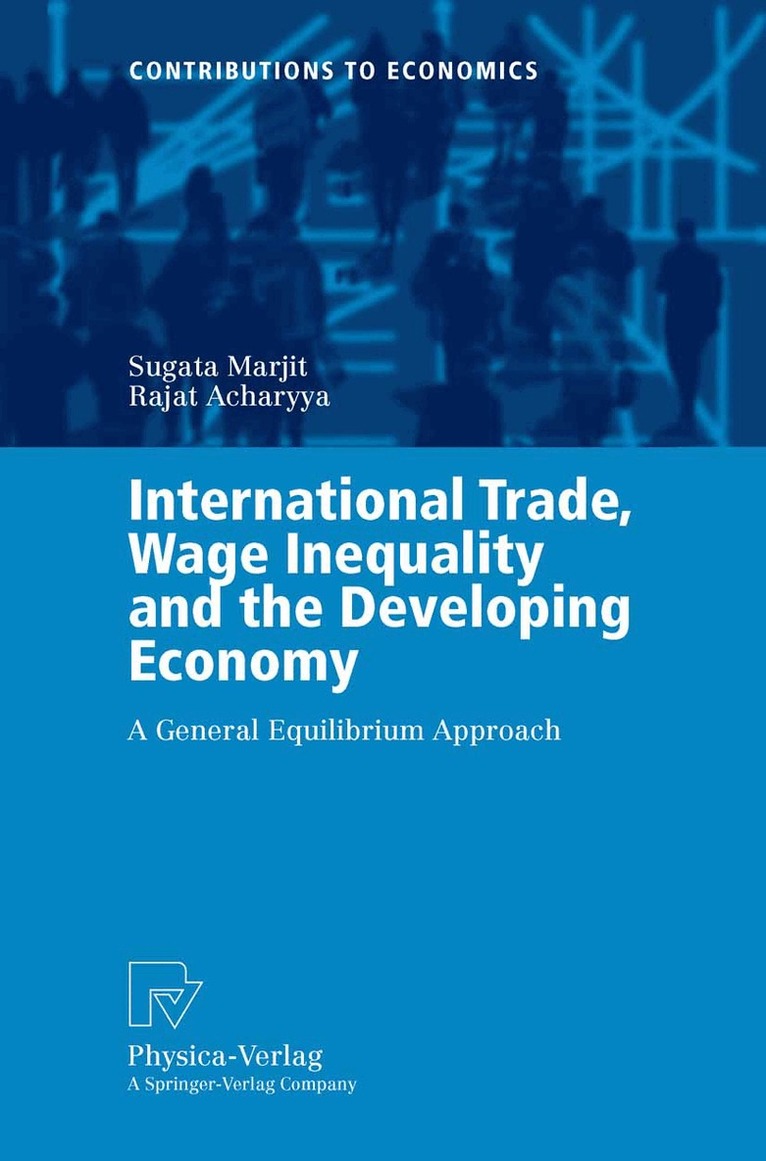
    International Trade, Wage Inequality and the Developing Economy

    A General Equilibrium Approach

    AvSugata Marjit,Rajat Acharyya

    Häftad, Engelska, 2003

    Del i serien Contributions to Economics

    563 kr

    Beställningsvara. Skickas inom 10-15 vardagar. Fri frakt över 249 kr.

    Beskrivning

    This book deals with the impact that international trade is likely to have on the skilled-unskilled wage gap in a typical developing economy. This is the first theoretical monograph on this particular issue which has already generated substantial debate and voluminous work for the developed countries. A unique feature of this work is that it tries to explain the possibility of rising inequality across trading nations and looks at the segmented labour markets of the poor economies. It makes convincing arguments that the standard general equilibrium models, the main workhorse of trade theory, can be given a creative facelift to address a number of critical and emerging issues in the area of trade and development.

    Produktinformation

    • Utgivningsdatum:2003-04-15
    • Mått:155 x 235 x 11 mm
    • Vikt:300 g
    • Format:Häftad
    • Språk:Engelska
    • Serie:Contributions to Economics
    • Antal sidor:176
    • Förlag:Springer-Verlag Berlin and Heidelberg GmbH & Co. KG
    • ISBN:9783790800319

    Utforska kategorier

    • Internationell ekonomi inom Ekonomi och Ledarskap

    Recensioner i media

    From the reviews: "The book ... explores the analytical borders of the standard trade model and shows how various modifications, motivated by a developing country (DC) perspective, can indeed reconcile the theory with the presumed facts. ... I find the book by Marjit and Acharyya to be a very helpful contribution to the literature ... . Apart from its obvious usefulness as a text for advanced courses on trade theory ... the book may also serve as a useful source of inspiration for researchers ... ." (Erich Gundlach, Review of World Economics, Vol. 140 (2), 2004)

    Innehållsförteckning

    • 1: Introduction.- I Evidence and the Debate.- 2: Wages and Employment.- II Explaining Symmetric Wage-Gap.- 3: The Standard Trade Theory:How Far Does It Go?.- 4: Trade Liberalization and Symmetric Wage-Gap.- 5: Input Trade: An Alternative Explanation.- III Trade, Capital Flow and Employment.- 6: Liberalization and Employmentin the Organized Sector.- IV Trade Liberalization, Wage Inequality and Employment in the South.- 7: Diverse Trade Pattern,Complementarity and Fragmentation.- 8: Segmented Input Marketsand Non-Traded Good.- 9: Trade, Skill Formation and the Wage-Gap.- 10: Conclusion.- List of Figures.- List of Tables.