• Fri frakt över 249 kr
  • •
  • Snabba leveranser
  • •
  • Billiga böcker
Kundservice

Du är på sajten för privatpersoner.

Företag, bibliotek eller offentlig verksamhet?

Du handlar på classic.bokus.com, där alla dina funktioner finns intakta.
Till classic.bokus.com
Bokus logotyp. Gå till startsidan.
  • Erbjudanden
  • Nyheter
  • Student
  • Topplistor
  • Barn & ungdom
  • Bokus Play
  • E-böcker
  • Pocketböcker
  • Spel & pussel

10% rabatt på allt med kod: NYSTART10 →

Sidfot

Mina sidor

    Hjälp

    • Kundservice
    • Vanliga frågor och svar
    • Frakt och leverans
    • Retur vid ångerrätt
    • Reklamera vara
    • Betalning
    • Köpvillkor
    • Allmänna villkor
    • Information om webbplatsens tillgänglighet

    Om Bokus

    • Om oss
    • Pressrum
    • För studenter
    • För företag
    • För bibliotek och offentlig verksamhet
    • För leverantörer
    • Hållbarhet

    Populärt

    • Aktuella erbjudanden
    • Presentkort
    • Studentlitteratur
    • Nya böcker
    • Topplistor
    • Signerade böcker
    • Engelska böcker

    Inspiration

    • Boktips
    • BookTok
    • Populära bokserier
    • Barnbokskaraktärer
    • Populära författare
    Logotyp för Bokus
    Följ oss på Facebook (extern länk)Följ oss på Instagram (extern länk)Följ oss på YouTube (extern länk)Följ oss på TikTok (extern länk)
    bokus @ CookiesAnpassa cookiesIntegritetspolicyKöpvillkor
    Till Citymail hemsida (extern länk)Till Budbee hemsida (extern länk)Till Postnord hemsida (extern länk)Till Schenker hemsida (extern länk)Till Early Bird hemsida (extern länk)Till Walleys hemsida (extern länk)
    1. Ekonomi och Ledarskap
    2. Nationalekonomi
    3. Internationell ekonomi

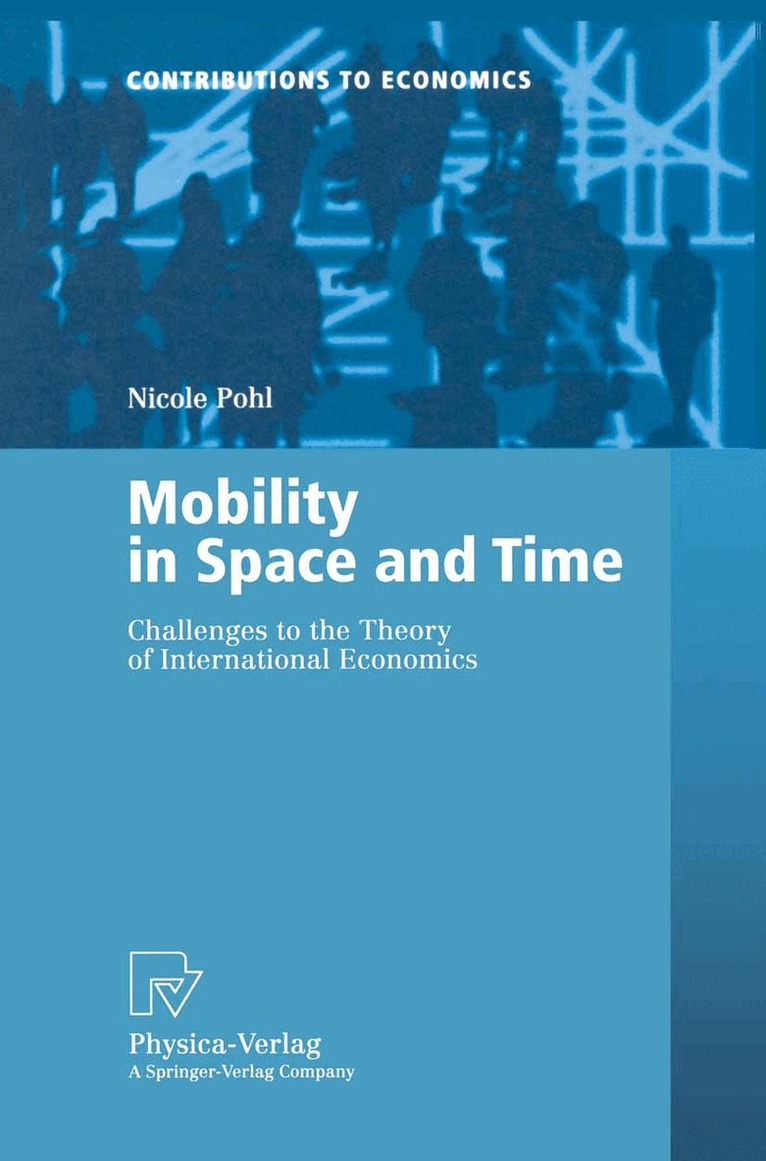
    Mobility in Space and Time

    Challenges to the Theory of International Economics

    AvNicole Pohl

    Häftad, Engelska, 2001

    Del i serien Contributions to Economics

    563 kr

    Beställningsvara. Skickas inom 10-15 vardagar. Fri frakt över 249 kr.

    Fler format och utgåvor

    E-bok

    732 kr

    Beskrivning

    The pure theory of international economics operates within a methodological framework of (static) equilibrium modelling. This sets a number of restrictions to its capability to explain empirical economic phenomena. A huge part of the scientific discourse takes place within this equilibrium framework. This is also true for new approaches like e.g. the New Economic Geography and models operating with market structures of oligopoly. This is why it is a courageous effort to try to cross the apparently unalterable borders set by equilibrium modelling. Most certainly this cannot be an end in itself. Especially the pure theory of international economics is still in many fields lacking adequate possibilities to deal with phenomena in space and time. These two dimensions have in common that they make the introduction of specific facets of movement, change, evolution - and therefore "mobility" - possible. Besides this "dynamic" component a point of view that includes space and time challenges us to find new possibilities to model heterogeneous agents. If these ideas are not so revolutionary in their content, the attempt to introduce them into a formal model is a big challenge. Moreover, it poses the question about the role of a theory of "international" economics in such a wider framework.

    Produktinformation

    • Utgivningsdatum:2001-02-27
    • Mått:155 x 235 x 14 mm
    • Vikt:382 g
    • Format:Häftad
    • Språk:Engelska
    • Serie:Contributions to Economics
    • Antal sidor:235
    • Förlag:Springer-Verlag Berlin and Heidelberg GmbH & Co. KG
    • ISBN:9783790813807

    Utforska kategorier

    • Internationell ekonomi inom Ekonomi och Ledarskap

    Innehållsförteckning

    • 1 Introduction: aims and conceptions.- A A concept of mobility in space and time.- 2 Mobility in the 21st century: some empirical observations.- 3 Mobility in space and time – structuring a complex phenomenon.- B Mobility in the theory of international economics.- 4 General possibilities and restrictions of theoretical modelling.- 5 International flows of goods and factors –traditional theory of international economics.- 6 New trade theory and multinational corporations.- 7 Non-linear dynamics and self-organization –New Economic Geography.- C Future agenda – towards a theory of mobility in space and time.- 8 Between old and new concepts.- 9 Economic agents, capabilities and relationships in space and time.- 10 Geography, culture, organization and politics as determinants of distance.- 11 Spaces of multinationalization.- 12 Novelty, capabilities and heterogeneity of agents.- 13 A new understanding of a complex matter – space and time.- 14 A formal model of mobility.- D Between given knowledge and new challenges.- 15 Conclusion.- List of figures.- List of tables.- References.