E-bok, Engelska, 2020
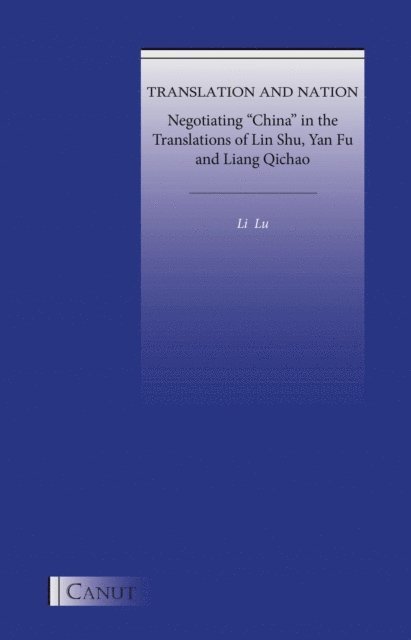
Translation and Nation
Av Li Lu
302 kr
Läs direkt i Bokus Reader – eller ladda ned till din enhet
Beskrivning
This book is aimed at examining each translation method and strategy used by Lin Shu, Yan Fu, and Liang Qichao and, more importantly, exploring the contribution of their translations to the formation of a consciousness of Chineseness. I hope to show that rather than serving as a tool to literary history, translation during the late nineteenth and early twentieth century served as one of the most important tools for introducing new ideas and producing cultural changes. In chapter one, the author gives an historical account of the formation of Chineseness in the late Qing period and its current problematic status. Next, briefly introduces Chinese translation history, which still remains largely obscure to Western readers. Finally, the author provides readers with biographical information about the three Chinese translators and with a basic acquaintance of their translations. Chapter two starts with a review of the criticism of Lin Shu’s translations. After a comparison of different translational motives behind Lin’s first two translation projects, the author maps out a constellation of emotional, cultural, and commercial motives, suggesting that Lin Shu started his translation career in a turbulent era when new cultural paradigms and national consciousness were looming in the distance. Chapter three devotes many pages to Yan Fu’s three translation criteria: xin 信 (accuracy), da 达 (intelligibility), and ya 雅 (elegance). The author argues that Yan Fu imbues these three ancient concepts with new meanings and tries to establish a new standard genre that is suitable to modern science. Though Yan Fu follows the original closer than does Lin Shu, he intervenes and manipulates the source text to the extent that his translation cannot be called literary translation. A study of Liang Qichao’s theory of fiction constitutes the main part of chapter four. Liang Qichao promotes a completely politically charged literary genre to sharpen Chinese consciousness. The author also offers a comparison of traditional Chinese ideas of fiction and Liang’s new fiction doctrine. Finally, the book examines Japanese influence on Liang’s literary and political ideas. In the conclusion chapter, the author suggests that the three Chinese translators not only tested the plasticity of the Chinese language in accommodating foreign languages, but also destabilized the boundary within the Chinese language. By using an unfamiliar language to translate an unknown language, the three Chinese translators longed for a new Chinese language that would become the mother tongue of the Chinese people as opposed to other races and ethnicities.
Produktinformation
- Utgivningsdatum: 2020-01-01
- Språk: Engelska
- Antal sidor: 184
- Filformat: EPUB
- Kopieringsskydd: LCP
- ISBN: 9786057693235
- Förlag: Distributed By Ingram Spark
Utforska kategorier
Betyg & recensioner
0 recensioner
Inga recensioner tillgängliga.