• Fri frakt över 249 kr
  • •
  • Snabba leveranser
  • •
  • Billiga böcker
Kundservice

Du är på sajten för privatpersoner.

Företag, bibliotek eller offentlig verksamhet?

Du handlar på classic.bokus.com, där alla dina funktioner finns intakta.
Till classic.bokus.com
Bokus logotyp. Gå till startsidan.
  • Erbjudanden
  • Nyheter
  • Student
  • Topplistor
  • Barn & ungdom
  • Bokus Play
  • E-böcker
  • Pocketböcker
  • Spel & pussel

10% rabatt på allt med kod: NYSTART10 →

Sidfot

Mina sidor

    Hjälp

    • Kundservice
    • Vanliga frågor och svar
    • Frakt och leverans
    • Retur vid ångerrätt
    • Reklamera vara
    • Betalning
    • Köpvillkor
    • Allmänna villkor
    • Information om webbplatsens tillgänglighet

    Om Bokus

    • Om oss
    • Pressrum
    • För studenter
    • För företag
    • För bibliotek och offentlig verksamhet
    • För leverantörer
    • Hållbarhet

    Populärt

    • Aktuella erbjudanden
    • Presentkort
    • Studentlitteratur
    • Nya böcker
    • Topplistor
    • Signerade böcker
    • Engelska böcker

    Inspiration

    • Boktips
    • BookTok
    • Populära bokserier
    • Barnbokskaraktärer
    • Populära författare
    Logotyp för Bokus
    Följ oss på Facebook (extern länk)Följ oss på Instagram (extern länk)Följ oss på YouTube (extern länk)Följ oss på TikTok (extern länk)
    bokus @ CookiesAnpassa cookiesIntegritetspolicyKöpvillkor
    Till Citymail hemsida (extern länk)Till Budbee hemsida (extern länk)Till Postnord hemsida (extern länk)Till Schenker hemsida (extern länk)Till Early Bird hemsida (extern länk)Till Walleys hemsida (extern länk)
    1. Naturvetenskap och teknik
    2. Teknik och industri
    3. Elektronik och kommunikationer

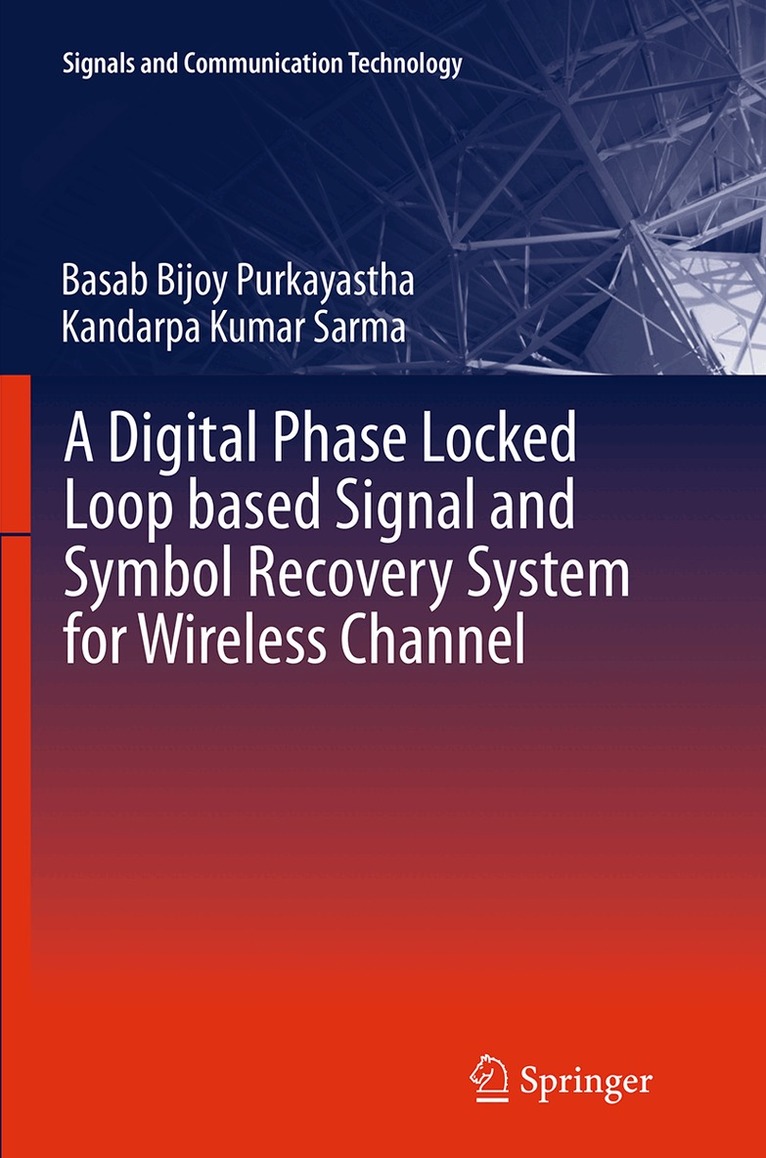
    Digital Phase Locked Loop based Signal and Symbol Recovery System for Wireless Channel

    AvBasab Bijoy Purkayastha,Kandarpa Kumar Sarma

    Häftad, Engelska, 2016

    Del i serien Signals and Communication Technology

    1 086 kr

    Beställningsvara. Skickas inom 10-15 vardagar. Fri frakt över 249 kr.

    Fler format och utgåvor

    Inbunden

    1 086 kr

    Beskrivning

    The book reports two approaches of implementation of the essential components of a Digital Phase Locked Loop based system for dealing with wireless channels showing Nakagami-m fading. It is mostly observed in mobile communication. In the first approach, the structure of a Digital phase locked loop (DPLL) based on Zero Crossing (ZC) algorithm is proposed. In a modified form, the structure of a DPLL based systems for dealing with Nakagami-m fading based on Least Square Polynomial Fitting Filter is proposed, which operates at moderate sampling frequencies. A sixth order Least Square Polynomial Fitting (LSPF) block and Roots Approximator (RA) for better phase-frequency detection has been implemented as a replacement of Phase Frequency Detector (PFD) and Loop Filter (LF) of a traditional DPLL, which has helped to attain optimum performance of DPLL. The results of simulation of the proposed DPLL with Nakagami-m fading and QPSK modulation is discussed in detail which shows that the proposed method provides better performance than existing systems of similar type.

    Produktinformation

    • Utgivningsdatum:2016-10-09
    • Mått:155 x 235 x 15 mm
    • Vikt:411 g
    • Format:Häftad
    • Språk:Engelska
    • Serie:Signals and Communication Technology
    • Antal sidor:244
    • Förlag:Springer, India, Private Ltd
    • ISBN:9788132229391

    Utforska kategorier

    • Elektronik och kommunikationer inom Naturvetenskap och teknik
    • Hårdvara inom Data och IT

    Mer om författaren

    Mr. Basab Bijoy Purkayastha is currently working as Technical Superintendent in the Department of Physics, Indian Institute of Technology Guwahati, India. He has completed MSc in Electronics Science from Gauhati University, India in 2002. He also completed M.Tech from the same institution in 2012 with specialization in Mobile Communication and DPLL based Design. He has around 10 research papers published in international conference proceedings and journals. Dr. Kandarpa Kumar Sarma, currently Associate Professor in Department of Electronics and Communication Technology, Gauhati University, Guwahati, Assam, India, has over seventeen years of professional experience. He has covered all areas of UG/PG level electronics courses including soft computing, mobile communication, digital signal and image processing. He obtained MTech degree in Signal Processing from Indian Institute of Technology Guwahati in 2005 and subsequently completed PhD programme in the area of Soft-Computational Application in Mobile Communication. He has authored seven books, several book chapters, around three hundred peer reviewed research papers in international conference proceedings and journals. His areas of interest are Soft-Computation and its Applications, Mobile Communication, Antenna Design, Speech Processing, Document Image Analysis and Signal Processing Applications in High Energy Physics, Neuro-computing and Computational Models for Social-Science Applications. He is senior member IEEE (USA), Fellow IETE (India), Member International Neural Network Society (INNS, USA), Life Member ISTE (India) and Life Member CSI (India). He serves as an Editor-in-Chief of International Journal of Intelligent System Design and Computing (IJISDC, UK), guest editor of several international journals, reviewer of over thirty international journals and over hundred international conferences.

    Innehållsförteckning

    • Introduction.- Transmitter Receiver Techniques.- Modulation Techniques and Signal Processing.- Basic Considerations of PLL and Its Types.- Digital Phased Locked Loop.- Synchronization.- A Zero Crossing Algorithm based Digital Phase Locked Loop.- Least Square Polynomial Fitting based Digital Phase Locked Loop.- A DPLL based Recovery System for Nakagami-m Fading Channel.- Coding Assisted Carrier and Symbol Recovery using DPLL.- Carrier Phase Detection of Rayleigh and Rician Faded Signals using Digital Phase Locked Loop.- DPLL based Square Loop for Carrier Synchronization over Fading Channel.- Conclusions and Future Direction.