• Fri frakt över 249 kr
  • •
  • Snabba leveranser
  • •
  • Billiga böcker
Kundservice

Du är på sajten för privatpersoner.

Företag, bibliotek eller offentlig verksamhet?

Du handlar på classic.bokus.com, där alla dina funktioner finns intakta.
Till classic.bokus.com
Bokus logotyp. Gå till startsidan.
  • Erbjudanden
  • Nyheter
  • Student
  • Topplistor
  • Barn & ungdom
  • Bokus Play
  • E-böcker
  • Pocketböcker
  • Spel & pussel

10% studentrabatt med kod TERM26

Sidfot

Mina sidor

    Hjälp

    • Kundservice
    • Vanliga frågor och svar
    • Frakt och leverans
    • Retur vid ångerrätt
    • Reklamera vara
    • Betalning
    • Köpvillkor
    • Allmänna villkor
    • Information om webbplatsens tillgänglighet

    Om Bokus

    • Om oss
    • Pressrum
    • För studenter
    • För företag
    • För bibliotek och offentlig verksamhet
    • För leverantörer
    • Hållbarhet

    Populärt

    • Aktuella erbjudanden
    • Presentkort
    • Studentlitteratur
    • Nya böcker
    • Topplistor
    • Signerade böcker
    • Engelska böcker

    Inspiration

    • Boktips
    • BookTok
    • Populära bokserier
    • Barnbokskaraktärer
    • Populära författare
    Logotyp för Bokus
    Följ oss på Facebook (extern länk)Följ oss på Instagram (extern länk)Följ oss på YouTube (extern länk)Följ oss på TikTok (extern länk)
    bokus @ CookiesAnpassa cookiesIntegritetspolicyKöpvillkor
    Till Citymail hemsida (extern länk)Till Budbee hemsida (extern länk)Till Postnord hemsida (extern länk)Till Schenker hemsida (extern länk)Till Early Bird hemsida (extern länk)Till Walleys hemsida (extern länk)
    1. Filosofi och religion
    2. Religion och tro
    3. Kristendom

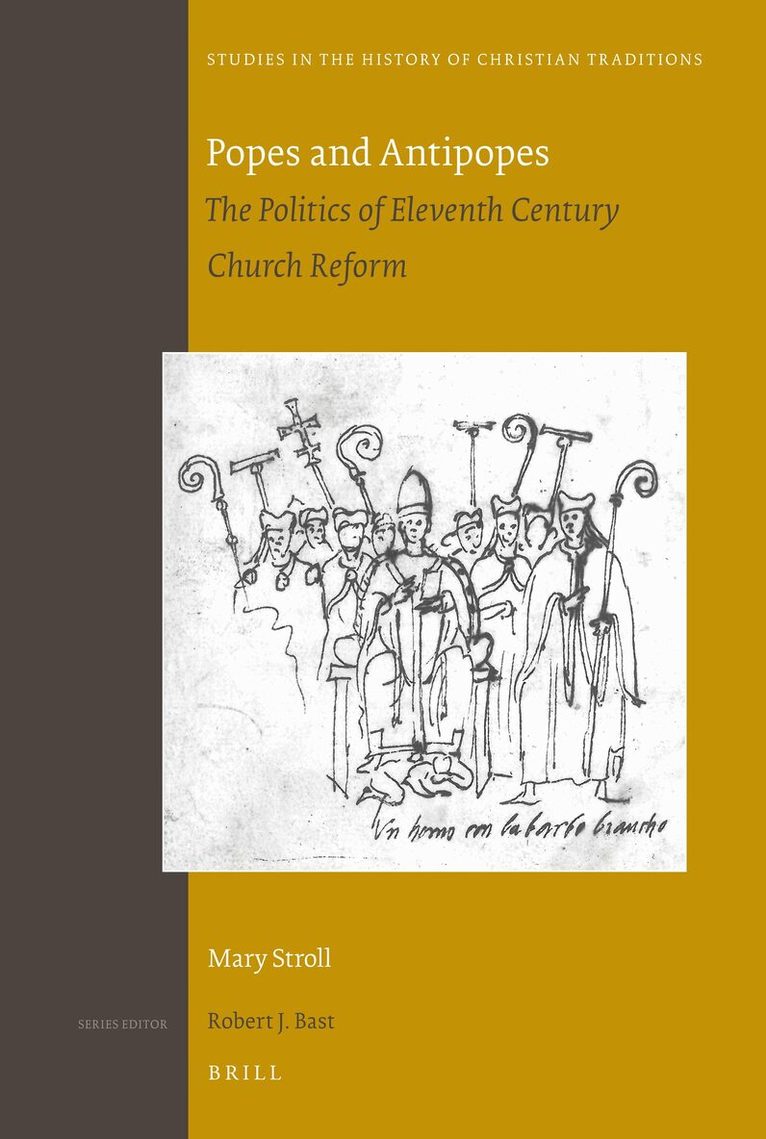
    Popes and Antipopes: The Politics of Eleventh Century Church Reform

    AvMary Stroll

    Inbunden, Engelska, 2011

    Del 159 i serien Studies in the History of Christian Traditions

    2 224 kr

    Beställningsvara. Skickas inom 5-8 vardagar. Fri frakt över 249 kr.

    Beskrivning

    A revolution shook the Christian world in the second half of the eleventh century. Many eminent historians point to Hildebrand, later Gregory VII (1073-1085), as the prime mover of this movement that aspired to free the Church from secular entanglements, and to return it to its state of paleochristian purity. I see the reform from the perspective of much wider developments such as the split between the Greek and the Latin Churches and the Norman infiltration of Southern Italy. Contentrating on the popes and the antipopes I delve into the character and motivations of the important personae, and do not see the movement as a smooth line of progress. I see the outcome as reversal of power of what had been a strong empire and a weak papacy.

    Produktinformation

    • Utgivningsdatum:2011-12-09
    • Mått:155 x 235 x 21 mm
    • Vikt:572 g
    • Format:Inbunden
    • Språk:Engelska
    • Serie:Studies in the History of Christian Traditions
    • Antal sidor:266
    • Förlag:Brill
    • ISBN:9789004217010

    Utforska kategorier

    • Kristendom inom Filosofi och religion

    Mer om författaren

    Mary Stroll, PhD (1975), University of California, San Diego, is a Visiting Scholar at UCSD. She has published extensively on the relationship between the Church and the Empire in the twelfth Century. Her latest book is Calixtus II (1119-1121): A Pope Born to Rule (Brill, 2004).

    Recensioner i media

    "Popes and Antipopes is less about an office than about people. Its institutional history morphs into social history. Its story really concerns reformers--not just the traditional heroes but also some who were anti-popes and imperialists and some who were morally compromised--all struggling with limited success as they tragically attempt to reshape an unjust and inharmonious world." - John Howe, Texas Tech University, in: The Medieval Review (January 2013)"Mary Stroll’s latest contribution to the history of the medieval papacy is a brave endeavour to illuminate the political factors the undergirded the successes and failures of the papal reform movement in the 11th century." - Eimhin Walsh, Trinity College, Dublin, in: Reviews in History (23 February 2013)

    Innehållsförteckning

    • AcknowledgmentsPrefaceAbbreviationsIntroduction1Imperial Authority over Papal ElectionsThe Patricius Romanorum Bonizo Petrus DamianiBenzoThe response of the reformers 2Henry III’s PopesHenry’s authorityThe Three Iniquitous PopesClement IIDamasus II3Leo IX (1049-1054): The Normans and the ByzantinesThe Election of Bishop Bruno of ToulThe NormansThe Byzantine EmpireThe first wedge between Eastern and Western ChurchesLeo’s LegacySummary and Conclusion4Victor II (1055-1057) and Stephen IX (1057-1058)Part 1: Victor II (1055-1057)Conflicting SourcesThe House of Lotharingia/CanossaThe NormansAfter Henry III’s DeathPart 2: Stephen IX (1057-1058)The Lotharingia/Canossa AllianceStephen IX’s ReignThe Significance of Stephen IX’s reign5Benedict X, Antipope: Romans versus ReformersThe Elections of Benedict X and Nicholas IIBenedict’s tragic ReignThe PierleoniPetrus DamianiLeo of OstiaLiber PontificalisGerman SourcesBonizoPanviniusConclusion6Nicholas II (1059-1061)Background and ElectionCoronation The Collection of 74 Titles7Nicholas II: Papal Electoral Decree and Break with the RegencyThe Papal Electoral Decree of 1059Two Versions of the Papal Electoral DecreeSignaturesPanviniusCardinal Bishops and the KingQuestions continue8 Nicholas II: The Normans and the Collapse of Imperial GoodwillThe New Norman PolicyThe NorthA Critical Reign9The Election of Alexander II (1061-1073)Anselm as BishopPatarinesAnselm, Nicholas II and the RegencyThe Role of HildebrandHow the Election was carried out Conclusion10 The Election of Cadalus, Honorius IICadalus as BishopAfter the death of Nicholas IIThe Council of BaselHugo CandidusEmpress AgnesPetrus DamianiPapal Authority and the Lombards11Conflict in Rome and the Abduction of Henry IVBenzo in RomeThe Arrival of CadalusOnly an Electus KaiserswerthThe Kidnapping12From Kaiserswerth to MantuaThe Effects of the Abduction on the SchismThe Council of AugsburgDissension within the German ChurchThe Easter Council of 1063 and the renewal of violenceCadalus Returns to RomeWarChange of Fortunes and the appeal to the KingConclusion 13The Council of MantuaPetrus Damiani Calls for a CouncilThe Council of Mantua (May 31-June 3, 1064)Benzo’s Purported ExposéAnalysis of Mantua 14Instability Following MantuaAdalbert of Bremen and AnnoQuedlinburgCeremony of Henry’s Coming of AgeAnno’s LettersLetter of Petrus Damiani to Henry15Ambivalence and Self InterestExpedition of Godfrey to RomeExpedition of Anno, Henry of Trent, and Otto of Bavaria to ItalyPetrus MezzabarbaBeatrice and Godfrey ChastisedHugo CandidusCencius StephaniFrayed loyalties and the Deaths of Cadalus and Alexander IIConclusionThe State of the Papacy at the End of the SchismBibliographyIndex