• Fri frakt över 249 kr
  • •
  • Snabba leveranser
  • •
  • Billiga böcker
Kundservice

Du är på sajten för privatpersoner.

Företag, bibliotek eller offentlig verksamhet?

Du handlar på classic.bokus.com, där alla dina funktioner finns intakta.
Till classic.bokus.com
Bokus logotyp. Gå till startsidan.
  • Erbjudanden
  • Nyheter
  • Student
  • Topplistor
  • Barn & ungdom
  • Bokus Play
  • E-böcker
  • Pocketböcker
  • Spel & pussel

10% rabatt på allt med kod: NYSTART10 →

Sidfot

Mina sidor

    Hjälp

    • Kundservice
    • Vanliga frågor och svar
    • Frakt och leverans
    • Retur vid ångerrätt
    • Reklamera vara
    • Betalning
    • Köpvillkor
    • Allmänna villkor
    • Information om webbplatsens tillgänglighet

    Om Bokus

    • Om oss
    • Pressrum
    • För studenter
    • För företag
    • För bibliotek och offentlig verksamhet
    • För leverantörer
    • Hållbarhet

    Populärt

    • Aktuella erbjudanden
    • Presentkort
    • Studentlitteratur
    • Nya böcker
    • Topplistor
    • Signerade böcker
    • Engelska böcker

    Inspiration

    • Boktips
    • BookTok
    • Populära bokserier
    • Barnbokskaraktärer
    • Populära författare
    Logotyp för Bokus
    Följ oss på Facebook (extern länk)Följ oss på Instagram (extern länk)Följ oss på YouTube (extern länk)Följ oss på TikTok (extern länk)
    bokus @ CookiesAnpassa cookiesIntegritetspolicyKöpvillkor
    Till Citymail hemsida (extern länk)Till Budbee hemsida (extern länk)Till Postnord hemsida (extern länk)Till Schenker hemsida (extern länk)Till Early Bird hemsida (extern länk)Till Walleys hemsida (extern länk)
    1. Språk och ordböcker
    2. Språkvetenskap och lingvistik

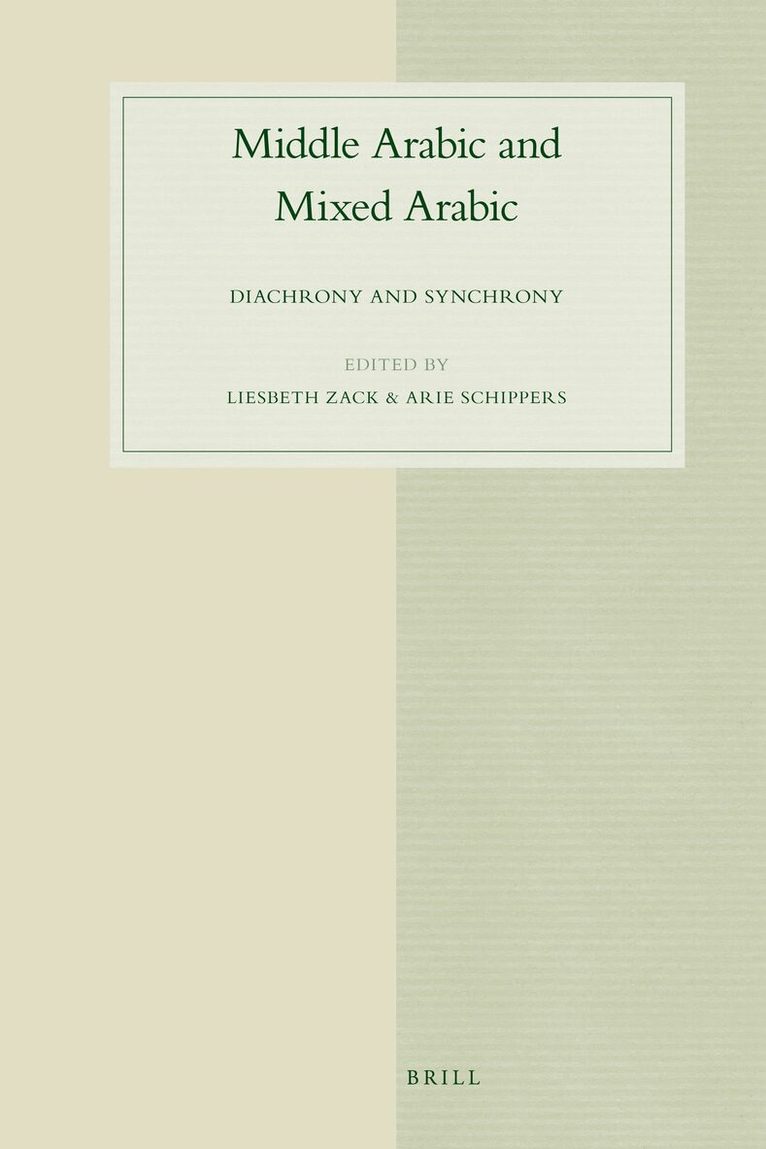
    Middle Arabic and Mixed Arabic

    Diachrony and Synchrony

    AvLiesbeth Zack

    Inbunden, Engelska, 2012

    Del 64 i serien Studies in Semitic Languages and Linguistics

    3 044 kr

    Beställningsvara. Skickas inom 5-8 vardagar. Fri frakt över 249 kr.

    Beskrivning

    In recent scholarship, the connection between Middle Arabic and Mixed Arabic is studied in a more systematic way. The idea of studying these two varieties in one theoretical frame is quite new, and was initiated at the conferences of the International Association for the Study of Middle and Mixed Arabic (AIMA). At these conferences, the members of AIMA discuss the latest insights into the definition, terminology, and research methods of Middle and Mixed Arabic. Results of various discussions in this field are to be found in the present book, which contains articles describing and analysing the linguistic features of Muslim, Jewish and Christian Arabic texts (folklore, religious and linguistic literature) as well as the matters of mixed language and diglossia.Contributors include: Berend Jan Dikken, Lutz Edzard, Jacques Grand’Henry, Bruno Halflants, Benjamin Hary, Rachel Hasson Kenat, Johannes den Heijer, Amr Helmy Ibrahim, Paolo La Spisa, Jérôme Lentin, Gunvor Mejdell, Arie Schippers, Yosef Tobi, Kees de Vreugd, Manfred Woidich, and Otto Zwartjes.

    Produktinformation

    • Utgivningsdatum:2012-04-19
    • Mått:155 x 235 x 26 mm
    • Vikt:672 g
    • Format:Inbunden
    • Språk:Engelska
    • Serie:Studies in Semitic Languages and Linguistics
    • Antal sidor:350
    • Förlag:Brill
    • ISBN:9789004222298

    Utforska kategorier

    • Språkvetenskap och lingvistik inom Språk och ordböcker

    Mer om författaren

    E.W.A. (Liesbeth) Zack, PhD (2009), is Assistant Professor of Arabic Language and Culture at the University of Amsterdam. Her main research interests are: historical sources of the Egyptian Arabic dialects, Middle Arabic, and modern Egyptian Arabic.Arie Schippers, PhD (1988), Semitic and Romance languages student (1966-74) and researcher (1974-76) at Leiden University, taught Hebrew at Nijmegen University (1976-77), and Arabic at the University of Amsterdam (1977-2012). He has published on Arabic and Hebrew literatures in connection with Romance literatures.

    Recensioner i media

    "The papers collected here represent the best of the conference volume genre, comprising a sharing of findings in an ongoing research enterprise with the broader scholarly community. The contributors are all active scholars in the field, most with long publication records." David Wilmsen, Linguist List, 09-12-2012, http://linguistlist.org/issues/23/23-5132.html.

    Innehållsförteckning

    • List of illustrationsAcknowledgements1. Introduction: Middle and Mixed Arabic, a new trend in Arabic StudiesJohannes den Heijer2. Moyen arabe et variétés mixtes de l’arabe : premier essai de bibliographie Supplément n° 1Jérôme Lentin3. Some remarks about Middle Arabic and Saʿadya Gaon’s Arabic translation of the Pentateuch in manuscripts of Jewish, Samaritan, Coptic Christian, and Muslim provenanceBerend Jan Dikken4. Linguistic and cultural features of an Iraqi Judeo-Arabic text of the qiṣaṣ al-ʾanbiyāʾ genreLutz Edzard5. Deux types de moyen arabe dans la version arabe du discours 41 de Grégoire de Nazianze ?Jacques Grand’Henry6. Présentation du livre Le Conte du Portefaix et des Trois Jeunes Femmes, dans le manuscrit de Galland(XIVe-XVe siècles)Bruno Halflants7. Judeo-Arabic as a Mixed LanguageBenjamin Hary8. The story of Zayd and Kaḥlāʾ – A folk story in a Judaeo-Arabic manuscriptRachel Hasson Kenat9. Towards an inventory of Middle and Mixed Arabic features: the inscriptions of Deir Mar Musa (Syria) as a case StudyJohannes den Heijer10. Qui est arabophone? Les variétés de l’arabe dans la définition d’une compétence nativeAmr Helmy Ibrahim11. Perspectives ecdotiques pour textes en moyen arabe : l’exemple des traités théologiques de Sulaymān al-Ġazzī Paolo La Spisa12. Normes orthographiques en moyen arabe : sur la notation du vocalisme brefJérôme Lentin13. Playing the same game? Notes on comparing spoken contemporary Mixed Arabic and (pre)modern written Middle ArabicGunvor Mejdell14. Middle Arabic in Moshe Darʿī’s Judaeo-Arabic PoemsArie Schippers15. Written Judeo-Arabic: Colloquial versus Middle ArabicYosef Tobi16. Yefet ben ʽEli’s Commentary on the Book of ZechariahKees de Vreugd17. Damascus Arabic according to the Compendio of Lucas Caballero (1709)Otto Zwartjes and Manfred WoidichList of ContributorsAppendix: Colour illustrations from Lucas Caballero’s CompendioIndex