• Fri frakt över 249 kr
  • •
  • Snabba leveranser
  • •
  • Billiga böcker
Kundservice

Du är på sajten för privatpersoner.

Företag, bibliotek eller offentlig verksamhet?

Du handlar på classic.bokus.com, där alla dina funktioner finns intakta.
Till classic.bokus.com
Bokus logotyp. Gå till startsidan.
  • Erbjudanden
  • Nyheter
  • Student
  • Topplistor
  • Barn & ungdom
  • Bokus Play
  • E-böcker
  • Pocketböcker
  • Spel & pussel

Må bättre, för mindre! Upp till 50% rabatt på hälsoböcker

Sidfot

Mina sidor

    Hjälp

    • Kundservice
    • Vanliga frågor och svar
    • Frakt och leverans
    • Retur vid ångerrätt
    • Reklamera vara
    • Betalning
    • Köpvillkor
    • Allmänna villkor
    • Information om webbplatsens tillgänglighet

    Om Bokus

    • Om oss
    • Pressrum
    • För studenter
    • För företag
    • För bibliotek och offentlig verksamhet
    • För leverantörer
    • Hållbarhet

    Populärt

    • Aktuella erbjudanden
    • Presentkort
    • Studentlitteratur
    • Nya böcker
    • Topplistor
    • Signerade böcker
    • Engelska böcker

    Inspiration

    • Boktips
    • BookTok
    • Populära bokserier
    • Barnbokskaraktärer
    • Populära författare
    Logotyp för Bokus
    Följ oss på Facebook (extern länk)Följ oss på Instagram (extern länk)Följ oss på YouTube (extern länk)Följ oss på TikTok (extern länk)
    bokus @ CookiesAnpassa cookiesIntegritetspolicyKöpvillkor
    Till Citymail hemsida (extern länk)Till Budbee hemsida (extern länk)Till Postnord hemsida (extern länk)Till Schenker hemsida (extern länk)Till Early Bird hemsida (extern länk)Till Walleys hemsida (extern länk)
    1. Juridik
    2. Rättsvetenskap
    3. Komparativ rätt

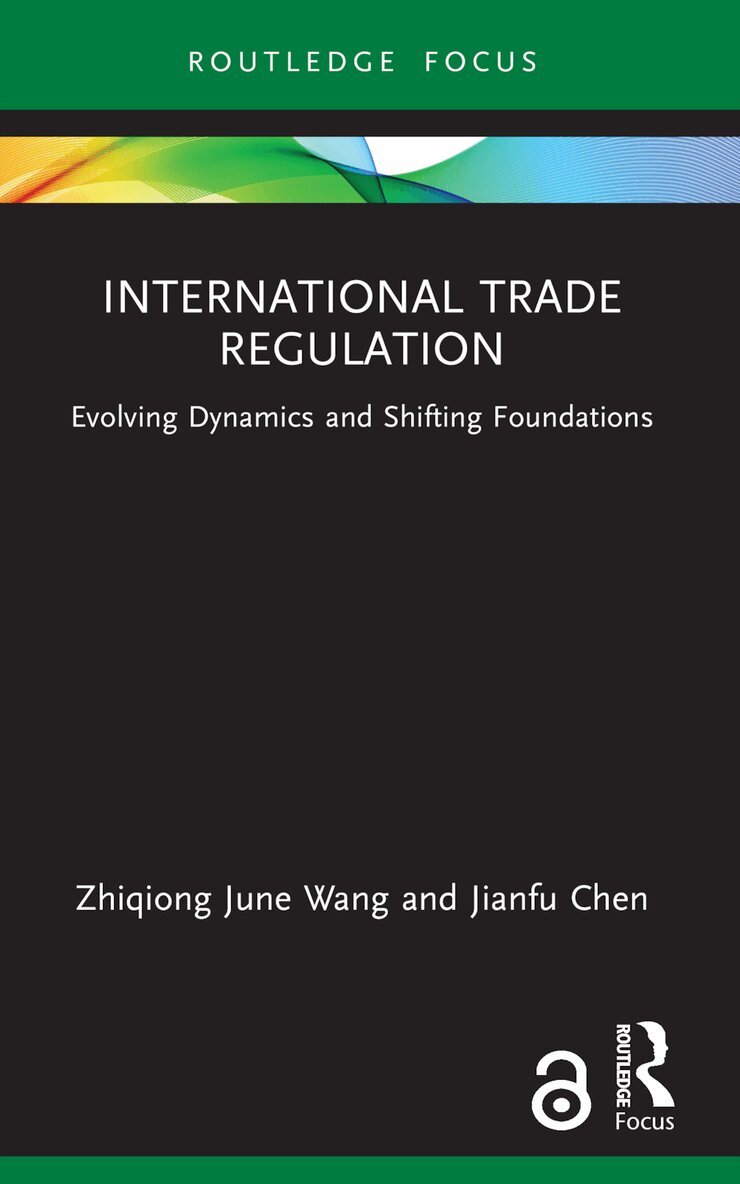
    Dispute Resolution in the People’s Republic of China

    The Evolving Institutions and Mechanisms

    AvZhiqiong June Wang,Jianfu Chen

    Inbunden, Engelska, 2019

    Del i serien Brill | Nijhoff

    3 811 kr

    Beställningsvara. Skickas inom 5-8 vardagar. Fri frakt över 249 kr.

    Beskrivning

    Dispute resolution reforms in China in the last decade or so have all centred around the strategy of establishing an integrated dispute resolution system as part of China’s modern governance system. This new integrated system, referred to as the ‘Mechanism for Pluralist Dispute Resolution (PDR)’ in China, serves as a dispute resolution system as well as a comprehensive social control mechanism. This book is the first academic attempt to explain the methods of civil and commercial dispute resolution in China from the perspective of PDR. It systematically and critically examines the development of China’s dispute resolution system, with each chapter analysing in detail the development and transformation of the different institutions, mechanisms and processes in their historical, politico-economic and comparative context.

    Produktinformation

    • Utgivningsdatum:2019-12-19
    • Mått:155 x 235 x 21 mm
    • Vikt:668 g
    • Format:Inbunden
    • Språk:Engelska
    • Serie:Brill | Nijhoff
    • Antal sidor:328
    • Förlag:Brill
    • ISBN:9789004331273

    Utforska kategorier

    • Komparativ rätt inom Juridik
    • Rättsordning inom Juridik

    Mer om författaren

    Zhiqiong June Wang, Ph.D. (UNSW), is Associate Professor of Law, Western Sydney University, Australia. She specialises in commercial law, comparative law and Chinese law. Prior to her joining academia, she was a practising lawyer in China. She has published widely on Chinese law, as well as on law, technology and legal education.Jianfu Chen, Ph.D. (Sydney), is Professor of Law, La Trobe University, Australia. He is also an arbitrator with the China International Economic and Trade Arbitration Commission. He has published widely on Chinese law and international trade law.

    Innehållsförteckning

    • PrefaceandAcknowledgementsAbbreviationsIntroduction1 Legal Culture and Historical Development of Law1 Introduction2 History as Legacy and Legacies of History2.1 History and Tradition in Context2.2 Confucianism2.3 Legalism2.4 Practical Politics—Confucianisation of Law2.5 The Legacies of History3 Evolution and Revolution3.1 Efforts towards Westernisation of Law3.2 Efforts Tilted towards Modernisation of Law4 Socialist Legality and Socialist Legacies4.1 From Socialist Legality to Legal Nihilism4.2 From Legal Instrumentalism to the Rule of Law4.3 The Return of Legal Instrumentalism4.4 Chinese Law at a Crossroads5 Concluding Remarks2 Legal Institutions: The Political and Constitutional Setting1 Introduction2 Separation of Powers and the Integration of Party and State3 Party Control over Institutional Setup and Personnel: The ChineseNomenklaturaSystem4 Party Control over Legal Institutions: The Politico-legal Committees5 Legal Institutions under the Chinese Constitution6 Administrative Responsibilities for Justice and Law6.1 An Overview6.2 The Ministry of Justice and Its Evolving Functionality6.3 Judicial Examination/Qualification Examination for Legal Professions7 Concluding Remarks3 Judicial Institutions1 Introduction2 Judicial Development and Reforms: The struggle for status, prestige and identity2.1 Judicial Development and Reforms in Context2.2 The New Round of Reforms2.3 The Consolidation of Reform Results3 Organisation and Structure4 Judges and Other Personnel of the People’s Courts5 The People’s Procuratorates and Civil Dispute Settlement6 Concluding Remarks4 The Legal Profession 1 Introduction2 Lawyers and Legal Practice2.1 The (Incomplete and Hesitant) Transformation of Lawyering as a Profession in China2.2 Lawyers: Qualification, Business Scope and Limitations2.3 Law Firms2.4 Lawyers’ Associations and the Ministry of Justice2.5 Foreign Lawyers and Foreign Law Firms in China3 Notary System and Authentication3.1 The Transformation has Just Started3.2 Qualifications, Establishment and Scope of Business4 Concluding Remarks5 Negotiation and Mediation1 Introduction2 Negotiation/Consultation2.1 Overview2.2 Cultural Context and the Limit of Cultural Influence2.3 The Essence of Negotiation: Trade-off and Due Diligence3 Mediation/Conciliation (Tiaojie/Hejie)3.1 Historical Development of Mediation in China3.2 An Ever-Expanding Scope and Increasing Importance of Application3.3 People’s Mediation3.4 Administrative Mediation3.5 Mediation in Arbitration3.6 Institutional Mediation/Conciliation3.7 Court Mediation4 Concluding Remarks6 Arbitration1 Introduction2 The Historical Development of Arbitration in China2.1 The Introduction of Arbitration to China2.2 The Resumption of Domestic Arbitration in Post-Mao China2.3 Rapid Development and the New Regime of Arbitration in China3 A National Arbitration Framework3.1 The Legal Framework and Underlying Principles3.2 Arbitration Commissions and Ad Hoc Arbitration3.3 The China Arbitration Association, and Arbitrators3.4 Arbitration Processes3.5 Arbitration Awards, Judicial Review and Enforcement3.6 Foreign-Related Arbitration and the Internationalisation of Arbitration4 TheCIETACand Arbitration byCIETAC4.1 TheCIETACas an Arbitration Commission4.2 The Main Features ofCIETACArbitration4.3 Specialised Arbitration5 Administrative Arbitration6 Concluding Remarks7 Civil Litigation1 Introduction2 Historical Development of Civil Litigation in China3 Civil Procedure Law and Rules3.1 Overall Legal Framework and General Features3.2 Jurisdiction3.3 Commencement and Pre-trial Preparations3.4 Evidence3.5 Trial Process3.6 Damages, Preservation Measures and Statutory Limitations3.7 Special Rules on Foreign-Related Litigation3.8 Execution of Judgments and Rulings4 False Litigation5 Concluding Remarks8 Enforcement of Judgments1 Introduction2 ‘Zhixing Nan’—A Political, Economic, Socio-legal Phenomenon3 Evolving Legal Mechanisms for Enforcement4 Execution of Judgments, Rulings and Decisions5 Enforcement of Foreign Judgments6 Concluding RemarksConclusionSelect BibliographyLegislation and Policy DocumentsIndex