• Fri frakt över 249 kr
  • •
  • Snabba leveranser
  • •
  • Billiga böcker
Kundservice

Du är på sajten för privatpersoner.

Företag, bibliotek eller offentlig verksamhet?

Du handlar på classic.bokus.com, där alla dina funktioner finns intakta.
Till classic.bokus.com
Bokus logotyp. Gå till startsidan.
  • Erbjudanden
  • Nyheter
  • Student
  • Topplistor
  • Barn & ungdom
  • Bokus Play
  • E-böcker
  • Pocketböcker
  • Spel & pussel

10% rabatt på allt med kod: NYSTART10 →

Sidfot

Mina sidor

    Hjälp

    • Kundservice
    • Vanliga frågor och svar
    • Frakt och leverans
    • Retur vid ångerrätt
    • Reklamera vara
    • Betalning
    • Köpvillkor
    • Allmänna villkor
    • Information om webbplatsens tillgänglighet

    Om Bokus

    • Om oss
    • Pressrum
    • För studenter
    • För företag
    • För bibliotek och offentlig verksamhet
    • För leverantörer
    • Hållbarhet

    Populärt

    • Aktuella erbjudanden
    • Presentkort
    • Studentlitteratur
    • Nya böcker
    • Topplistor
    • Signerade böcker
    • Engelska böcker

    Inspiration

    • Boktips
    • BookTok
    • Populära bokserier
    • Barnbokskaraktärer
    • Populära författare
    Logotyp för Bokus
    Följ oss på Facebook (extern länk)Följ oss på Instagram (extern länk)Följ oss på YouTube (extern länk)Följ oss på TikTok (extern länk)
    bokus @ CookiesAnpassa cookiesIntegritetspolicyKöpvillkor
    Till Citymail hemsida (extern länk)Till Budbee hemsida (extern länk)Till Postnord hemsida (extern länk)Till Schenker hemsida (extern länk)Till Early Bird hemsida (extern länk)Till Walleys hemsida (extern länk)
    1. Filosofi och religion
    2. Religion och tro
    3. Religion: allmänt

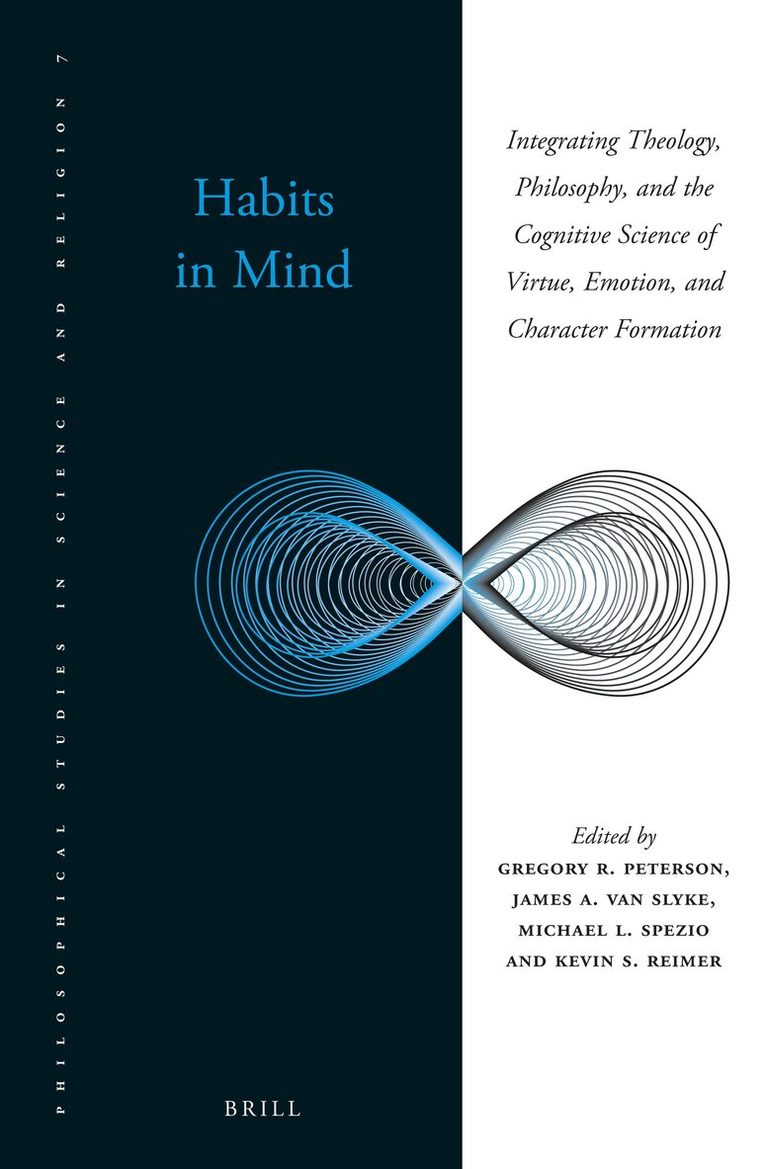
    Habits in Mind

    Integrating Theology, Philosophy, and the Cognitive Science of Virtue, Emotion, and Character Formation

    Inbunden, Engelska, 2017

    Del 7 i serien Philosophical Studies in Science and Religion

    2 546 kr

    Beställningsvara. Skickas inom 5-8 vardagar. Fri frakt över 249 kr.

    Beskrivning

    The language of habit plays a central role in traditional accounts of the virtues, yet it has received only modest attention among contemporary scholars of philosophy, psychology, and religion. This volume explores the role of both “mere habits” and sophisticated habitus in the moral life. Beginning with an essay by Stanley Hauerwas and edited by Gregory R. Peterson, James A. Van Slyke, Michael L. Spezio, and Kevin S. Reimer, the volume explores the history of the virtues and habit in Christian thought, the contributions that psychology and neuroscience make to our understanding of habitus, freedom, and character formation, and the relation of habit and habitus to contemporary philosophical and theological accounts of character formation and the moral life.Contributors are: Joseph Bankard, Dennis Bielfeldt, Craig Boyd, Charlene Burns, Mark Graves, Brian Green, Stanley Hauerwas, Todd Junkins, Adam Martin, Darcia Narvaez, Gregory R. Peterson, Kevin S. Reimer, Lynn C. Reimer, Michael L. Spezio, Kevin Timpe, and George Tsakiridis.

    Produktinformation

    • Utgivningsdatum:2017-05-04
    • Mått:155 x 235 x 24 mm
    • Vikt:625 g
    • Format:Inbunden
    • Språk:Engelska
    • Serie:Philosophical Studies in Science and Religion
    • Antal sidor:306
    • Förlag:Brill
    • ISBN:9789004342941

    Utforska kategorier

    • Religion: allmänt inom Filosofi och religion

    Mer om författaren

    Gregory R. Peterson, Ph.D. (1996), University of Denver/Iliff School of Theology, is Professor of Philosophy and Religion at South Dakota State University. He is the author of numerous publications on philosophy, religion, and behavioural and cognitive science.James A. Van Slyke, Ph.D. (2008), School of Theology and Psychology, Fuller Theological Seminary, is Assistant Professor of Psychology at Fresno Pacific University. His research primarily focuses on psychology of religion, moral psychology, and religion & science.Michael L. Spezio, Ph.D. (2002), University of Oregon, Ph.D. (1988), Case Western Reserve University, is Associate Professor of Psychology & Neuroscience at Scripps College and Visiting Researcher at the Institute for Systems Neuroscience, University of Hamburg Medical Center.Kevin S. Reimer, Ph.D. (2001), Graduate School of Psychology, Fuller Theological Seminary, is Director of Undergraduate Programs in the UC Irvine School of Education. A development psychologist and former academic dean, his research has been profiled on NPR.

    Recensioner i media

    "This edited volume advances understanding of the topic of character formation significantly through sustained attention to virtue and the process of becoming virtuous. The fifteen essays found in the volume are engaging interdisciplinary explorations of the role of habit and habitus in moral formation and ethical living. The effort throughout is to bridge a divide which exists at times between the theoretical and the concrete by bringing into fruitful dialogue theology and philosophy on the subject of habit and virtue, on the one hand, and with moral psychology, on the other hand. The result is a multi-faceted study that touches on the foundations of virtue ethics in Aristotle and Aquinas but engages the evolving contributions of neuroscience in understanding dispositions and their role in early moral development." Raymond Studzinski, Catholic University of America, in: Reading Religion, Vol. 24 (2017).

    Innehållsförteckning

    • ContentsPart I - Habits & Virtues: Resources in History and ReligionIntroduction: From Habit to Habitus in Science, Philosophy, and ReligionGregory R. PetersonChapter 1: Habit Matters: The Bodily Character of the VirtuesStanley HauerwasChapter 2: Habitus in the Roman Catholic Tradition: Context and ChallengesBrian GreenChapter 3: Virtue is not in the Head: Contributions from the Late Medieval and Reformation Traditions for Understanding Virtue ExtrinsicallyDennis BielfeldtChapter 4: Habit as a Spiritual Discipline in Early ChristianityGeorge TsakiridisPart II: Psychology, Habit, and the Development of CharacterChapter 5: Disposition Formation and Early Moral DevelopmentTodd Junkins and Darcia NarvaezChapter 6: Faith and Imitatio for the Understanding of HabitusMichael L. SpezioChapter 7: STAMINA: Character and Persistence in Youth Mentor PartnershipsKevin S. Reimer and Lynn C. ReimerPart III: The Limits of Habit? Situationism, Individualism, and FreedomChapter 8: Habit, Character, and the Situationist ChallengeGregory R. PetersonChapter 9: Paying Attention to the Will: On the Neuroscience and Psychology of Self, Volition, and CharacterAdam MartinChapter 10: Freedom as Sensitive to Reasons, Habits, and CharacterKevin TimpePart IV: From Habit to Virtue: Integrating Science, Philosophy, and ReligionChapter 11: In the Image and Likeness: Theological Reflections on the Science of HabitCharlene Burns Chapter 12: Habit, Science, and the Virtue of HumilityCraig BoydChapter 13: Cultivating a Grateful Disposition: Increasing Moral Behavior and Personal Well-BeingJoseph BankardChapter 14: Habits, Tendencies, and Habitus: The Embodied Soul’s Dispositions of Mind, Body, and PersonMark GravesIndex