• Fri frakt över 249 kr
  • •
  • Snabba leveranser
  • •
  • Billiga böcker
Kundservice

Du är på sajten för privatpersoner.

Företag, bibliotek eller offentlig verksamhet?

Du handlar på classic.bokus.com, där alla dina funktioner finns intakta.
Till classic.bokus.com
Bokus logotyp. Gå till startsidan.
  • Erbjudanden
  • Nyheter
  • Student
  • Topplistor
  • Barn & ungdom
  • Bokus Play
  • E-böcker
  • Pocketböcker
  • Spel & pussel

10% rabatt på allt med kod: NYSTART10 →

Sidfot

Mina sidor

    Hjälp

    • Kundservice
    • Vanliga frågor och svar
    • Frakt och leverans
    • Retur vid ångerrätt
    • Reklamera vara
    • Betalning
    • Köpvillkor
    • Allmänna villkor
    • Information om webbplatsens tillgänglighet

    Om Bokus

    • Om oss
    • Pressrum
    • För studenter
    • För företag
    • För bibliotek och offentlig verksamhet
    • För leverantörer
    • Hållbarhet

    Populärt

    • Aktuella erbjudanden
    • Presentkort
    • Studentlitteratur
    • Nya böcker
    • Topplistor
    • Signerade böcker
    • Engelska böcker

    Inspiration

    • Boktips
    • BookTok
    • Populära bokserier
    • Barnbokskaraktärer
    • Populära författare
    Logotyp för Bokus
    Följ oss på Facebook (extern länk)Följ oss på Instagram (extern länk)Följ oss på YouTube (extern länk)Följ oss på TikTok (extern länk)
    bokus @ CookiesAnpassa cookiesIntegritetspolicyKöpvillkor
    Till Citymail hemsida (extern länk)Till Budbee hemsida (extern länk)Till Postnord hemsida (extern länk)Till Schenker hemsida (extern länk)Till Early Bird hemsida (extern länk)Till Walleys hemsida (extern länk)
    1. Språk och ordböcker
    2. Språk: referensverk och allmänt
    3. Grammatikhandböcker

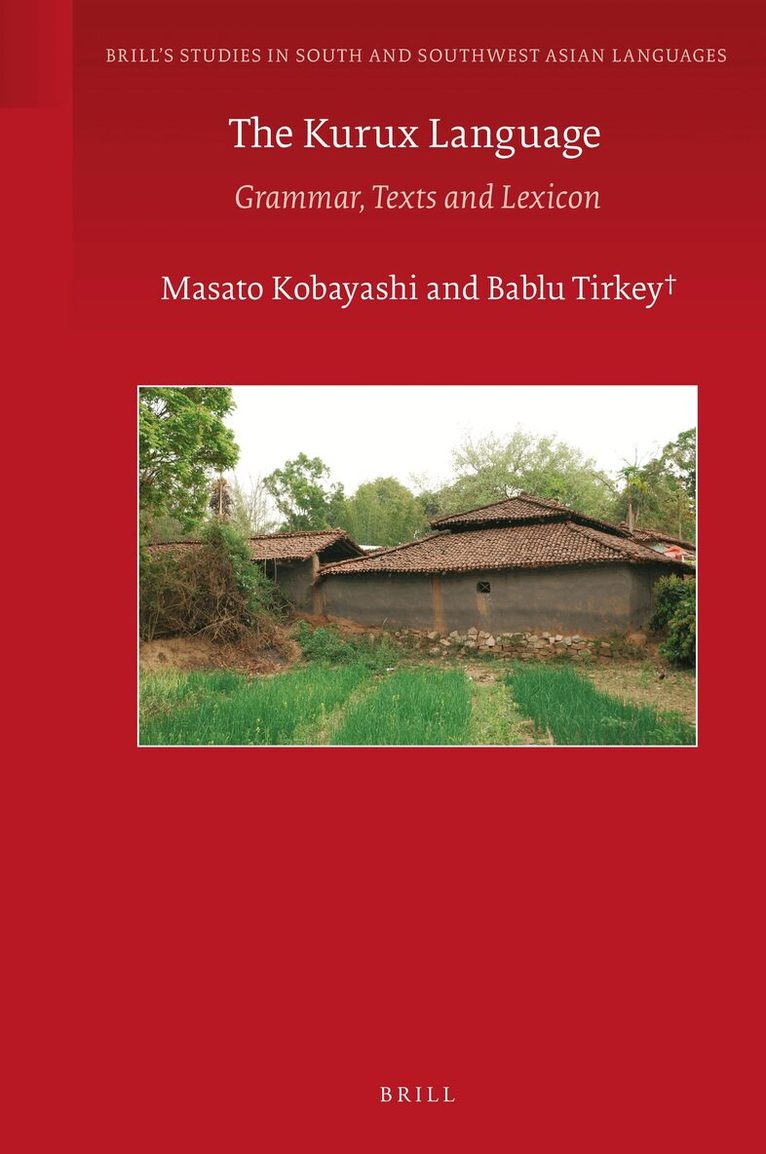
    Kurux Language

    Grammar, Texts and Lexicon

    AvMasato Kobayashi,Bablu Tirkey

    Inbunden, Engelska, 2017

    Del 8 i serien Brill's Studies in South and Southwest Asian Languages

    3 200 kr

    Beställningsvara. Skickas inom 5-8 vardagar. Fri frakt över 249 kr.

    Beskrivning

    The Kurux Language: Grammar, Texts and Lexicon by Masato Kobayashi and Bablu Tirkey is a comprehensive description of Kurux, a northern Dravidian tribal language with two million speakers. Isolated in the Chota Nagpur Plateau of Eastern India, Kurux shows a unique mixture of archaic Dravidian traits and innovations induced by contact with neighboring Indo-Aryan and Munda languages, and has posed questions regarding language change and Dravidian subgrouping.Making use of first-hand materials from their fieldwork, Kobayashi and Tirkey analyze the complexities of the language in the grammar section. This book also contains transcribed and glossed texts, and a lexicon with more than 9,000 entries, and serves both as reference for linguists and learning resource for students.

    Produktinformation

    • Utgivningsdatum:2017-09-21
    • Mått:155 x 235 x 53 mm
    • Vikt:1 380 g
    • Format:Inbunden
    • Språk:Engelska
    • Serie:Brill's Studies in South and Southwest Asian Languages
    • Antal sidor:792
    • Förlag:Brill
    • ISBN:9789004347656

    Utforska kategorier

    • Grammatikhandböcker inom Språk och ordböcker
    • Språkvetenskap och lingvistik inom Språk och ordböcker

    Mer om författaren

    Masato Kobayashi, Ph.D. (2000), University of Pennsylvania, is Associate Professor of Linguistics at the University of Tokyo. He has worked on ancient and modern Indian languages, and is the author of Texts and Grammar of Malto (Vizianagaram, Kotoba Books, 2012).Bablu Tirkey (1980-2015) was a Lecturer of Kurux at Doranda College, Ranchi. Firmly established in Kurux tradition, he worked on Kurux language and literature, and authored the Kurux novel Khatrka Ropnas gahi Tungul (‘Poor Ropna’s Dream’) (Bendora, Manas Prakashan, 2017).

    Innehållsförteckning

    • List of TablesList of FiguresList of Abbreviations1 Introduction§ 1 Typological Overview§ 2 Profile of the Language§ 3 Language Endangerment§ 4 Writing Systems and Transcription§ 5 Name of the Language§ 6 Dialectal Variation§ 7 Genetic Relationship§ 8 Lexicon§ 9 Convergence§ 10 Previous Studies§ 11 Fieldwork and Materials§ 12 Organization of the Book§ 13 AcknowledgmentGrammar2 Phonology§ 14 Vowels§ 15 Vowel Length§ 16 Umlaut§ 17 Consonants§ 18 Geminates and Singletons§ 19 Metathesis and Linearity§ 20 Syllable§ 21 Stress and Rhythm§ 22 Intonation§ 23 Morphophonology§ 24 Sound Changes up to Proto-Kurux-Malto§ 25 Phonological Alternations within Kurux§ 26 Summary of Historical Phonology3 Morphology§ 27 Characteristics of Kurux Morphology§ 28 Parts of Speech§ 29 Nouns: Nominal Stems and Bases§ 30 Nouns: Gender§ 31 Nouns: Number§ 32 Nouns: Cases§ 33 Diminutive and Augmentative§ 34 Compound Nouns and Adjectives§ 35 Pronouns: Personal Pronouns§ 36 Pronouns: Reflexives§ 37 Pronouns: Possessives§ 38 Pronouns: Demonstratives§ 39 Pronouns: Interrogatives and Indefinites§ 40 Pronouns: Cases of Personal and Reflexive Pronouns§ 41 Pronouns: Cases of Demonstratives and Interrogatives§ 42 Adpositions§ 43 Agreement Suffix and Predicative Nominals§ 44 Adjectives: Simple§ 45 Adjectives in -taː, -iyaː, -madʰheː and -aːboː§ 46 Adjectives: Suffixes Deriving Demonyms etc.§ 47 Numerals and Classifiers§ 48 Adverbs§ 49 Preverbs§ 50 Verbs§ 51 Verbal Roots and Verbal Bases§ 52 Past Stem and the Primary Verb Classes§ 53 Irregular Verb Inflection§ 54 Verb Inflection: Simple Tenses§ 55 Complex Aspectual Forms: Perfect§ 56 Complex Aspectual Forms: Progressive§ 57 Complex Aspectual Forms: ciʔ-aː Benefactive§ 58 Verb Inflection: Modal Forms§ 59 Verb Inflection: Inter-Female Forms§ 60 Copula and Existential Verbs§ 61 Copular Clauses and Concord§ 62 Derived Verbal Bases§ 63 Frequentative Verbs§ 64 Infinitives§ 65 Inflection Reduction§ 66 Perfect and Imperfect Participles§ 67 Agentive Participle§ 68 Adverbial Participles§ 69 Converb§ 70 Origin of the Kurux-Malto Past Inflection4 Syntax and Pragmatics§ 71 Word Order§ 72 Coordinating Conjunctions§ 73 Subordinating Conjunctions§ 74 Complementizer§ 75 Reflexives and Logophorics§ 76 Relative Clauses§ 77 The -madʰheː Construction and Adnominal PPs§ 78 Conditional and Counterfactual§ 79 Complex Predicates§ 80 Voice and Argument Alternation§ 81 Passive and Grammatical Relations§ 82 Stative Passive Construction§ 83 Use of the -aː Infinitive§ 84 Use of the -naː Infinitive§ 85 Non-nominative Subjects§ 86 Impersonal Construction§ 87 Topic and Focus§ 88 Phrasal Clitics§ 89 Clausal Clitics5 Semantics§ 90 Spatial Deixis§ 91 Animacy, Number, Gender and Person§ 92 Use of the Copular Verbs§ 93 Possession§ 94 Question§ 95 Deictic Verbs§ 96 Definiteness and Differential Object Marking§ 97 Lexical Aspect§ 98 Use of the Simple Tenses§ 99 Use of the Aspectual Forms§ 100 Modality§ 101 Use of the Causative§ 102 Function of the Passive Voice§ 103 Volition or Control over the Action§ 104 Negation§ 105 Negative Polarity Items§ 106 Politeness§ 107 Use of Cases: Nominative§ 108 Use of Cases: Accusative§ 109 Use of Cases: Dative§ 110 Use of Cases: Instrumental-Ablative§ 111 Use of Cases: Genitive§ 112 Use of Cases: Locative6 Lexicon§ 113 Characteristics of the Kurux Lexicon§ 114 Inherited Etyma§ 115 Loanwords and Toponyms§ 116 Source of Loanwords§ 117 Semantic Shift, Doublets and False Friends§ 118 Kinship Terms§ 119 Personal Names§ 120 Echo Words and Onomatopoeia§ 121 Interjections§ 122 Euphemistic Expression§ 123 Fauna and FloraTexts7 Glossed Texts§ 124 Home Visit (Dialogue)§ 125 From Bablu Tirkey, Poor Ropna’s Dream (2017)§ 126 Sone the Vulture§ 127 Life Story of a Farmer§ 128 The Bihar Famine (1966–1967) and my Father§ 129 Letiya the Thief§ 130 Building a Career§ 131 King’s Seven Daughters and a Rakshas§ 132 Story of Two Orphans and the Banyan Seed§ 133 Seven Brothers and a Sister§ 134 Story of a Man and a Tiger§ 135 Myth of Fire and Rain§ 136 Why Oraons Observe the Karam FestivalLexiconBibliographyWord IndexGeneral Index