• Fri frakt över 249 kr
  • •
  • Snabba leveranser
  • •
  • Billiga böcker
Kundservice

Du är på sajten för privatpersoner.

Företag, bibliotek eller offentlig verksamhet?

Du handlar på classic.bokus.com, där alla dina funktioner finns intakta.
Till classic.bokus.com
Bokus logotyp. Gå till startsidan.
  • Erbjudanden
  • Nyheter
  • Student
  • Topplistor
  • Barn & ungdom
  • Bokus Play
  • E-böcker
  • Pocketböcker
  • Spel & pussel

10% studentrabatt med kod TERM26

Sidfot

Mina sidor

    Hjälp

    • Kundservice
    • Vanliga frågor och svar
    • Frakt och leverans
    • Retur vid ångerrätt
    • Reklamera vara
    • Betalning
    • Köpvillkor
    • Allmänna villkor
    • Information om webbplatsens tillgänglighet

    Om Bokus

    • Om oss
    • Pressrum
    • För studenter
    • För företag
    • För bibliotek och offentlig verksamhet
    • För leverantörer
    • Hållbarhet

    Populärt

    • Aktuella erbjudanden
    • Presentkort
    • Studentlitteratur
    • Nya böcker
    • Topplistor
    • Signerade böcker
    • Engelska böcker

    Inspiration

    • Boktips
    • BookTok
    • Populära bokserier
    • Barnbokskaraktärer
    • Populära författare
    Logotyp för Bokus
    Följ oss på Facebook (extern länk)Följ oss på Instagram (extern länk)Följ oss på YouTube (extern länk)Följ oss på TikTok (extern länk)
    bokus @ CookiesAnpassa cookiesIntegritetspolicyKöpvillkor
    Till Citymail hemsida (extern länk)Till Budbee hemsida (extern länk)Till Postnord hemsida (extern länk)Till Schenker hemsida (extern länk)Till Early Bird hemsida (extern länk)Till Walleys hemsida (extern länk)
    1. Samhälle och politik
    2. Samhälle och kultur

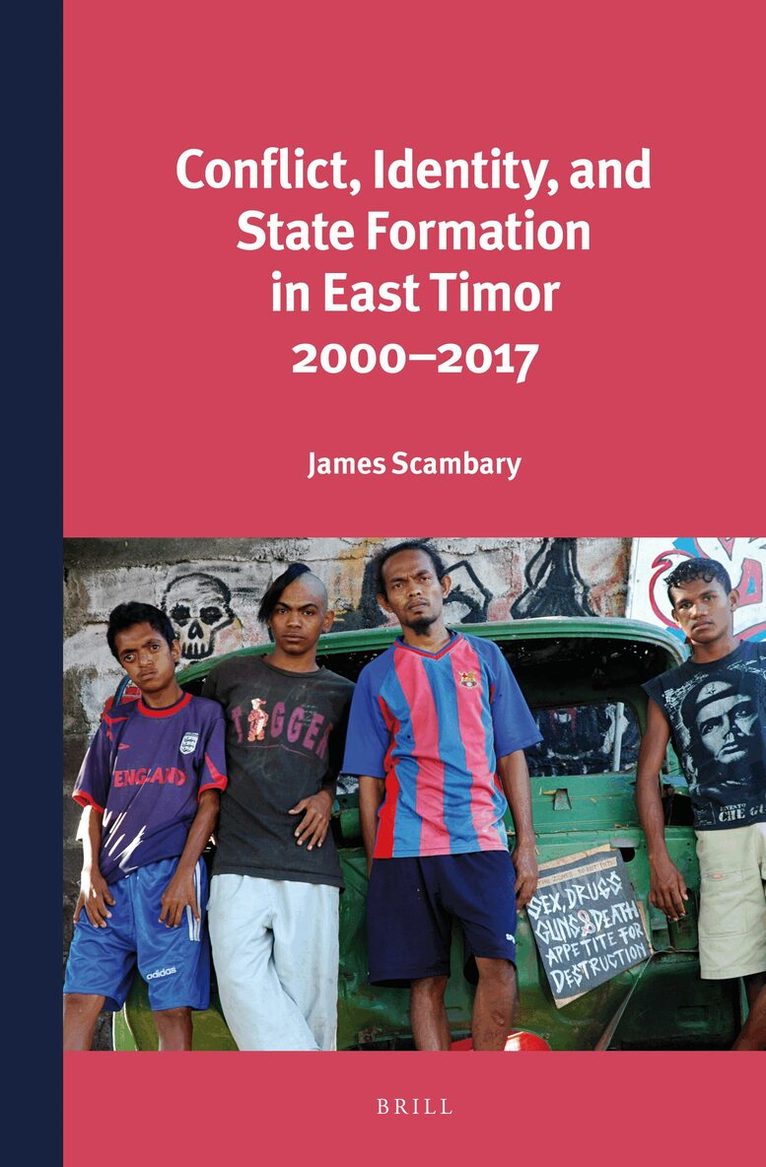
    Conflict, Identity, and State Formation in East Timor 2000 - 2017

    AvJames Scambary

    Inbunden, Engelska, 2019

    Del 311 i serien Verhandelingen van het Koninklijk Instituut voor Taal-, Land- en Volkenkunde

    1 706 kr

    Beställningsvara. Skickas inom 5-8 vardagar. Fri frakt över 249 kr.

    Beskrivning

    In Conflict, Identity, and State Formation in East Timor 2000-2017, James Scambary analyses the complex interplay between local and national level conflict and politics in the independence period. Communal conflict, often enacted by a variety of informal groups such as gangs and martial arts groups, has been a constant feature of East Timor’s post-independence landscape. A focus on statebuilding, however, in academic discourse has largely overlooked this conflict, and the informal networks that drive Timorese politics and society. Drawing on over a decade of fieldwork, Scambary documents the range of different cultural and historical dynamics and identities that drive conflict, and by which local conflicts and non-state actors became linked to national conflict, and laid the foundations of a clientelist state.

    Produktinformation

    • Utgivningsdatum:2019-05-16
    • Mått:155 x 235 x 20 mm
    • Vikt:540 g
    • Format:Inbunden
    • Språk:Engelska
    • Serie:Verhandelingen van het Koninklijk Instituut voor Taal-, Land- en Volkenkunde
    • Antal sidor:252
    • Förlag:Brill
    • ISBN:9789004394186

    Utforska kategorier

    • Samhälle och kultur inom Samhälle och politik

    Mer om författaren

    James Scambary, PhD (2015, Australian National University), is a research fellow at Deakin University. His publications include (2015), ‘In search of white elephants: the political economy of resource income expenditure in Timor-Leste’ Critical Asian Studies, 47 (2): 283-308.

    Recensioner i media

    "This is a book that I would hope (against hope) that external actors involved in peacebuilding and development would read, even if they do not engage with Timor-Leste. It compellingly makes the case for why a contextualised, nuanced, grounded analysis of conflicts is needed." – Henri Myrttinen, in International Quarterly for Asian Studies 52:1-2 (2021). "One of the great accomplishment of Scambary in this book was his ability to link an extremely detailed, micro level empirical research with a broader and often very abstract discussion on peacebuilding and statebuilding and clearly detailsome important gaps in the literature, while providing ways to move forward. This is not an easy task and was probably only possible due to the author’s long experience researching and working in Timor-Leste, most notably engaging with members of the community, experiencing the micro level, while also working extensively with different projects and consultancies for development agencies in the country. This is a book to be read more than once, so the reader may grasp all the amount of information provided with such rich detail." – Roberta Holanda Maschietto, Centre for Social Studies, University of Coimbra, in International Peacekeeping

    Innehållsförteckning

    • Acronyms and Foreign TermsList of Figures and Tables1 The Enigma of the 2006 Crisis1 An Alternative Reading2 Dominant Narratives2.1 The UN Made Me Do It2.2 Post-Crisis Representations2.3 The Invisibility of Sub-National Conflict3 Some Observations on the Ground3.1 Rural-Urban Linkages4 Normative Traditions5 New Paradigms6 New Critical Scholarship7 Conceptual Approach8 Book Structure2 An Archaeology of Conflict1 Historical Legacies of Conflict1.1 The 1975 Civil War1.2 The Indonesian Invasion1.3 Displacement and Resettlement1.4 The Creation of ISGS2 The 1999 Referendum Violence2.1 ‘Mixed with other Matters’3 Social and Cultural Background3.1 Language and Ethnicity3.2 Social Organisation3.3 Payback Traditions3.4 Traditional and Administrative Residential Structures3.5 Rural-Urban Migration3.6 Conclusion3 The 2006 Crisis in Context1 Early Tensions2 The April/May 2006 Crisis2.1 Orchestrated and Inclusive Violence3 The Second Phase4 Patterns in Conflict5 The Post-Crisis Period5.1 Conclusion4 Mystics, Messiahs and Machismo: MAGS and Veterans’ Groups1 Group Typology2 Veterans’ groups2.1 Linkages and Alliances3 Martial Arts Groups3.1 Linkages and Alliances3.2 Conclusion5 Gangs or Glee Clubs? Urban Dili-Based Groups1 Group Origins2 Violence as a Social Construct3 Group Typology3.1 Youth Groups3.2 Clandestine Groups3.3 Gangs4 Multiple Identities and Memberships4.1 Conclusion6 Conflict and Resilience in a Squatter Settlement1 Background2 Contested Authority2.1 Dynamics of Communal Conflict3 Symptoms of Alienation or Forms of Resilience?3.1 Conclusion7 Implications for Peacebuilding1 Macro-Level Approaches to Peacebuilding2 The IDP Return Process3 mag Mediation Initiatives4 Localised Initiatives5 Hybrid Approaches6 Participatory Approaches7 Local Approaches7.1 Conclusion7.2 As Mac Ginty and Richmond contend8 The Foundations of a Clientelist State1 Politics and Elections East Timor Style2 Emerging Clientelist Patterns3 Centralisation of Power4 A Culture of Informality5 Defining Power Configurations5.1 Conclusion9 Conflict and State Formation: An Integrated Understanding1 Understanding Conflict Dynamics2 The 2006 Crisis and State-Formation3 PostscriptReferencesIndex