• Fri frakt över 249 kr
  • •
  • Snabba leveranser
  • •
  • Billiga böcker
Kundservice

Du är på sajten för privatpersoner.

Företag, bibliotek eller offentlig verksamhet?

Du handlar på classic.bokus.com, där alla dina funktioner finns intakta.
Till classic.bokus.com
Bokus logotyp. Gå till startsidan.
  • Erbjudanden
  • Nyheter
  • Student
  • Topplistor
  • Barn & ungdom
  • Bokus Play
  • E-böcker
  • Pocketböcker
  • Spel & pussel

10% rabatt på allt med kod: NYSTART10 →

Sidfot

Mina sidor

    Hjälp

    • Kundservice
    • Vanliga frågor och svar
    • Frakt och leverans
    • Retur vid ångerrätt
    • Reklamera vara
    • Betalning
    • Köpvillkor
    • Allmänna villkor
    • Information om webbplatsens tillgänglighet

    Om Bokus

    • Om oss
    • Pressrum
    • För studenter
    • För företag
    • För bibliotek och offentlig verksamhet
    • För leverantörer
    • Hållbarhet

    Populärt

    • Aktuella erbjudanden
    • Presentkort
    • Studentlitteratur
    • Nya böcker
    • Topplistor
    • Signerade böcker
    • Engelska böcker

    Inspiration

    • Boktips
    • BookTok
    • Populära bokserier
    • Barnbokskaraktärer
    • Populära författare
    Logotyp för Bokus
    Följ oss på Facebook (extern länk)Följ oss på Instagram (extern länk)Följ oss på YouTube (extern länk)Följ oss på TikTok (extern länk)
    bokus @ CookiesAnpassa cookiesIntegritetspolicyKöpvillkor
    Till Citymail hemsida (extern länk)Till Budbee hemsida (extern länk)Till Postnord hemsida (extern länk)Till Schenker hemsida (extern länk)Till Early Bird hemsida (extern länk)Till Walleys hemsida (extern länk)
    1. Skönlitteratur
    2. Litteraturvetenskap
    3. Litteraturvetenskap

    Remembering the Medieval Present: Generative Uses of England’s Pre-Conquest Past, 10th to 15th Centuries

    AvJay Paul Gates

    Inbunden, Engelska, 2019

    Del 11 i serien Explorations in Medieval Culture

    2 117 kr

    Beställningsvara. Skickas inom 5-8 vardagar. Fri frakt över 249 kr.

    Beskrivning

    This volume of essays focuses on how individuals living in the late tenth through fifteenth centuries engaged with the authorizing culture of the Anglo-Saxons. Drawing from a reservoir of undertreated early English documents and texts, each contributor shows how individual poets, ecclesiasts, legists, and institutions claimed Anglo-Saxon predecessors for rhetorical purposes in response to social, cultural, and linguistic change. Contributors trouble simple definitions of identity and period, exploring how medieval authors looked to earlier periods of history to define social identities and make claims for their present moment based on the political fiction of an imagined community of a single, distinct nation unified in identity by descent and religion.Contributors are Cynthia Turner Camp, Irina Dumitrescu, Jay Paul Gates, Erin Michelle Goeres, Mary Kate Hurley, Maren Clegg Hyer, Nicole Marafioti, Brian O’Camb, Kathleen Smith, Carla María Thomas, Larissa Tracy, and Eric Weiskott.See inside the book.

    Produktinformation

    • Utgivningsdatum:2019-09-19
    • Mått:155 x 235 x 26 mm
    • Vikt:695 g
    • Format:Inbunden
    • Språk:Engelska
    • Serie:Explorations in Medieval Culture
    • Antal sidor:342
    • Förlag:Brill
    • ISBN:9789004395152

    Utforska kategorier

    • Litteraturvetenskap inom Skönlitteratur
    • Historia inom Historia och arkeologi

    Mer om författaren

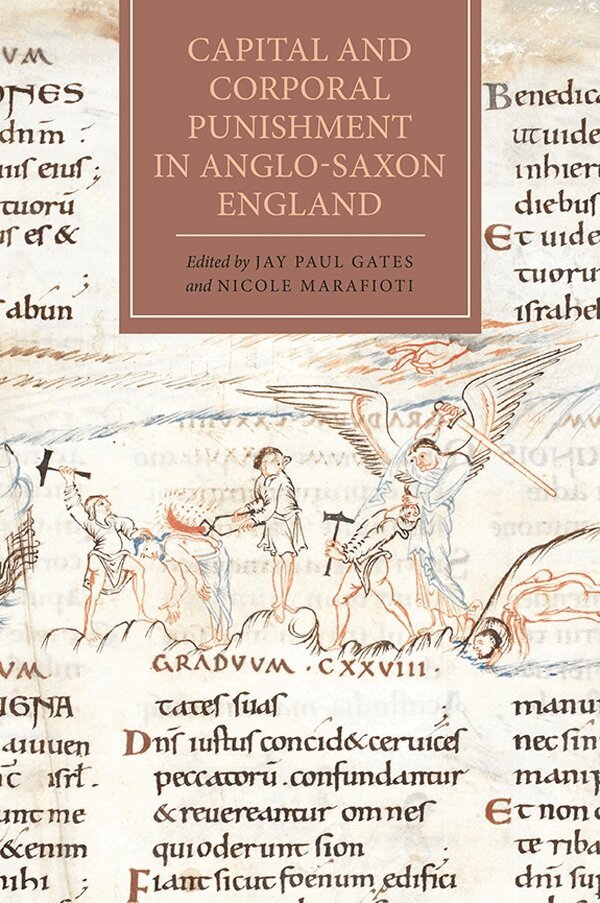
    Jay Paul Gates, Ph.D. (2007), is Associate Professor of Anglo-Saxon and Early Medieval Literature and Languages at John Jay College in the City University of New York. He co-edited, with Nicole Marafioti, Capital and Corporal Punishment in Anglo-Saxon England (2014). He has published on Anglo-Saxon law and literature, the effects of Anglo-Scandinavian cultural contact, and post-Conquest historiographical treatments of the Anglo-Saxon period.Brian O’Camb, Ph.D. (2009), is Associate Professor of English at Indiana University Northwest. He has published articles on the scribal, material, and intellectual contexts of the Exeter Book, and its later reception and editorial transmission by the eighteenth-century antiquarian George Hickes, in journals such as English Literary History, Philological Quarterly, and Review of English Studies.

    Recensioner i media

    "Jay Paul Gates and Brian T. O’Camb’s edited volume Remembering the Medieval Present is the eleventh in the Explorations in Medieval Culture series. In the interdisciplinary style characteristic of the series, it combines historical, philological, and manuscript approaches to political, religious, and literary sources in order to explore how the history of pre-Conquest England was engaged with, rewritten, and reinterpreted in the tenth to fifteenth centuries. At the centre of these essays sits an investigation into history, time, and community—collectively they explore how the past was used to create and navigate identity in the present. [...] The interdisciplinary approach of this collection is a great strength here. It contributes a comprehensive analysis into diverse usages of history, drawing out how different genres of sources in various ways worked to a similar goal of identity building. [...] Overall, Medieval Present provides a compelling variety of investigations into usages of the pre-Conquest past across genres and contexts; it is a sound addition to the research into appeals to history". - Lucy Moloney, in: Parergon, 38.1 (2021)"Jay Paul Gates and Brian O’Camb have edited a stimulating and timely collection of ten essays covering various aspects of the ways medieval authors and audiences, ca.1000–1600, attempted to understand the early medieval English past. The essays in Remembering the Medieval Present highlight the value that later generations attached to their constantly evolving and individualized versions of the imagined early English past. They showcase numerous examples of how identifying alterations to perceived narratives of the past help the modern reader to better understand the cultural capital of historical knowledge in political, intellectual, religious, and cultural spheres.[…]Gates and O’Camb and their contributing authors have given us much to think about in this fascinating essay collection." Charles C. Rozier, in Journal of British Studies, 60.3 (July 2021)"The volume as a whole offers many valuable local insights into the texts examined. In addition, certain leitmotifs emerge across its chapters: memories of early colonization are repeatedly used to construct a sense of national unity; the lives of early saints can generate a strong sense of identity in myriad contexts; in the hands of poets, a textual inheritance becomes a tool for remembering, interrogating, and reimagining literary history itself. Such areas of inquiry as these will surely continue to produce insights into how the past was remembered across the medieval period. To guide such future studies, this volume should stand as a strong reminder that the pressures of the present fundamentally influence how history is remembered." Anya Adair, in The Medieval Review, 22.03.20. See the full reviewhere.

    Innehållsförteckning

    • ContentsAcknowledgementsList of Figures and TablesList of AbbreviationsList of ContributorsIntroduction: Anglo-Saxon Predecessors and PrecedentsJay Paul Gates and Brian O’Camb1 The Legacy of King Edgar in the Laws of Archbishop WulfstanNicole Marafioti2 Exile and Migration in the Vernacular Lives of Edward “the Confessor”Erin Michelle Goeres3 Quidam proditor partis Danicae: Aelred’s Re-Imagining of the Anglo-Saxon PastJay Paul Gates4 The Hermitic Topos: “Selling” Shared Sanctity to Anglo-Saxon, Anglo-Norman, and English AudiencesMaren Clegg Hyer5 Looking for Holy Grandmothers in Late Medieval NunneriesCynthia Turner Camp6 Peace Weaving and Gold Giving: Anglo-Saxon Queenship in Havelok the DaneLarissa Tracy7 Writing, Rewriting, and Disrupting the Anglo-Saxon Past in Chaucer’s Man of Law’s TaleKathleen Smith8 The Case of Poema Morale: Old English Homiletic Influence in Early Middle English VerseCarla María Thomas9 The Familiar Wisdom of Treasured Friends and the Landscape of Conquest in The Proverbs of AlfredBrian O’Camb10 The Idea of Bede in English Political ProphecyEric WeiskottAfterwordIrina Dumitrescu and Mary Kate HurleyBibliography General Index