• Fri frakt över 249 kr
  • •
  • Snabba leveranser
  • •
  • Billiga böcker
Kundservice

Du är på sajten för privatpersoner.

Företag, bibliotek eller offentlig verksamhet?

Du handlar på classic.bokus.com, där alla dina funktioner finns intakta.
Till classic.bokus.com
Bokus logotyp. Gå till startsidan.
  • Erbjudanden
  • Nyheter
  • Student
  • Topplistor
  • Barn & ungdom
  • Bokus Play
  • E-böcker
  • Pocketböcker
  • Spel & pussel

Må bättre, för mindre! Upp till 50% rabatt på hälsoböcker

Sidfot

Mina sidor

    Hjälp

    • Kundservice
    • Vanliga frågor och svar
    • Frakt och leverans
    • Retur vid ångerrätt
    • Reklamera vara
    • Betalning
    • Köpvillkor
    • Allmänna villkor
    • Information om webbplatsens tillgänglighet

    Om Bokus

    • Om oss
    • Pressrum
    • För studenter
    • För företag
    • För bibliotek och offentlig verksamhet
    • För leverantörer
    • Hållbarhet

    Populärt

    • Aktuella erbjudanden
    • Presentkort
    • Studentlitteratur
    • Nya böcker
    • Topplistor
    • Signerade böcker
    • Engelska böcker

    Inspiration

    • Boktips
    • BookTok
    • Populära bokserier
    • Barnbokskaraktärer
    • Populära författare
    Logotyp för Bokus
    Följ oss på Facebook (extern länk)Följ oss på Instagram (extern länk)Följ oss på YouTube (extern länk)Följ oss på TikTok (extern länk)
    bokus @ CookiesAnpassa cookiesIntegritetspolicyKöpvillkor
    Till Citymail hemsida (extern länk)Till Budbee hemsida (extern länk)Till Postnord hemsida (extern länk)Till Schenker hemsida (extern länk)Till Early Bird hemsida (extern länk)Till Walleys hemsida (extern länk)
    1. Historia och arkeologi
    2. Historia
    3. Historia: särskilda händelser och ämnen
    4. Kolonialism och imperialism

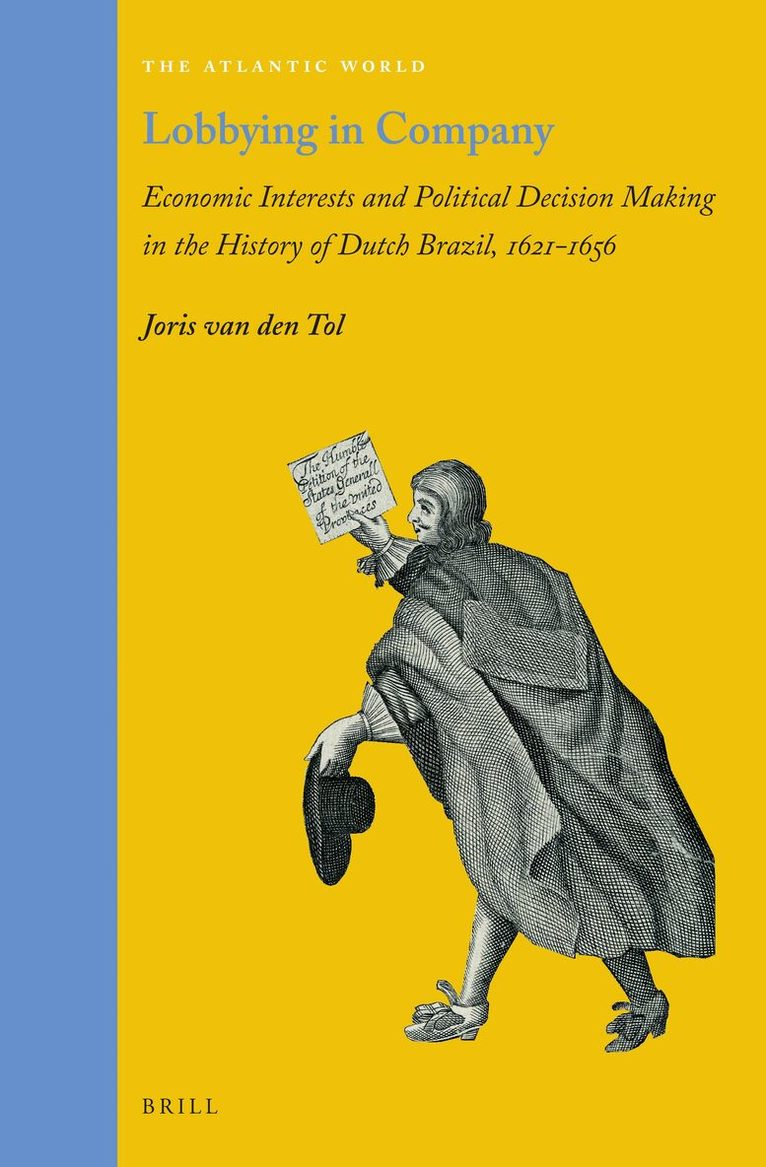
    Lobbying in Company

    Economic Interests and Political Decision Making in the History of Dutch Brazil, 1621–1656

    AvJoris van den Tol

    Inbunden, Engelska, 2020

    Del 38 i serien Atlantic World

    2 030 kr

    Beställningsvara. Skickas inom 5-8 vardagar. Fri frakt över 249 kr.

    Beskrivning

    In Lobbying in Company, Joris van den Tol argues that people made a difference in the Dutch West India Company colony in Brazil (1630–1654). Through a combination of petitions, personal relations, and public opinion, individuals were able to exercise influence on the decision-making process regarding Dutch Brazil. His thorough analysis of these different elements offers a new perspective on the Atlantic and the Dutch Republic in the seventeenth century as well as a better understanding of lobbying in the early modern period.

    Produktinformation

    • Utgivningsdatum:2020-10-22
    • Mått:155 x 235 x 27 mm
    • Vikt:686 g
    • Format:Inbunden
    • Språk:Engelska
    • Serie:Atlantic World
    • Antal sidor:322
    • Förlag:Brill
    • ISBN:9789004397958

    Utforska kategorier

    • Kolonialism och imperialism inom Historia och arkeologi
    • Slaveri inom Historia och arkeologi
    • Internationella relationer inom Samhälle och politik

    Mer om författaren

    Joris van den Tol (Ph.D., Leiden 2018) is a visiting postdoctoral scholar at Harvard’s History Department on a NWO Rubicon fellowship. He has published on petitions in relation to the colonies in Brazil, New Netherland, and Taiwan and on smuggling.

    Innehållsförteckning

    • List of Figures, Graphs and TablesAcknowledgementsAbbreviationsIntroduction1 Lobbying for the Creation of the WIC1 The Dutch Republic1.1 The Cities1.2 Provincial States1.3 States General1.4 The Stadtholders1.5 Conflicting Powersbr/>2 The West India Company2.1 Willem Usselincx2.2 The Layout of the WIC3 Brazil4 Conclusion2 Lobbying in Brazil1 1624/1630–1636: Ad Hoc Solutions2 1637–1646: Consolidation and a Prince in the Tropics2.1 The Diet as a Colonial Tool2.2 The Brazilian Diet of 16402.3 The 81 Petitions of August 16402.4 Petitions for Regulations3 Religious Affairs3.1 The Power of the Church4 Slavery4.1 Access to Institutions for Non-European5 The Possible Consequence of Top-Down Decision Making5.1 Johan Maurits’ Reaction5.2 The Reactions from the Council of Justice and the Ministers6 Conclusion3 Trading Regulations or Free Trade1 The Opening Moves2 Selecting the Playing Field3 Making It Count4 Making It Count Even More5 The Role of the Amsterdam City Council6 Delaying a Decision7 Lobbying to and from the Colony8 Conclusion4 Petitioning the Public Sphere1 What Is the Public Sphere?2 The Dutch Public Sphere2.1 Pamphlets and Dutch Brazil3 Petitions and Public Opinion3.1 Printed Petitions4 Multiple Signatures on Petitions4.1 Group Petitions to the States General5 Managing Information of the Revolt in Brazil6 Petitioning the Public Sphere on Brazil7 Petitioning the Public Sphere on the Atlantic7.1 Other Forms of Signatures8 Conclusion5 Personal Connections and Direct Lobbying1 Personal Connections and Societal Capital2 Appointing a New High Government in Brazil3 Background Issues3.1 Peace Negotiations in Münster3.2 A Frisian Chamber in the WIC4 Information Control5 Personal Relations6 Conclusion6 The Last Hope, 1652–16541 The Second Battle of Guarapes2 Why Was Brazil Lost?3 The Delegates from Brazil4 Requesting a Resolution from the States General5 A Delegation to Friesland5.1 The Report from the Friesland Commission6 Accelerating the Admiralties7 Seizing Momentum8 Planning for the Future9 It Is All about the Money9.1 It Is about the People10 The Loss of Brazil11 Conclusion7 Lobbying for Money in the Aftermath of Dutch Brazil1 Return to the Republic2 Claiming Wages3 Travel Pennies4 Shared Features5 The Printed Petition from the Army6 Conclusion8 Making the Company WorkAppendix A – Free Trade Exports from Brazil in 1637Manuscript SourcesSecondary Literature and Published SourcesIndex