• Fri frakt över 249 kr
  • •
  • Snabba leveranser
  • •
  • Billiga böcker
Kundservice

Du är på sajten för privatpersoner.

Företag, bibliotek eller offentlig verksamhet?

Du handlar på classic.bokus.com, där alla dina funktioner finns intakta.
Till classic.bokus.com
Bokus logotyp. Gå till startsidan.
  • Erbjudanden
  • Nyheter
  • Student
  • Topplistor
  • Barn & ungdom
  • Bokus Play
  • E-böcker
  • Pocketböcker
  • Spel & pussel

10% rabatt på allt med kod: NYSTART10 →

Sidfot

Mina sidor

    Hjälp

    • Kundservice
    • Vanliga frågor och svar
    • Frakt och leverans
    • Retur vid ångerrätt
    • Reklamera vara
    • Betalning
    • Köpvillkor
    • Allmänna villkor
    • Information om webbplatsens tillgänglighet

    Om Bokus

    • Om oss
    • Pressrum
    • För studenter
    • För företag
    • För bibliotek och offentlig verksamhet
    • För leverantörer
    • Hållbarhet

    Populärt

    • Aktuella erbjudanden
    • Presentkort
    • Studentlitteratur
    • Nya böcker
    • Topplistor
    • Signerade böcker
    • Engelska böcker

    Inspiration

    • Boktips
    • BookTok
    • Populära bokserier
    • Barnbokskaraktärer
    • Populära författare
    Logotyp för Bokus
    Följ oss på Facebook (extern länk)Följ oss på Instagram (extern länk)Följ oss på YouTube (extern länk)Följ oss på TikTok (extern länk)
    bokus @ CookiesAnpassa cookiesIntegritetspolicyKöpvillkor
    Till Citymail hemsida (extern länk)Till Budbee hemsida (extern länk)Till Postnord hemsida (extern länk)Till Schenker hemsida (extern länk)Till Early Bird hemsida (extern länk)Till Walleys hemsida (extern länk)
    1. Historia och arkeologi
    2. Historia
    3. Historia: särskilda händelser och ämnen
    4. Historisk geografi

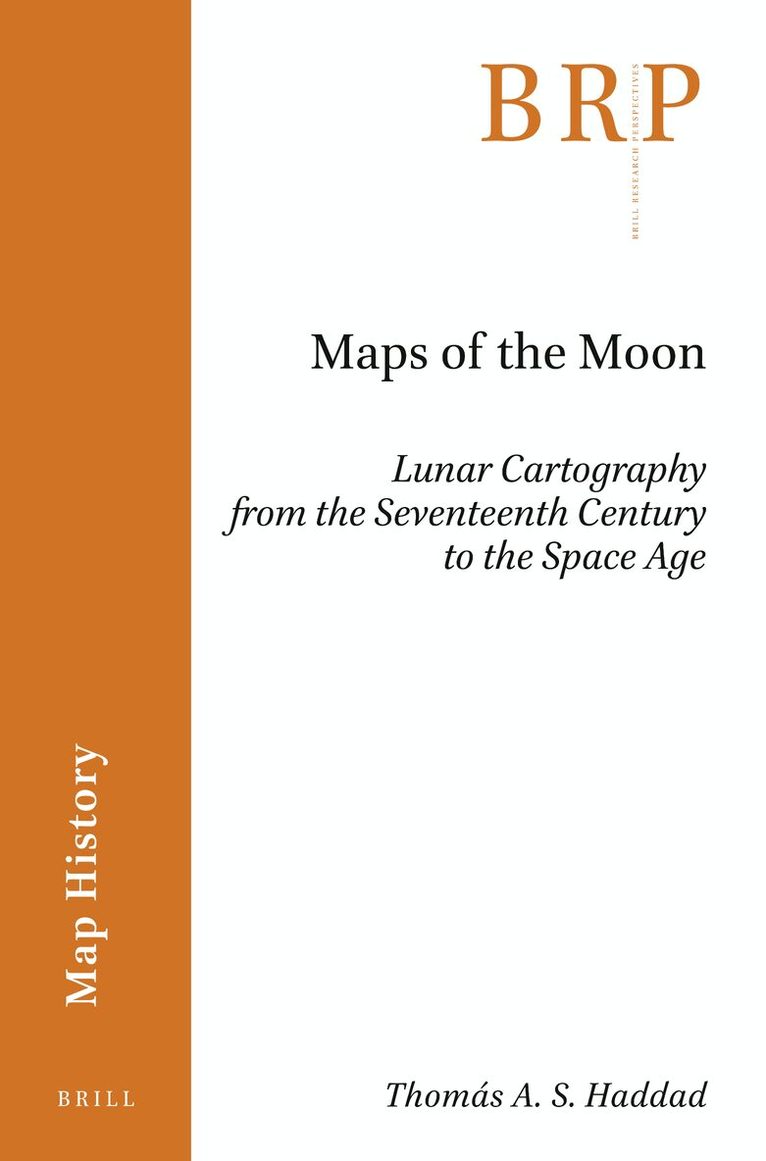
    Maps of the Moon

    Lunar Cartography from the Seventeenth Century to the Space Age

    AvThomás A. S. Haddad

    Häftad, Engelska, 2019

    Del i serien Brill Research Perspectives in Map History

    1 237 kr

    Beställningsvara. Skickas inom 5-8 vardagar. Fri frakt över 249 kr.

    Beskrivning

    When does a depiction of the moon become a lunar map? This publication addresses this question from theoretical and historical standpoints. It is argued that moon maps are of crucial importance to the history of cartography, for they challenge established notions of what a map is, how it functions, what its purposes are, and what kind of power it embodies and performs. The publication also shows how terrestrial cartography has shaped the history of lunar mapping since the seventeenth century, through visual and nomenclature conventions, the cultural currency of maps, mapmakers’ social standing, and data-gathering and projection practices. It further demonstrates that lunar cartography has also been organized by an internal principle that is born of the fundamental problem of how to create static map spaces capable of representing a referent that is constantly changing to our eyes, as is the visible face of the moon. It is suggested that moon maps may be classed in three broad categories, according to the kinds of solutions for this representational problem that have been devised over the last 400 years.

    Produktinformation

    • Utgivningsdatum:2019-12-30
    • Mått:155 x 235 x 6 mm
    • Vikt:178 g
    • Format:Häftad
    • Språk:Engelska
    • Serie:Brill Research Perspectives in Map History
    • Antal sidor:98
    • Förlag:Brill
    • ISBN:9789004400887

    Utforska kategorier

    • Historisk geografi inom Historia och arkeologi

    Mer om författaren

    Thomás A. S. Haddad, Ph.D. (2004), University of São Paulo, is Senior Lecturer in the History of Science at that university. He has published book chapters and articles on the cultural history of early modern astronomy, and is currently the editor of the Brazilian Journal for the History of Science.

    Innehållsförteckning

    • Maps of the Moon: Lunar Cartography from the Seventeenth Century to the Space AgeThomás A. S. HaddadAbstractKeywordsIntroduction: Bringing the History of Cartography to the History of Moon Maps1 Approaches to the Specificity of Moon Maps2 Making It Visible: Bringing the Moon Down to the Earth3 Making It Legible: Taking the Earth Up to the Moon4 Time Concreted5 Time Abstracted6 Time EliminatedConcluding Remarks: the Moon Is Dead, Long Live the MoonBibliography