• Fri frakt över 249 kr
  • •
  • Snabba leveranser
  • •
  • Billiga böcker
Kundservice

Du är på sajten för privatpersoner.

Företag, bibliotek eller offentlig verksamhet?

Du handlar på classic.bokus.com, där alla dina funktioner finns intakta.
Till classic.bokus.com
Bokus logotyp. Gå till startsidan.
  • Erbjudanden
  • Nyheter
  • Student
  • Topplistor
  • Barn & ungdom
  • Bokus Play
  • E-böcker
  • Pocketböcker
  • Spel & pussel

10% rabatt på allt med kod: NYSTART10 →

Sidfot

Mina sidor

    Hjälp

    • Kundservice
    • Vanliga frågor och svar
    • Frakt och leverans
    • Retur vid ångerrätt
    • Reklamera vara
    • Betalning
    • Köpvillkor
    • Allmänna villkor
    • Information om webbplatsens tillgänglighet

    Om Bokus

    • Om oss
    • Pressrum
    • För studenter
    • För företag
    • För bibliotek och offentlig verksamhet
    • För leverantörer
    • Hållbarhet

    Populärt

    • Aktuella erbjudanden
    • Presentkort
    • Studentlitteratur
    • Nya böcker
    • Topplistor
    • Signerade böcker
    • Engelska böcker

    Inspiration

    • Boktips
    • BookTok
    • Populära bokserier
    • Barnbokskaraktärer
    • Populära författare
    Logotyp för Bokus
    Följ oss på Facebook (extern länk)Följ oss på Instagram (extern länk)Följ oss på YouTube (extern länk)Följ oss på TikTok (extern länk)
    bokus @ CookiesAnpassa cookiesIntegritetspolicyKöpvillkor
    Till Citymail hemsida (extern länk)Till Budbee hemsida (extern länk)Till Postnord hemsida (extern länk)Till Schenker hemsida (extern länk)Till Early Bird hemsida (extern länk)Till Walleys hemsida (extern länk)
    1. Ekonomi och Ledarskap
    2. Nationalekonomi

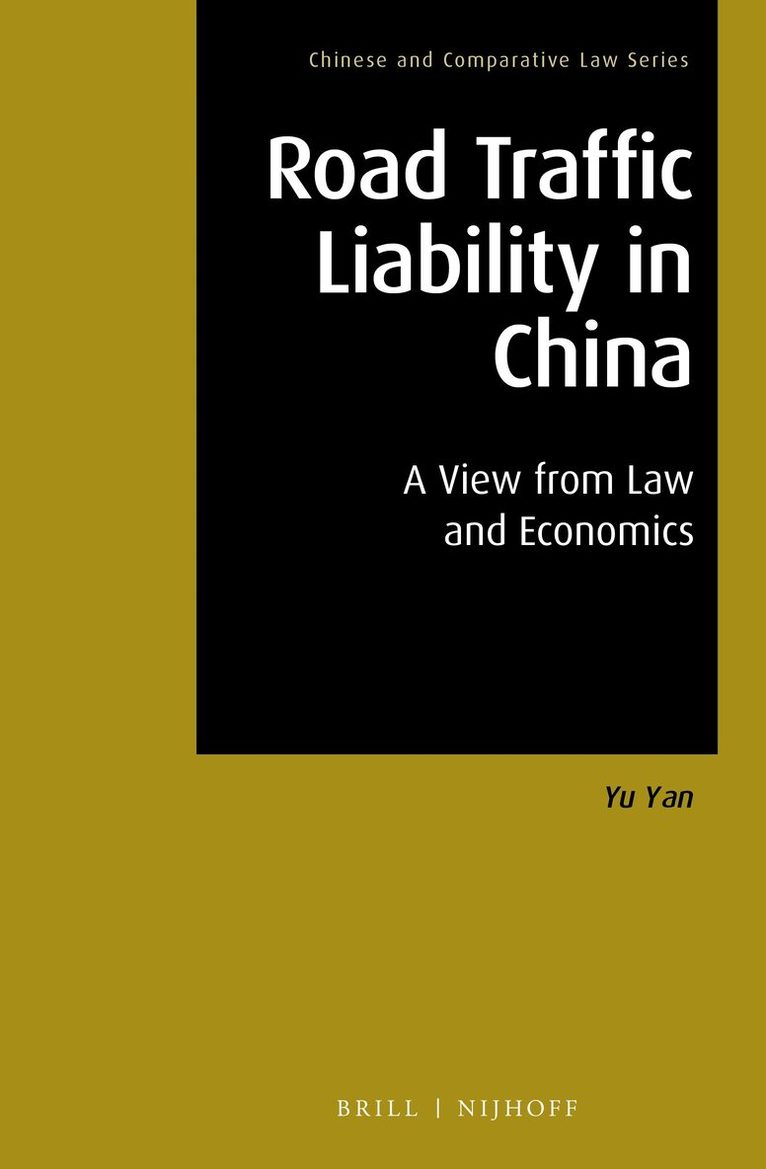
    Road Traffic Liability in China

    A View from Law and Economics

    AvYu Yan

    Inbunden, Engelska, 2019

    Del 8 i serien Chinese and Comparative Law Series

    3 346 kr

    Beställningsvara. Skickas inom 5-8 vardagar. Fri frakt över 249 kr.

    Beskrivning

    In Road Traffic Liability in China: A View from Law and Economics, Yu Yan provides an in-depth analysis of the Chinese road traffic liability system, as well as other alternative accident prevention schemes from a view of law and economics. The analysis refers to the functioning of the system both on paper and in practice. The conclusion shows that the current Chinese traffic liability system can only achieve partial deterrence, and that the problems of under-compensation and insufficient risk-spreading seem to be serious, at least in the economically underdeveloped regions. Based on these findings, Yu Yan suggests specific legislative changes to be taken for the policymakers to improve the system.

    Produktinformation

    • Utgivningsdatum:2019-11-21
    • Mått:155 x 235 x 22 mm
    • Vikt:744 g
    • Format:Inbunden
    • Språk:Engelska
    • Serie:Chinese and Comparative Law Series
    • Antal sidor:382
    • Förlag:Brill
    • ISBN:9789004410015

    Utforska kategorier

    • Nationalekonomi inom Ekonomi och Ledarskap
    • Komparativ rätt inom Juridik
    • Rättsordning inom Juridik

    Mer om författaren

    Yu Yan obtained her Ph.D. in Law in 2018 in Institute for Transnational Legal Research (METRO) at Maastricht University in the Netherlands. She now works as a research fellow in School of Law at Xiamen University in China. She has published several articles and her research interest includes tort law, law and economics analysis of accident law, and insurance law.

    Innehållsförteckning

    • AcknowledgmentsList of IllustrationsList of AbbreviationsIntroduction1 Background2 Aims of the Book3 Structure and Brief Overview 1 The First Phase of DevelopmentIntroduction1 The Legal Framework for Dealing with rta Related Disputes2 Rules on Road Traffic Liability2.1 Fault-Based Liability in the 1951 Interim Measures2.2 Vicarious Liability in spc’s Judicial Interpretations2.3 Fault-Based Liability in Local Laws3 Rules on the Compensation of Traffic Accident Victims3.1 Limited Amount of Compensation3.2 The Role of the “Danwei” in Victim Compensation3.3 Detailed Rules in the Local Administrative Measures4 Methods Used to Settle rta Compensation Claims5 The Development of Private Insurance6 Conclusion2 The Second Phase of DevelopmentIntroduction1 The Legal Framework for Dealing with rta Related Disputes2 Rules on Road Traffic Liability2.1 Strict Liability in the gpcl2.2 Inconsistent Interpretations in Local Laws2.3 A Uniform Interpretation in the 1991 Regulation2.4 Different Basis of Liability in the rtsl2.5 Liable Person in the tll3 Rules on the Compensation of Road Traffic Victims3.1 Rules for Tort Damages in the gpcl3.2 Detailed Criteria for Calculating Damages Provided by Local Laws3.3 Uniform Criteria for Calculating Damages in the 1991 Regulation3.4 Harmonising the Compensation Criteria in Two Judicial Interpretations4 Current Chinese Legal Framework for rta Prevention4.1 Aims of Tort Liability System4.2 Liability Rules4.3 Safety Regulation and Road Traffic Liability5 The Impact of Insurance on the Road Traffic Liability System5.1 cvli before 20065.2 cvli after 20065.3 Social Security Schemes in China5.4 A Comparison of Different Insurances: Some Empirical Evidence6 Conclusion3 Economic Analysis of Road Traffic LiabilityIntroduction1 Economic Essence of Tort Law2 Deterrence via Tort Liability2.1 Unilateral versus Bilateral Accidents2.2 Applied to Road Traffic Accidents3 The Impact of Imperfect Information3.1 Standard of Care3.2 Causation3.3 Damages 4 The Impact of Regulation4.1 The Need to Regulate Traffic Safety4.2 Arguments for Licensing Driving4.3 Arguments for Regulation4.4 Violation of Traffic Regulation and Liability5 The Impact of Insurance5.1 Risk Aversion and the Demand for Insurance5.2 Problems of Insurance Markets and Possible Solutions6 The Impact of Insolvency7 The Impact of Litigation Costs8 Compensation via Road Traffic Liability8.1 Rationale8.2 Compensation Accomplished by Insurance8.3 Compensation Accomplished by Road Traffic Liability9 Conclusion4 Empirics of Road Traffic LiabilityIntroduction1 The Operation of the Road Traffic Liability Litigation System 1.1 Frequency, Causes, and Severity of Road Traffic Accidents 1.2 Claims Initiation 1.3 Claims Resolution2 Effects of Road Traffic Liability Reform on Litigation and Insurance2.1 Trends in Road Traffic Liability Claims2.2 Effects of Tort Reform on Claim Frequency and Damage Awards2.3 Effects of Tort Reform on Insurance3 Safety Effects of Road Traffic Liability3.1 The Change in the Negligence Rule3.2 Safety Measures4 Costs and Benefits4.1 Administrative Costs4.2 Cost-Benefit Analysis5 Conclusion5 Economic Analysis of Alternative InstrumentsIntroduction1 Alternative Instruments for rta Prevention2 The Choice of Sanctions3 First-Party Insurance Scheme as an Alternative Compensatory Instrument3.1 First-Party Insurance versus Liability Insurance3.2 First-Party Insurance versus Tort Liability4 Compensation Schemes Not Based on Fault4.1 No-Fault Compensation Systems for rta s4.2 Some Empirical Evidence4.3 Rationale of Compulsory Insurance4.4 Rationale of Social Security5 Conclusion6 Critical Analysis of the Current Road Traffic Liability System in ChinaIntroduction1 Critical Analysis of the Road Traffic Liability System in China1.1 Multiple-Goals1.2 Basis of Liability1.3 Objective Test to Determine Fault1.4 Imputability1.5 Causation and Causal Apportionment among Multiple Tortfeasors1.6 Quantum Rules1.7 The Role Played by the Victim1.8 Interplay between Traffic Safety Regulation and Tort Law2 Critical Analysis of the Chinese rta Compensation System2.1 Liability Insurance in China2.2 First-party Insurance and Social Security Schemes3 Some Empirics3.1 Frequency, Severity, and Causes of Road Traffic Accidents3.2 Claim Initiation3.3 Claim Resolution 3.4 Litigation Costs3.5 The Effectiveness of Road Traffic Safety Regulation4 Conclusion7 Summary, Policy Recommendations and Future Developments1 Summary of Main Findings 1.1 Answers to Question 1 1.2 Answers to Question 2 1.3 Answers to Question 3 1.4 Answers to Question 4 1.5 Answers to Question 5 2 Possibilities for Future Research 3 The Way Forward Appendix 1: Chinese LegislationAppendix 2: Cases Appendix 3: InterviewsBibliographyIndex