• Fri frakt över 249 kr
  • •
  • Snabba leveranser
  • •
  • Billiga böcker
Kundservice

Du är på sajten för privatpersoner.

Företag, bibliotek eller offentlig verksamhet?

Du handlar på classic.bokus.com, där alla dina funktioner finns intakta.
Till classic.bokus.com
Bokus logotyp. Gå till startsidan.
  • Erbjudanden
  • Nyheter
  • Student
  • Topplistor
  • Barn & ungdom
  • Bokus Play
  • E-böcker
  • Pocketböcker
  • Spel & pussel

10% rabatt på allt med kod: NYSTART10 →

Sidfot

Mina sidor

    Hjälp

    • Kundservice
    • Vanliga frågor och svar
    • Frakt och leverans
    • Retur vid ångerrätt
    • Reklamera vara
    • Betalning
    • Köpvillkor
    • Allmänna villkor
    • Information om webbplatsens tillgänglighet

    Om Bokus

    • Om oss
    • Pressrum
    • För studenter
    • För företag
    • För bibliotek och offentlig verksamhet
    • För leverantörer
    • Hållbarhet

    Populärt

    • Aktuella erbjudanden
    • Presentkort
    • Studentlitteratur
    • Nya böcker
    • Topplistor
    • Signerade böcker
    • Engelska böcker

    Inspiration

    • Boktips
    • BookTok
    • Populära bokserier
    • Barnbokskaraktärer
    • Populära författare
    Logotyp för Bokus
    Följ oss på Facebook (extern länk)Följ oss på Instagram (extern länk)Följ oss på YouTube (extern länk)Följ oss på TikTok (extern länk)
    bokus @ CookiesAnpassa cookiesIntegritetspolicyKöpvillkor
    Till Citymail hemsida (extern länk)Till Budbee hemsida (extern länk)Till Postnord hemsida (extern länk)Till Schenker hemsida (extern länk)Till Early Bird hemsida (extern länk)Till Walleys hemsida (extern länk)
    1. Språk och ordböcker
    2. Språkvetenskap och lingvistik

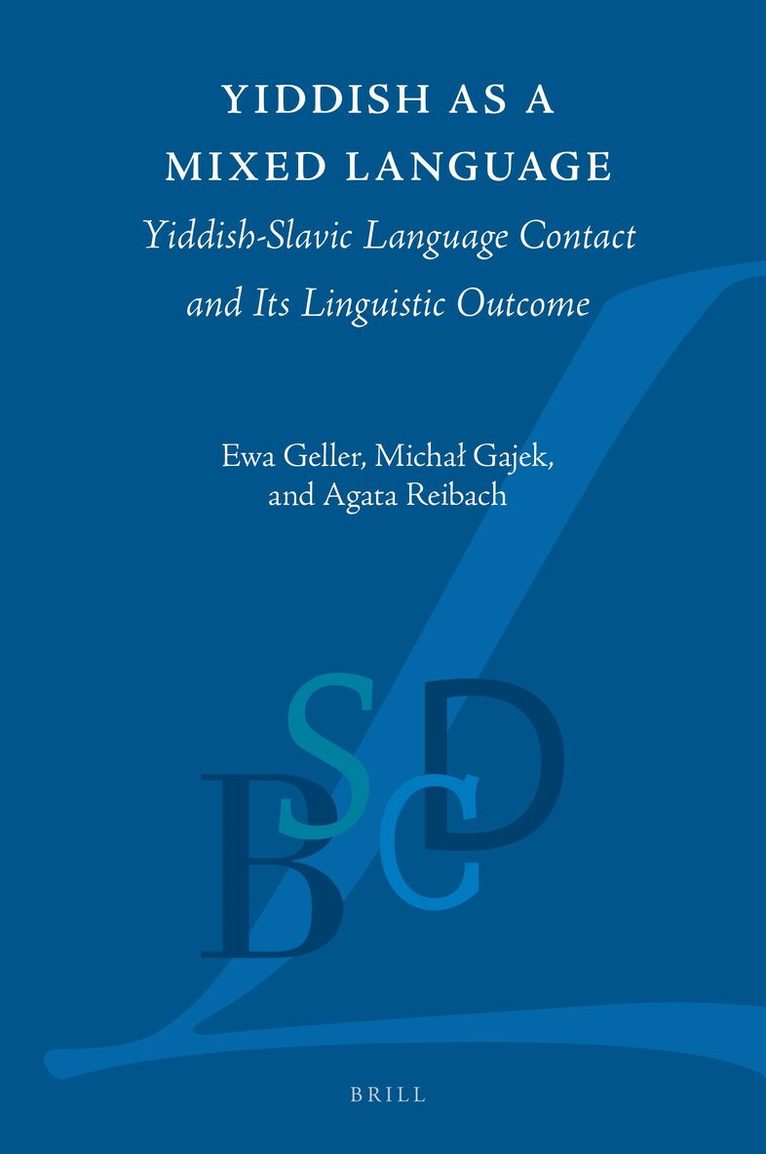
    Yiddish as a Mixed Language

    Yiddish-Slavic Language Contact and Its Linguistic Outcome

    AvEwa Geller,Michał Gajek

    Inbunden, Engelska, 2022

    Del 3 i serien Brill Studies in Language Contact and the Dynamics of Language

    2 082 kr

    Beställningsvara. Skickas inom 5-8 vardagar. Fri frakt över 249 kr.

    Beskrivning

    Yiddish, the language of Eastern-European Jews, has so far been mostly described as Germanic within the framework of the traditional, divergence-based Language Tree Model. Meanwhile, advances in contact linguistics allow for a new approach, placing the idiom within the mixed language spectrum, with the Slavic component playing a significant role. So far, the Slavic elements were studied as isolated, adstratal borrowings. This book argues that they represent a coherent system within the grammar. This suggests that the Slavic languages had at least as much of a constitutive role in the inception and development of Yiddish as German and Hebrew. The volume is copiously illustrated with examples from the vernacular language.With a contribution of Anna Pilarski, University of Szczecin.

    Produktinformation

    • Utgivningsdatum:2022-11-17
    • Mått:155 x 235 x 25 mm
    • Vikt:633 g
    • Format:Inbunden
    • Språk:Engelska
    • Serie:Brill Studies in Language Contact and the Dynamics of Language
    • Antal sidor:286
    • Förlag:Brill
    • ISBN:9789004423978

    Utforska kategorier

    • Språkvetenskap och lingvistik inom Språk och ordböcker

    Mer om författaren

    Ewa Geller is full professor of Linguistics at the Department of German Studies at the University of Warsaw. Her research focuses on the origins and structure of Eastern Yiddish. She is the author of Warschauer Jiddisch and other significant works in the field.Michał Gajek obtained his Ph.D. in Linguistics at the University of Warsaw, defending a dissertation entitled Mechanisms of the Integration of Yiddish Loanwords in Polish from the Point of View of Contact Linguistics. His primary fields of work are language contact, diachronic linguistics, digital lexicography.Agata Reibach obtained her Ph.D. in Linguistics at the University of Warsaw, defending a dissertation entitled Der jidišer šnajder: Jewish-Polish Linguistic Contact on Example of ‘Tailoring’ Semantic Field in Yiddish. Her research interests focus on Yiddish lexicology, semantics and sociolects from a contact-linguistic perspective. She is a translator and teacher of Yiddish.

    Innehållsförteckning

    • PrefaceList of Illustrations and TablesAbbreviations1 Max Weinreich and Slavic Component of YiddishMichał Gajek1 Introduction2 Max Weinreich on Slavic-Yiddish Language Contact—Attempts at Revision3 Slavic Elements in Subsystems of Yiddish4 Discussion and Conclusions2 Yiddish in the Framework of the Mixed Language DebateEwa Geller and Michał Gajek1 Introduction2 Defining Terminology3 Yiddish-Slavic Language Contact4 Language Shift in Inception of Eastern Yiddish5 Borrowing in Development of Eastern Yiddish6 Yiddish as Mixed Language7 Conclusions3 Role of Slavic Matter Borrowings in New Pattern GrammaticalizationEwa Geller1 Introduction2 Theoretical Framework3 Method4 Analysis and Its Results5 Conclusions4 De-Construction of German-Type CompoundsAgata Reibach1 Introduction2 Methods3 Compound Types in Yiddish4 Compounds in Yiddish Component Languages5 Results6 Conclusions5 Core Vocabulary Borrowability Restrictions: Case of Semantic Field ‘Body’Agata Reibach1 Introduction2 Methods3 Results4 Discussion and DesiderataAppendix6 Convergence of Syntactic Structures of Yiddish and Polish Direct Interrogative Sentences: Remarks on Parametric Structure of CP and wh-MovementAnna Pilarski1 Introduction2 Methods3 Analysis4 Results5 Conclusions7 Yiddish as Donor Language for PolishMichał Gajek1 Introduction2 Methodological Issues3 Yiddish Loanwords in Polish—Integration and Assimilation4 Yiddishisms in Polish Vocabulary as Example of Low-Variety Influence5 Conclusions and DesiderataReferencesIndex