• Fri frakt över 249 kr
  • •
  • Snabba leveranser
  • •
  • Billiga böcker
Kundservice

Du är på sajten för privatpersoner.

Företag, bibliotek eller offentlig verksamhet?

Du handlar på classic.bokus.com, där alla dina funktioner finns intakta.
Till classic.bokus.com
Bokus logotyp. Gå till startsidan.
  • Erbjudanden
  • Nyheter
  • Student
  • Topplistor
  • Barn & ungdom
  • Bokus Play
  • E-böcker
  • Pocketböcker
  • Spel & pussel

10% rabatt på allt med kod: NYSTART10 →

Sidfot

Mina sidor

    Hjälp

    • Kundservice
    • Vanliga frågor och svar
    • Frakt och leverans
    • Retur vid ångerrätt
    • Reklamera vara
    • Betalning
    • Köpvillkor
    • Allmänna villkor
    • Information om webbplatsens tillgänglighet

    Om Bokus

    • Om oss
    • Pressrum
    • För studenter
    • För företag
    • För bibliotek och offentlig verksamhet
    • För leverantörer
    • Hållbarhet

    Populärt

    • Aktuella erbjudanden
    • Presentkort
    • Studentlitteratur
    • Nya böcker
    • Topplistor
    • Signerade böcker
    • Engelska böcker

    Inspiration

    • Boktips
    • BookTok
    • Populära bokserier
    • Barnbokskaraktärer
    • Populära författare
    Logotyp för Bokus
    Följ oss på Facebook (extern länk)Följ oss på Instagram (extern länk)Följ oss på YouTube (extern länk)Följ oss på TikTok (extern länk)
    bokus @ CookiesAnpassa cookiesIntegritetspolicyKöpvillkor
    Till Citymail hemsida (extern länk)Till Budbee hemsida (extern länk)Till Postnord hemsida (extern länk)Till Schenker hemsida (extern länk)Till Early Bird hemsida (extern länk)Till Walleys hemsida (extern länk)
    1. Historia och arkeologi
    2. Historia
    3. Allmän historia och världshistoria

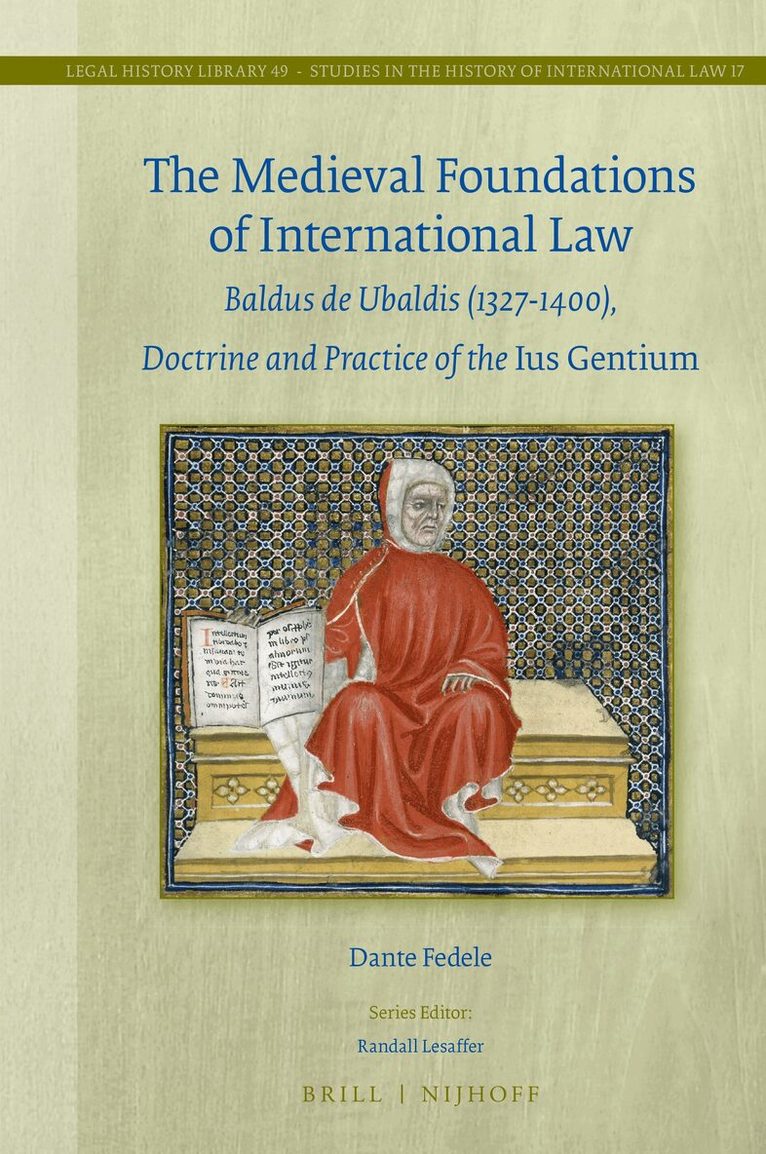
    Medieval Foundations of International Law

    Baldus de Ubaldis (1327–1400), Doctrine and Practice of the Ius Gentium

    AvDante Fedele

    Inbunden, Engelska, 2021

    Del i serien Studies in the History of International Law

    3 356 kr

    Beställningsvara. Skickas inom 5-8 vardagar. Fri frakt över 249 kr.

    Beskrivning

    Dante Fedele’s new work of reference reveals the medieval foundations of international law through a comprehensive study of a key figure of late medieval legal scholarship: Baldus de Ubaldis (1327-1400). A student of Bartolus de Sassoferrato, Baldus wrote both extensive commentaries on Roman, canon and feudal law and thousands of consilia originating from particular cases. His writings dealt with numerous issues related to sovereignty, territorial jurisdiction, diplomacy and war, combining a rich conspectus of earlier scholarship with highly creative ideas that exercised a profound influence on later juristic thought. The detailed picture of the international law doctrines elaborated by a prominent medieval jurist offered in this study contributes to our understanding of the intellectual archaeology of international law."Dr. Fedele’s monograph will no doubt become a necessary work of reference for any scholar interested in the history of international law. [...] Beyond the specific doctrines on particular areas of international law, Dr. Fedele’s study of Baldus shows how in the area of international governance, jurists sought to marshal different expressions of normativity." - Alain Wijffels, Foreword

    Produktinformation

    • Utgivningsdatum:2021-04-30
    • Mått:155 x 235 x 51 mm
    • Vikt:1 319 g
    • Format:Inbunden
    • Språk:Engelska
    • Serie:Studies in the History of International Law
    • Antal sidor:698
    • Förlag:Brill
    • ISBN:9789004447110

    Utforska kategorier

    • Allmän historia och världshistoria inom Historia och arkeologi

    Mer om författaren

    Dante Fedele, Ph.D. (2014), is Research Fellow at the CNRS (CHJ UMR 8025 - Lille). His publications on the history of diplomacy and international law include Naissance de la diplomatie moderne (XIIIe-XVIIe siècles). L’ambassadeur au croisement du droit, de l’éthique et de la politique (Nomos, 2017).

    Innehållsförteckning

    • ExerguePrefaceAcknowledgements1 Introduction1 ‘International Law’ in the Middle Ages2 The ‘Medieval Foundations’ of International Law3 Baldus de Ubaldis4 Structure5 A Note on the Sources2 Universal Authorities and Territorial Polities1 The Emperor’s Sovereignty1.1 The Emperor ‘Lord of the World’1.2 The Universality of Imperial Sovereignty1.3 Summary2 The Pope’s Sovereignty and the Relationship between the Emperor and the Pope2.1 The Pope’s Sovereignty2.2 The Relationship between the Emperor and the Pope2.2.1 Imperial Coronation2.2.2 The Pope’s Exercise of the Imperial Vicariate During a Vacancy in the Empire2.2.3 The Papal Right to Depose the Emperor2.3 The Pope’s Sovereignty in the Lands of St Peter2.4 Summary3 Kingdoms3.1 ‘Rex Superiorem Non Recognoscens in Regno Suo Est Imperator’3.2 The Relationship between Kingdoms and the Empire3.3 The Relationship between Kingdoms and the Church3.4 Summary4 Signorie and Vicariates4.1 The Legitimation of Seigneurial Rule4.2 Giangaleazzo Visconti and His Ducal Titles4.3 Summary5 Cities That Recognise No Superior5.1 The Juristic Debate on Cities’ Autonomy5.2 The Foundations of Cities’ Autonomy5.3 Cities belonging to the Papal Lands5.4 Summary3 Feudo-Vassalic Relations and Territorial Jurisdiction1 Feudo-Vassalic Relations1.1 ‘Feudum a Fidelitate’1.2 The Vassal’s Obligation to Respond to the Lord’s Call to Arms1.3 The Prohibition against the Alienation of Fiefs, and the Resolution of Feudal Disputes1.4 The Public Character of Feuda Dignitatum1.5 Summary2 Territory and Jurisdiction (i)2.1 ‘Territorium a Terrendo’2.2  ‘Iurisdictio Cohaeret Territorio’2.3 The Grant of a Castrum2.4 The Prescription of Jurisdiction3 Territory and Jurisdiction (ii)3.1 The Boundaries of Territory3.2 The Sea3.3 Summary4 Conflicts of Laws and Jurisdiction4.1 Citizenship and Foreignness4.1.1 Native and Naturalised Citizens4.1.2 Foreigners4.2 The Conflict of Laws4.3 Conflicts of Laws and Jurisdiction in Criminal Matters4.3.1 The Forum Loci Delicti4.3.2 The Forum of the Defendant’s Place of Origin4.3.3 The Forum of the Defendant’s Place of Residence, and the Prosecution of Foreigners for Offences Committed Abroad4.3.4 Summons and Extraditions4.3.5 Bis in Idem4.4 Summary4 Diplomacy1 The Office of Ambassador1.1 The Ambassador and the Papal Legate1.2 The Actors Entitled to Send Ambassadors1.3 The Ambassador’s Appointment and the Compulsory Nature of the Office1.4 The Right to a Salary or Reimbursement for Losses1.5 The Capacity to Accept or Solicit Gifts1.6 Inviolability, Immunities and Other Privileges1.7 Summary2 The Ambassador’s Negotiating Powers and the Ratification of Treaties2.1Nuntius, Procurator and Syndicus2.2 Procurations2.3 The Ratification of Treaties2.4 The Effects of Treaties on Individual Citizens2.5 Summary3 The Observance of Treaties3.1 The Binding Force of Agreements3.1.1 Agreements Concluded by the Emperor or the Pope3.1.2 Agreements Concluded by Kings3.1.3 Agreements Concluded by Cities3.2 Exceptions to the Principle3.2.1 Vices of Consent,Causa, and the Public Utility3.2.2 The Implied Clauses Rebus sic se Habentibusand Frangenti Fidem Fides Frangitur3.3 Summary4 Leagues, Adhaerentiae and Submissions4.1 Leagues4.1.1 The Legitimacy of Leagues4.1.2 Leagues as Corporate Bodies4.1.3 League Treaties as ‘Contracts of Strict Law’4.1.4 The Rights and Obligations of Allies4.2 Adhaerentiae4.3 Submissions4.4 Summary5 War and Reprisals1 The Conditions of Just War1.1 Late Medieval Categorizations of Just War Conditions1.2 Legitimate Authority1.3 Just Cause1.3.1 War of Aggression1.3.2 Defensive War1.3.3 War of Recovery1.3.4 Unilateral or Bilateral Justice1.4 Summary2 The Conduct of War2.1 The Scope of Diffidatio and the Obligation to Serve in the Army2.2 The Soldiers’ Responsibility, Obligations and Rights2.3 The Limitation of Violence in War (Moderamen, Pax Dei and Treuga Dei)2.4 Truces between War and Peace2.5 Summary3 The Law of Booty and Captives3.1 General Principles3.2 The Law of Booty3.3 The Occupation of Foreign Territory3.4 The Law of Captives3.4.1 The Status of Captives3.4.2 Captives and Captors3.4.3 Postliminium and the Redemption of Captives3.5 Summary4 Peacemaking and the Safeguarding of Peace4.1 The Meaning of Pax4.2 Arbitrations4.3 Amnesty and Restitution Clauses4.4 The Status of Conquered Territories4.5 The Safeguarding of Peace4.6 Summary5 Reprisals5.1 Reprisals between Practice and Doctrine5.2 The Legitimacy of Reprisals5.3 Reprisals and Citizenship5.4 The Granting and the Execution of Reprisals5.5 SummaryConclusionBibliographyIndex