• Fri frakt över 249 kr
  • •
  • Snabba leveranser
  • •
  • Billiga böcker
Kundservice

Du är på sajten för privatpersoner.

Företag, bibliotek eller offentlig verksamhet?

Du handlar på classic.bokus.com, där alla dina funktioner finns intakta.
Till classic.bokus.com
Bokus logotyp. Gå till startsidan.
  • Erbjudanden
  • Nyheter
  • Student
  • Topplistor
  • Barn & ungdom
  • Bokus Play
  • E-böcker
  • Pocketböcker
  • Spel & pussel

10% rabatt på allt med kod: NYSTART10 →

Sidfot

Mina sidor

    Hjälp

    • Kundservice
    • Vanliga frågor och svar
    • Frakt och leverans
    • Retur vid ångerrätt
    • Reklamera vara
    • Betalning
    • Köpvillkor
    • Allmänna villkor
    • Information om webbplatsens tillgänglighet

    Om Bokus

    • Om oss
    • Pressrum
    • För studenter
    • För företag
    • För bibliotek och offentlig verksamhet
    • För leverantörer
    • Hållbarhet

    Populärt

    • Aktuella erbjudanden
    • Presentkort
    • Studentlitteratur
    • Nya böcker
    • Topplistor
    • Signerade böcker
    • Engelska böcker

    Inspiration

    • Boktips
    • BookTok
    • Populära bokserier
    • Barnbokskaraktärer
    • Populära författare
    Logotyp för Bokus
    Följ oss på Facebook (extern länk)Följ oss på Instagram (extern länk)Följ oss på YouTube (extern länk)Följ oss på TikTok (extern länk)
    bokus @ CookiesAnpassa cookiesIntegritetspolicyKöpvillkor
    Till Citymail hemsida (extern länk)Till Budbee hemsida (extern länk)Till Postnord hemsida (extern länk)Till Schenker hemsida (extern länk)Till Early Bird hemsida (extern länk)Till Walleys hemsida (extern länk)
    1. Samhälle och politik
    2. Samhälle och kultur

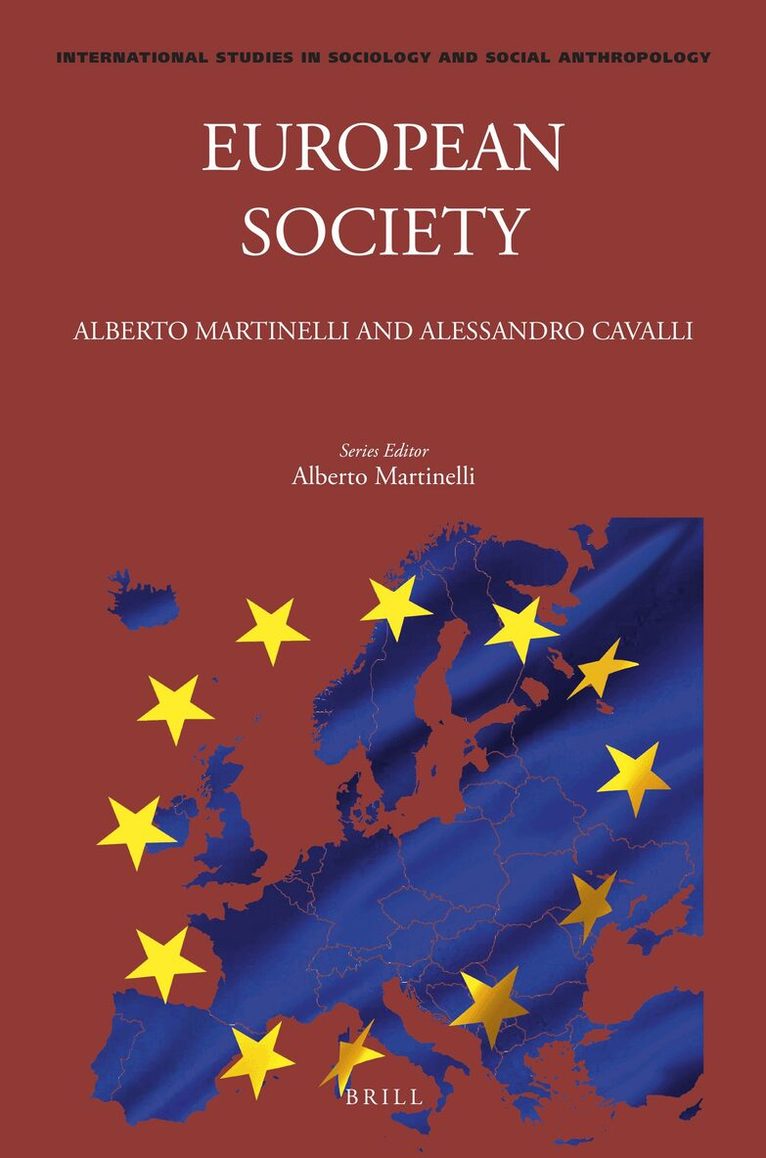
    European Society

    AvAlberto Martinelli,Alessandro Cavalli

    Häftad, Engelska, 2021

    Del 133 i serien International Studies in Sociology and Social Anthropology

    665 kr

    Beställningsvara. Skickas inom 5-8 vardagar. Fri frakt över 249 kr.

    Fler format och utgåvor

    Inbunden

    3 707 kr

    Beskrivning

    The EU today is at a crossroads: either it becomes a great supranational union or it goes back to being an array of separate independent states. Alberto Martinelli and Alessandro Cavalli draw a grand fresco of the society in which the European Union is taking shape. Long-term social and cultural trends and main current developments in economics and politics are synthetically outlined. Key questions of identity and nationalism, immigration and inequality, welfare and economic governance, are thoroughly analysed. Main cleavages, conflicts of interest and different visions of member states, as well as institutional reforms and crisis management strategies are critically discussed. A detailed proposal for advancing the process of political integration concludes the volume.

    Produktinformation

    • Utgivningsdatum:2021-09-02
    • Mått:155 x 235 x 23 mm
    • Vikt:656 g
    • Format:Häftad
    • Språk:Engelska
    • Serie:International Studies in Sociology and Social Anthropology
    • Antal sidor:376
    • Förlag:Brill
    • ISBN:9789004471443

    Utforska kategorier

    • Samhälle och kultur inom Samhälle och politik
    • Sociologi och antropologi inom Samhälle och politik
    • Internationella relationer inom Samhälle och politik

    Mer om författaren

    Alberto Martinelli, laurea in Economics (Milan, 1964); Ph.D. in Sociology (Berkeley, 1975), and Professor Emeritus of Sociology and Political Science, Milan. His most recent books include Global Modernization (Sage, 2005); Transatlantic Divide (Oxford University Press, 2007), and Mal di nazione (Bocconi University Press, 2013).Alessandro Cavalli, laurea in Economic History (Milan, 1963), and former Professor of Sociology at the University of Pavia, Italy. He has published several monographs on the history of sociology, youth, education, memory and time.

    Innehållsförteckning

    • Tables and FiguresIntroduction1The European Identity1 Preface: Identity and Identification2 One or Many European Identities?3 Rationalism and Individualism/Subjectivity4 University and Scientific Research, Market Capitalism and Industrial Enterprise, Nation State and Polyarchic Democracy5 An Unusual and Controversial Identity6 Changes in the Content of European Identity and the Perception of their Meaning7 How European Citizens’ Identification with Europe has Changed8 Identity Techniques9 The Renewed Relevance of the European Project2 Nationalism1 Nationalism as the Ideology of the Modern State2 The Double Matrix of European Nationalism and Its Relationship with Democracy3 Main Alternatives to the Modernist Approach4 Nationalism in the First Decades of the 21st Century5 Nationalism and the Contradictions of European Integration6 Main Causes of the National/Populist Upsurge in Contemporary Europe3 Languages1 The Distant Past2 The Recent Past3 Multilingualism and Plurilingualism: Europe’s Inevitable Future4 The Linguistic Policies of the EU5 English as Lingua Franca6 Languages and the Culture Industry4 Religion and Religions1 A Look at the Past2 Rationalization, Modernization, and Secularization3 Europe and America – A Comparison4 The Return of Religiousness in New Forms5 Contemporary Fundamentalism6 Migration and Religious Pluralism7 Religious Pluralism and Cosmopolitanism5 The Universities1 Introduction2Studium Generale in the Middle Ages3 The Universities on the Threshold of the Modern Age4 The Birth of the Scientific Societies5 University Models in the Age of the Nation States6 From University for the Elites to University for the Masses7 The Changing Relationship between Teaching and Research8 Current Tendencies: Where Are European Universities Going?6 The Cities1 From the Ancient City to the Medieval City2 State and Industry during the Formation of the Modern City3 The Contemporary European City7 Population and Family Structures1 How Many Europeans Are There and How Many Will There Be?2 Household Units and Family Structures3 Declining Birth Rates4 Couples, Families, and Reproductive Decisions5 Fewer People Die and Live Longer6 Social Policies for the Family8 Internal and External Migrations1 A Challenge (Also) to the Sense of Identity2 The Europe as an Area of Emigration and of Immigration3 Internal and External Migrations to the EU4 The Reasons and Causes of Migration5 The Migration Emergency of 2015 and Subsequent Years6 Models and Ways of Integration7 Stages and Obstacles in the Admissions/Integration Process8 Xenophobic Movements and Welcoming Culture9 Necessity of and Obstacles to a European Migration Policy9 The Dimensions of Inequality1 Rich and Poor People in Rich and Poor Countries2 Dualism and Territorial Inequalities3 Beyond Economic Inequalities in the EU4 Conclusion10 The Political-Institutional Architecture of the European Union1 The EU as an Example of Bold Institutional Innovation2 The Main Phases of European Integration3 The Basic Institutions of the European Union4 EU Decision-making11 Parties, Elections, Pressure Groups1 Transnational Party Federations2 Transnational Party Federations and European Parliament Party Groups3 The 2019 Elections of the European Parliament: Voter Turnout4 The 2019 Elections of the European Parliament: Results and Recognized Party Groups5 EP Elections Results in the Largest EU Member Countries6 President Ursula von der Leyen’s Programme Priorities and the Composition of the New Commission7 Interest Groups and Pressure Politics12 The European Welfare State1 Welfare and the European Social Model2 Welfare State Models3 Challenges Confronting the European Welfare State4 The European Social Model as Common Core of European Welfare Systems5 The Three Phases of European Welfare6 The Effects of the Global Financial Crisis and the Reaction of European Welfare Regimes7 The Critics from Opposite Sides8 The Reformers: The Social Investment Approach9 The Open Method of Coordination10 Conclusion13 The European Economy1 Unity and Diversity of the European Economy2 European Economic Development since the Start of the Integration Process3 The 1970s Regime Change in the World Economy4 The EU in the Global Market5 The Choice of the Euro14 The Global Financial Crisis1 An Interpretation of the Global Financial Crisis2 The Financial-Economic Crisis in the EU and the Predominance of the Intergovernmental Regime of Decision-making3 The Stages of the EU Exit Strategy4 The Crucial Role of the European Central Bank5 Fiscal Stringency and a Difficult Return to Economic GrowthConclusion1 External Constraints, Internal Cleavages, and Reform of the European Union2 Amending the Treaties3 Reform Proposals under Existing Treaties4 Key Decisions for Moving Forward a Greater UnionAfterwordBibliographyIndex