• Fri frakt över 249 kr
  • •
  • Snabba leveranser
  • •
  • Billiga böcker
Kundservice

Du är på sajten för privatpersoner.

Företag, bibliotek eller offentlig verksamhet?

Du handlar på classic.bokus.com, där alla dina funktioner finns intakta.
Till classic.bokus.com
Bokus logotyp. Gå till startsidan.
  • Erbjudanden
  • Nyheter
  • Student
  • Topplistor
  • Barn & ungdom
  • Bokus Play
  • E-böcker
  • Pocketböcker
  • Spel & pussel

10% rabatt på allt med kod: NYSTART10 →

Sidfot

Mina sidor

    Hjälp

    • Kundservice
    • Vanliga frågor och svar
    • Frakt och leverans
    • Retur vid ångerrätt
    • Reklamera vara
    • Betalning
    • Köpvillkor
    • Allmänna villkor
    • Information om webbplatsens tillgänglighet

    Om Bokus

    • Om oss
    • Pressrum
    • För studenter
    • För företag
    • För bibliotek och offentlig verksamhet
    • För leverantörer
    • Hållbarhet

    Populärt

    • Aktuella erbjudanden
    • Presentkort
    • Studentlitteratur
    • Nya böcker
    • Topplistor
    • Signerade böcker
    • Engelska böcker

    Inspiration

    • Boktips
    • BookTok
    • Populära bokserier
    • Barnbokskaraktärer
    • Populära författare
    Logotyp för Bokus
    Följ oss på Facebook (extern länk)Följ oss på Instagram (extern länk)Följ oss på YouTube (extern länk)Följ oss på TikTok (extern länk)
    bokus @ CookiesAnpassa cookiesIntegritetspolicyKöpvillkor
    Till Citymail hemsida (extern länk)Till Budbee hemsida (extern länk)Till Postnord hemsida (extern länk)Till Schenker hemsida (extern länk)Till Early Bird hemsida (extern länk)Till Walleys hemsida (extern länk)
    1. Psykologi och pedagogik
    2. Pedagogik

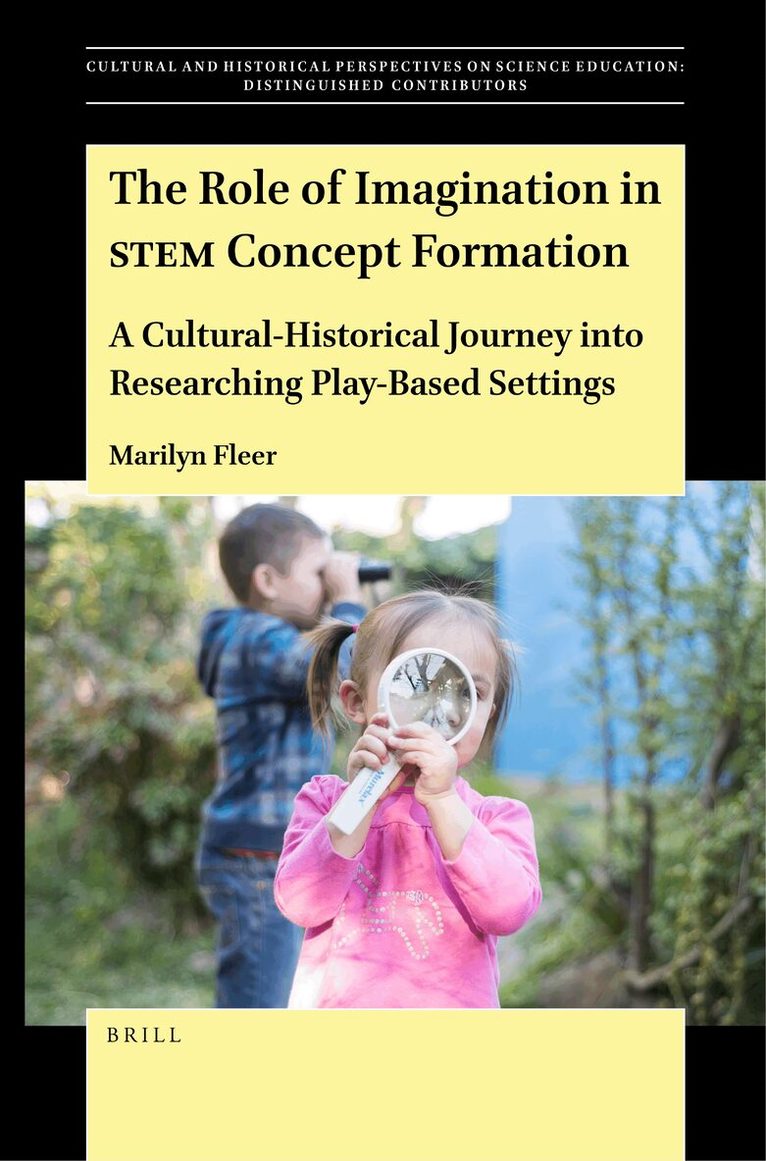
    Role of Imagination in STEM Concept Formation

    A Cultural-Historical Journey into Researching Play-Based Settings

    AvMarilyn Fleer

    Inbunden, Engelska, 2022

    Del i serien Cultural and Historical Perspectives on Science Education: Distinguished Contributors

    2 112 kr

    Beställningsvara. Skickas inom 5-8 vardagar. Fri frakt över 249 kr.

    Fler format och utgåvor

    Häftad

    898 kr

    Beskrivning

    Why has early childhood science education taken so long to become established as a field of research inquiry? Why do we continue to blame early childhood and primary teachers for their lack of confidence and competence in science education? This book tackles these questions and more.Grounded in cultural-historical theory, this book explores the development of the field through the eyes of the author. Over 30 years the contexts, the questions, and the foci of a generation of science education researchers are mapped. As the field develops, new concepts, models of teaching and new methods and methodologies are theorised and empirically supported, bringing forward uniqueness of science education for children in play-based settings.

    Produktinformation

    • Utgivningsdatum:2022-06-24
    • Mått:155 x 235 x 19 mm
    • Vikt:646 g
    • Format:Inbunden
    • Språk:Engelska
    • Serie:Cultural and Historical Perspectives on Science Education: Distinguished Contributors
    • Antal sidor:304
    • Förlag:Brill
    • ISBN:9789004520059

    Utforska kategorier

    • Pedagogik inom Psykologi och pedagogik

    Mer om författaren

    Marilyn Fleer holds the Foundation Chair of Early Childhood Education and Development at Monash University, Australia. Additionally, she was awarded the 2018 Kathleen Fitzpatrick Laureate Fellowship by the Australian Research Council, and former President, International Society of Cultural-historical Activity Research.

    Innehållsförteckning

    • AcknowledgementsList of Figures and Tables1 Beginning the Journey into Early Childhood Science Education Research: Beyond Alternative Conceptions1 Introduction2 Beginning the Journey3 Concluding Remarks and Future DirectionsPaper 1: Children’s Alternative Views: Alternative to What?2 Conceptual Play: New Research Agendas Driven by Policy Changes for Play-Based Settings1 Introduction2 National Reviews and Imperatives for Early Childhood Science Education3 International Imperatives Shaping Early Childhood Education4 Concluding Remarks and Future DirectionsPaper 2: ‘Conceptual Play’: Foregrounding Imagination and Cognition during Concept Formation in Early Years Education3 Building an Evidence-Based Model for Early Childhood Science Education: The Place of Emotions in Science, Motivating Learning into Play, and the Teacher in Play Relations1 Big Research Problems Need a Suite of ARC Discovery Grants2 Bringing in Emotions and Drama into Science3 Motives and Motivating Conditions4 Leaping Forward …5 Going Back …7 Thinking Differently about the Problem: Teachers Inside of Children’s PlayPaper 3: Affective Imagination in Science Education: Determining the Emotional Nature of Scientific and Technological Learning of Young ChildrenPaper 4: The Demands and Motives Afforded through Digital Play in Early Childhood Activity SettingsPaper 5: Pedagogical Positioning in Play–Teachers Being Inside and Outside of Children’s Imaginary Play4 Conceptual PlayWorlds: New Model of Practice for Supporting Early Childhood Teachers in the Intentional Teaching of STEM1 An Educational Experiment and a Conceptual PlayWorld as an Intervention2 The Five Characteristics of Conceptual Playworlds3 ConclusionPaper 6: Conceptual Playworlds: The Role of Imagination in Play and LearningPaper 7: Scientific Playworlds: A Model of Teaching Science in Play-Based SettingsPaper 8: Conceptual PlayWorlds as a Pedagogical Intervention: Supporting the Learning and Development of the Preschool Child in Play-Based Setting5 Conceptual PlayLab for Early Childhood STEM: Australian Research Council Laureate Fellowship Scheme1 Engaging with Social Media – Making and Curating Content2 Video Productions3 Halfway through the Five-year Period of Funding6 Agentic STEM Practices: From Role-Playing “As If” Engineer/Scientist to Imagining This As a Career1 Mentoring in the Academy …2 Building the Legacy and Circling Back …3 Where Are We at Now?4 Future Imagining in Engineering5 Engineering PlayWorlds6 Looking ForwardPaper 9: When Preschool Girls Engineer: Future Imaginings of Being and Becoming an EngineerIndex