• Fri frakt över 249 kr
  • •
  • Snabba leveranser
  • •
  • Billiga böcker
Kundservice

Du är på sajten för privatpersoner.

Företag, bibliotek eller offentlig verksamhet?

Du handlar på classic.bokus.com, där alla dina funktioner finns intakta.
Till classic.bokus.com
Bokus logotyp. Gå till startsidan.
  • Erbjudanden
  • Nyheter
  • Student
  • Topplistor
  • Barn & ungdom
  • Bokus Play
  • E-böcker
  • Pocketböcker
  • Spel & pussel

10% rabatt på allt med kod: NYSTART10 →

Sidfot

Mina sidor

    Hjälp

    • Kundservice
    • Vanliga frågor och svar
    • Frakt och leverans
    • Retur vid ångerrätt
    • Reklamera vara
    • Betalning
    • Köpvillkor
    • Allmänna villkor
    • Information om webbplatsens tillgänglighet

    Om Bokus

    • Om oss
    • Pressrum
    • För studenter
    • För företag
    • För bibliotek och offentlig verksamhet
    • För leverantörer
    • Hållbarhet

    Populärt

    • Aktuella erbjudanden
    • Presentkort
    • Studentlitteratur
    • Nya böcker
    • Topplistor
    • Signerade böcker
    • Engelska böcker

    Inspiration

    • Boktips
    • BookTok
    • Populära bokserier
    • Barnbokskaraktärer
    • Populära författare
    Logotyp för Bokus
    Följ oss på Facebook (extern länk)Följ oss på Instagram (extern länk)Följ oss på YouTube (extern länk)Följ oss på TikTok (extern länk)
    bokus @ CookiesAnpassa cookiesIntegritetspolicyKöpvillkor
    Till Citymail hemsida (extern länk)Till Budbee hemsida (extern länk)Till Postnord hemsida (extern länk)Till Schenker hemsida (extern länk)Till Early Bird hemsida (extern länk)Till Walleys hemsida (extern länk)
    1. Historia och arkeologi
    2. Historia

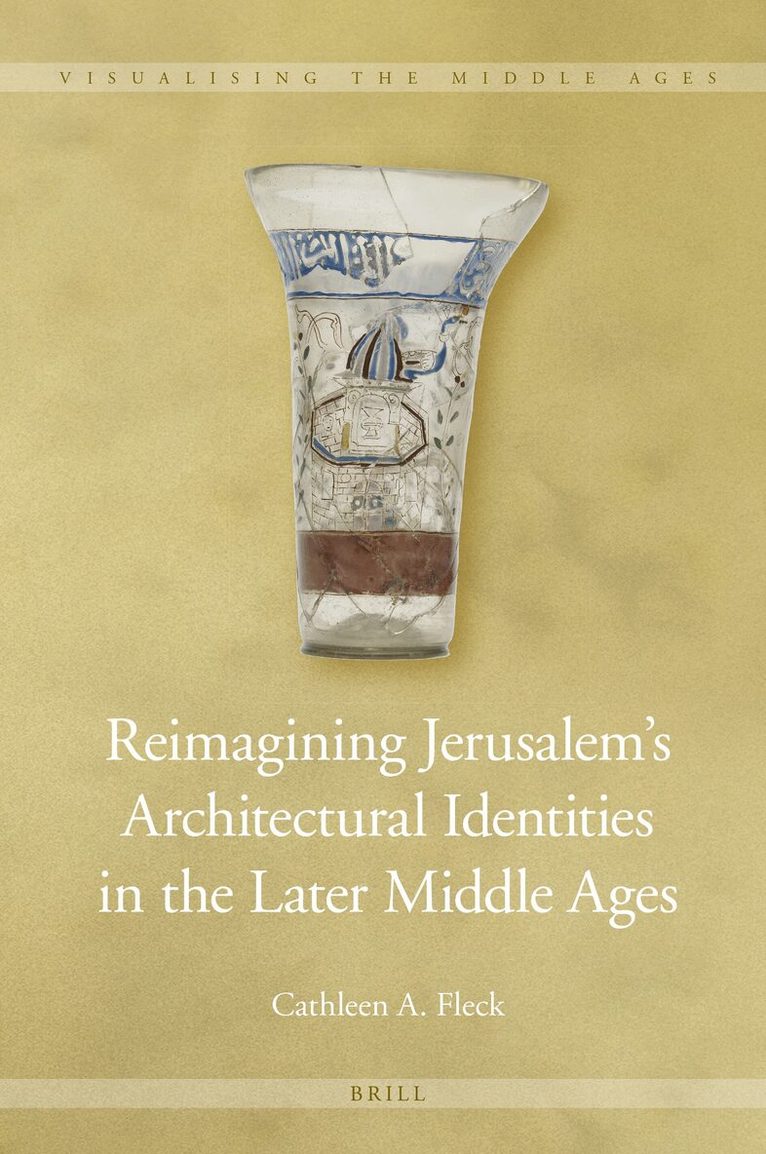
    Reimagining Jerusalem’s Architectural Identities in the Later Middle Ages

    AvCathleen A. Fleck

    Inbunden, Engelska, 2022

    Del 14 i serien Visualising the Middle Ages

    2 485 kr

    Beställningsvara. Skickas inom 5-8 vardagar. Fri frakt över 249 kr.

    Beskrivning

    How can medieval art explain Jerusalem’s centrality in the world faiths of Christianity and Islam? This book delves into that topic by examining how Jerusalem was creatively represented and reimagined in several intriguing Christian and Islamic artworks in the later Middle Ages (c. 1187 to 1356).The book considers how European Catholic crusaders, Eastern Christian sects, and diverse Muslim factions displayed Jerusalem’s architecture to express their interpretation of the holy city’s sanctity and influence. These examples demonstrate how artworks can reflect Jerusalem’s importance to these faiths in the past and illuminate our understanding of its status into the modern era.

    Produktinformation

    • Utgivningsdatum:2022-10-05
    • Mått:155 x 235 x 32 mm
    • Vikt:824 g
    • Format:Inbunden
    • Språk:Engelska
    • Serie:Visualising the Middle Ages
    • Antal sidor:402
    • Förlag:Brill
    • ISBN:9789004523081

    Utforska kategorier

    • Historia inom Historia och arkeologi

    Mer om författaren

    Cathleen A. Fleck, Ph.D. (1999), The Johns Hopkins University, is Associate Professor (Art History) and Chair (Fine and Performing Arts) at Saint Louis University. She publishes on medieval Mediterranean art, including The Clement Bible at the Medieval Courts of Naples and Avignon: A Story of Papal Power, Royal Prestige, and Patronage (Ashgate, 2010).

    Innehållsförteckning

    • AcknowledgmentsNotes on Transcriptions and DatesList of FiguresIntroduction1 Jerusalem in Relief A Crusader Pilaster Reexamined1.1 The Pilaster and Its Jerusalem Scenes1.1.1 The Church of the Holy Sepulcher1.1.2 The Dome of the Rock1.1.3 The Tower of David and ‘Curia Regis’1.2 A Context of Production1.2.1 The Temple Mount Setting in Jerusalem1.2.2 A Royal Display1.3 Conclusions2 Jerusalem as a Guide for Personal Deliverance The Riccardiana Psalter in the Thirteenth Century2.1 The Issues of the Riccardiana Psalter2.2 The Visual Content, Iconography, and Style2.2.1 The Annunciation and Visitation at Psalm 12.2.2 The Adoration of the Magi at Psalm 262.2.3 The Presentation in the Temple at Psalm 382.2.4 The Entry of Christ into Jerusalem at Psalm 522.2.5 The Last Supper and Washing of the Apostles’ Feet at Psalm 682.2.6 The Harrowing of Hell and Three Marys at the Tomb at Psalm 802.2.7 The Ascension at Psalm 972.2.8 The Pentecost at Psalm 1092.3 The Place of Production2.4 A Devotional Prayer Book2.5 Conclusions3 Jerusalem on Souvenir Glass Beakers and Cross-Cultural Exchange3.1 The Architecture on the Beakers3.1.1 The Large Beaker3.1.1.1 The Dome of the Rock3.1.1.2 The Church of the Holy Sepulcher3.1.2 The Small Beaker3.1.2.1 The Golden Gate3.1.2.2 The Church of the Ascension3.2 The Figures on the Beakers3.3 Palm Sunday Liturgy in Jerusalem and the Beakers3.4 The Material, Context, and Inscriptions3.5 Conclusions4 A Multicultural View of Jerusalem on the Freer Canteen4.1 “Islamic” Metalware in the Thirteenth Century: Material, Imagery, and Form4.2 The Imagery on the Canteen’s Obverse Side4.2.1 The Virgin and Child4.2.2 The Christological Scenes4.2.2.1 The Nativity in Bethlehem—and Jerusalem: The Grotto in the Church of the Nativity and Cradle of Jesus4.2.2.2 The Presentation in the Temple: The Temple as Conflation of the Dome of the Rock and Church of the Holy Sepulcher4.2.2.3 The Entry into Jerusalem: Palm Sunday Liturgy and the Golden Gate4.2.2.4 The Combination of Scenes on the Obverse: A Christological Focus4.3 The Canteen’s Reverse: Sacred and Secular Models4.4 The Canteen’s Inscriptions4.5 Conclusions5 Jerusalem and King Solomon in the Clement Bible The Promotion of Robert iof Naples as Symbolic King of Jerusalem in the Fourteenth Century5.1 A Description of the Clement Bible5.1.1 The Temple of Jerusalem in the Clement Bible5.2 Naples and the Holy Land: Related Scenes in the Clement Bible5.2.1 The Related Anjou Bible and Jerusalem5.3 The Clement Bible and the Discourse on Rome and Jerusalem5.4 King Robert i and Crusades5.5 Conclusions6 Jerusalem as a Symbol of Islamic Identity The Holy City Displayed in Mamluk Cairo6.1 The Jerusalem Theme on the Pilaster in Mamluk Cairo6.1.1 The Dome of the Rock6.1.2 The Tower of David6.1.3 The Church of the Holy Sepulcher6.2 The Jerusalemite Pilaster as Spolia6.3 The Pilaster’s Setting in Mamluk Cairo6.3.1 The Visual Evidence of the Portal in Cairo6.4 Sultan Hasan’s Complex and the Black Death6.5 Hasan’s Motivations for the Complex and the Use of the Jerusalemite Pilasters6.6 ConclusionsConclusionsBibliographyIndex