• Fri frakt över 249 kr
  • •
  • Snabba leveranser
  • •
  • Billiga böcker
Kundservice

Du är på sajten för privatpersoner.

Företag, bibliotek eller offentlig verksamhet?

Du handlar på classic.bokus.com, där alla dina funktioner finns intakta.
Till classic.bokus.com
Bokus logotyp. Gå till startsidan.
  • Erbjudanden
  • Nyheter
  • Student
  • Topplistor
  • Barn & ungdom
  • Bokus Play
  • E-böcker
  • Pocketböcker
  • Spel & pussel

10% rabatt på allt med kod: NYSTART10 →

Sidfot

Mina sidor

    Hjälp

    • Kundservice
    • Vanliga frågor och svar
    • Frakt och leverans
    • Retur vid ångerrätt
    • Reklamera vara
    • Betalning
    • Köpvillkor
    • Allmänna villkor
    • Information om webbplatsens tillgänglighet

    Om Bokus

    • Om oss
    • Pressrum
    • För studenter
    • För företag
    • För bibliotek och offentlig verksamhet
    • För leverantörer
    • Hållbarhet

    Populärt

    • Aktuella erbjudanden
    • Presentkort
    • Studentlitteratur
    • Nya böcker
    • Topplistor
    • Signerade böcker
    • Engelska böcker

    Inspiration

    • Boktips
    • BookTok
    • Populära bokserier
    • Barnbokskaraktärer
    • Populära författare
    Logotyp för Bokus
    Följ oss på Facebook (extern länk)Följ oss på Instagram (extern länk)Följ oss på YouTube (extern länk)Följ oss på TikTok (extern länk)
    bokus @ CookiesAnpassa cookiesIntegritetspolicyKöpvillkor
    Till Citymail hemsida (extern länk)Till Budbee hemsida (extern länk)Till Postnord hemsida (extern länk)Till Schenker hemsida (extern länk)Till Early Bird hemsida (extern länk)Till Walleys hemsida (extern länk)
    1. Språk och ordböcker
    2. Språkvetenskap och lingvistik

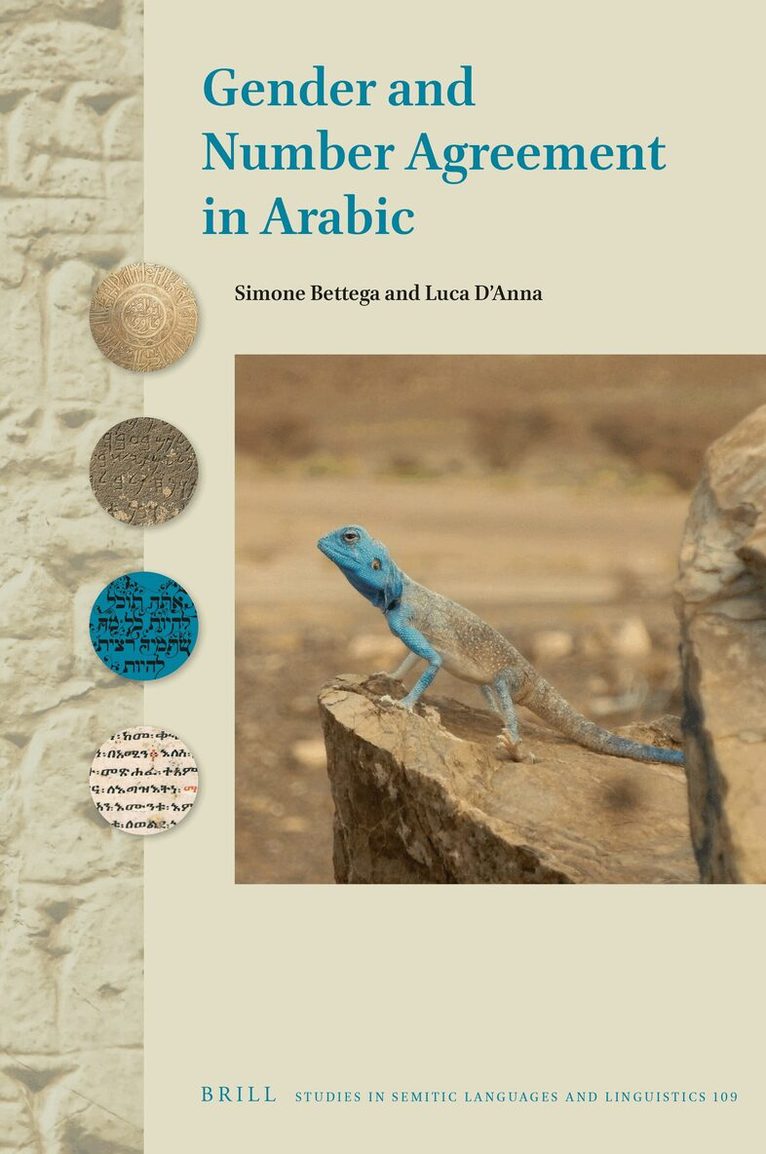
    Gender and Number Agreement in Arabic

    AvSimone Bettega,Luca D’Anna

    Inbunden, Engelska, 2022

    Del 109 i serien Studies in Semitic Languages and Linguistics

    2 493 kr

    Beställningsvara. Skickas inom 5-8 vardagar. Fri frakt över 249 kr.

    Beskrivning

    This book offers a comprehensive survey of the agreement phenomena found in written and spoken Arabic. It focuses on both the synchronic description of these agreement systems, and the diachronic question of how they evolved. To answer these questions, large amounts of data have been collected and analysed, ranging from 6th century poetry and Quranic Arabic to the contemporary dialects. The results presented by the authors of this research greatly improve our understanding of Arabic syntax, and challenge some well-established views. Can Arabic be envisioned as possessing more than only two genders? Are some contemporary dialects more similar to the pre-Classical version of the language than MSA is? And is the Standard rule prescribing feminine singular agreement with nonhuman plurals a more recent development than previously thought?

    Produktinformation

    • Utgivningsdatum:2022-12-01
    • Mått:155 x 235 x 32 mm
    • Vikt:841 g
    • Format:Inbunden
    • Språk:Engelska
    • Serie:Studies in Semitic Languages and Linguistics
    • Antal sidor:408
    • Förlag:Brill
    • ISBN:9789004527232

    Utforska kategorier

    • Språkvetenskap och lingvistik inom Språk och ordböcker

    Mer om författaren

    Simone Bettega works as a researcher at the University of Turin, where he received his Ph.D. in Linguistics in 2016. His researches mainly focus on linguistic typology, syntax, historical linguistics and the documentation of the Arabic dialects of south-eastern Arabia.Luca D’Anna holds the position of Associate Professor of Arabic Dialectology at the University of Naples “L’Orientale”, after serving as an Assistant Professor of Arabic at The University of Mississippi. His research focuses on Arabic Linguistics and Dialectology, Eastern Maghrebi dialects, Judeo-Arabic and historical linguistics.

    Innehållsförteckning

    • AcknowledgmentsList of Tables and FiguresA Note on TerminologyIntroductory Note1 Previous Studies on Agreement in Arabic1.1 Agreement through Time: Arabic Old and New1.2 Classical and Modern Standard Arabic1.3 Spoken Arabic2 Describing the Systems2.1 Agreement from a Typological Perspective2.2 Morphological Markers of Gender and Number in Arabic2.3 The Spoken Dialects2.4 Pre-Classical Arabic: Pre-Islamic Poetry and the Quran2.5 The Odd Ones Out: Classical and Modern Standard Arabic2.6 Summary3 A Diachronic Account of Agreement: Formal and Written Arabic3.1 An Overview of Agreement in Central Semitic3.2 Methodological Issues in the Selection of the Corpora3.3 A Change in Progress? Resemanticization in Pre-Islamic Poetry3.4 Down the Agreement Hierarchy: Evidence from the Quran3.5 Post-7th Century Poetry3.6 The Dawn of Arabic Prose: Translated Syntax in Kalīla wa Dimna3.7 From [-Individuated] to [-Human]: The Reanalysis of Semantic Features in Classical Arabic3.8 After the 10th Century: What Escaped Standardization3.9 Nabaṭī Poetry: Poetic Register or Survival of the Old System?3.10 Summary4 The Approach of Traditional Grammar: An Attempt at Reconstruction4.1 Scope of the Chapter4.2 Early Arabic Grammarians: From Sībawayh to al-Mubarrad4.3 From 10th Century Grammars to Didactic Manuals: Further Developments4.4 Between Tradition and Standardization: Arabic Grammar during the Nahḍa4.5 Summary5 A Diachronic Account of Agreement: Spoken Arabic5.1 Feminine Singular Agreement with Plural Controllers: Modern Innovation or Ancient Retention?5.2 The Loss of Feminine Plural Agreement5.3 SummaryBibliographyIndex of Languages and DialectsGeneral Index