• Fri frakt över 249 kr
  • •
  • Snabba leveranser
  • •
  • Billiga böcker
Kundservice

Du är på sajten för privatpersoner.

Företag, bibliotek eller offentlig verksamhet?

Du handlar på classic.bokus.com, där alla dina funktioner finns intakta.
Till classic.bokus.com
Bokus logotyp. Gå till startsidan.
  • Erbjudanden
  • Nyheter
  • Student
  • Topplistor
  • Barn & ungdom
  • Bokus Play
  • E-böcker
  • Pocketböcker
  • Spel & pussel

10% rabatt på allt med kod: NYSTART10 →

Sidfot

Mina sidor

    Hjälp

    • Kundservice
    • Vanliga frågor och svar
    • Frakt och leverans
    • Retur vid ångerrätt
    • Reklamera vara
    • Betalning
    • Köpvillkor
    • Allmänna villkor
    • Information om webbplatsens tillgänglighet

    Om Bokus

    • Om oss
    • Pressrum
    • För studenter
    • För företag
    • För bibliotek och offentlig verksamhet
    • För leverantörer
    • Hållbarhet

    Populärt

    • Aktuella erbjudanden
    • Presentkort
    • Studentlitteratur
    • Nya böcker
    • Topplistor
    • Signerade böcker
    • Engelska böcker

    Inspiration

    • Boktips
    • BookTok
    • Populära bokserier
    • Barnbokskaraktärer
    • Populära författare
    Logotyp för Bokus
    Följ oss på Facebook (extern länk)Följ oss på Instagram (extern länk)Följ oss på YouTube (extern länk)Följ oss på TikTok (extern länk)
    bokus @ CookiesAnpassa cookiesIntegritetspolicyKöpvillkor
    Till Citymail hemsida (extern länk)Till Budbee hemsida (extern länk)Till Postnord hemsida (extern länk)Till Schenker hemsida (extern länk)Till Early Bird hemsida (extern länk)Till Walleys hemsida (extern länk)
    1. Psykologi och pedagogik
    2. Pedagogik

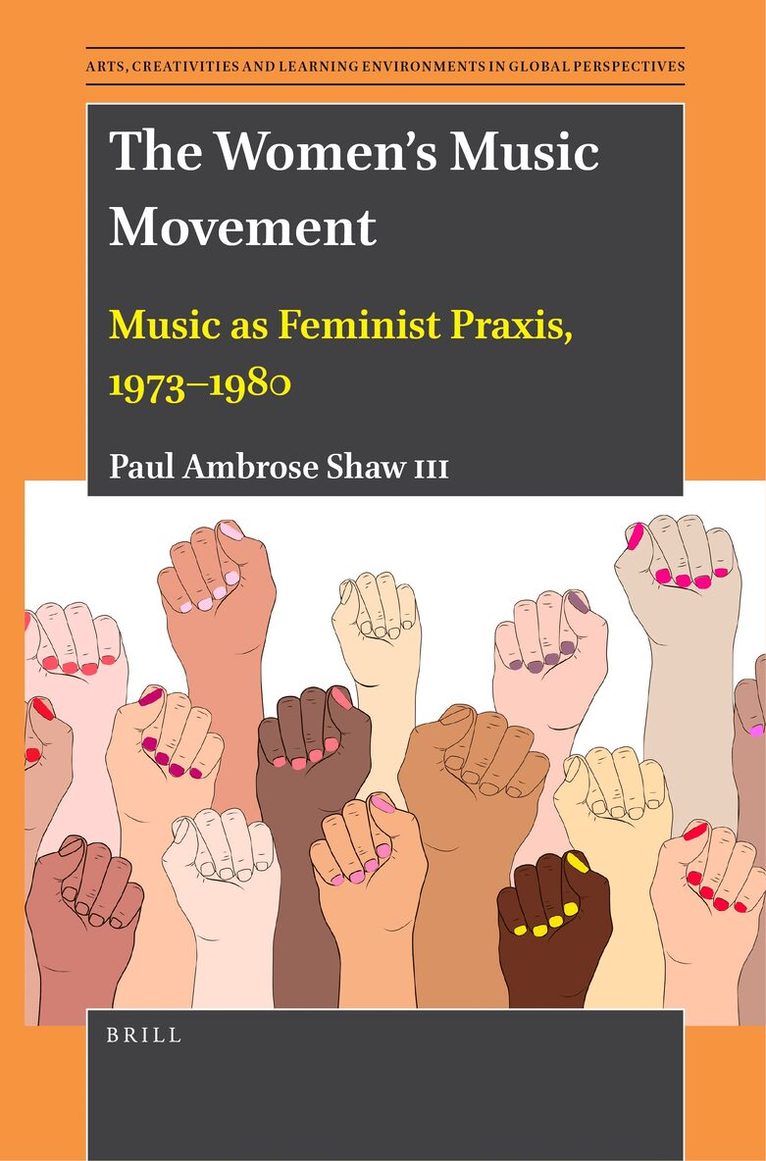
    Women’s Music Movement

    Music as Feminist Praxis, 1973–1980

    AvPaul Ambrose Shaw III

    Häftad, Engelska, 2022

    Del 8 i serien Arts, Creativities, and Learning Environments in Global Perspectives

    787 kr

    Beställningsvara. Skickas inom 5-8 vardagar. Fri frakt över 249 kr.

    Fler format och utgåvor

    Inbunden

    1 474 kr

    Beskrivning

    Scholarship on artistic output during second wave feminism (SWF) primarily reflects art-genres such as visual art, performance art, literature, and poetry. In The Women’s Music Movement: Music as Feminist Praxis, 1973–1980, Paul Ambrose Shaw III contends the women’s music movement (WMM) was a vibrant locus of feminist activity during SWF but received comparatively less scholarly attention. Specifically, Shaw conducts a content analysis of five songs recorded between 1973 and 1980. As such, he draws on musical elements and structures, poetic and lyrical devices, personal insights from the artists, and feminist theory to explore the following important questions: What can we learn about second wave feminist movement through the lens of the women’s music movement? Was the women’s music movement, as some scholars and activists assert, simply a cultural and lifestyle movement, or an impactful locus of feminist praxis? Through a detailed analysis of five songs recorded by stalwarts of WMM—Meg Christian, Cris Williamson, Ferron, Holly Near, and Linda Tillery—Shaw argues for the importance of WMM as a vibrant center of struggle, growth, and creativity that serves as a model for modern social movement cultural activity.

    Produktinformation

    • Utgivningsdatum:2022-12-01
    • Mått:155 x 235 x 8 mm
    • Vikt:252 g
    • Format:Häftad
    • Språk:Engelska
    • Serie:Arts, Creativities, and Learning Environments in Global Perspectives
    • Antal sidor:130
    • Förlag:Brill
    • ISBN:9789004534964

    Utforska kategorier

    • Pedagogik inom Psykologi och pedagogik

    Mer om författaren

    Paul Ambrose Shaw III, Ph.D. (2022), Union Institute and University, is Adjunct Professor of Humanities at United States University. He has published two drum set instructional books and two peer reviewed publications on the music of the Gullah Geechee.

    Innehållsförteckning

    • PrefaceAcknowledgementsIntroduction: Why This Study?1 How a Musical Lens Can Inform SWF Narratives1 Feminism and Women’s Music: Definitions, Context, and Terms1 Intersectionality2 Background3 Context4 Abbreviations2 Considerations: Epistemology, Feminist Criteria, Gender and Pop1 Epistemology and Feminist Art Criteria2 A Case for more Musical, Lyrical (Semiotic) Scholarship: Gender and Pop3 Music as Social, Personal, and Political4 Analysis Process: Limitations, the Songwriters, and the Songs1 A Note on Process2 Limitations and Assumptions3 The Songwriters4 The Songs5 Meg Christian’s “Valentine Song”1 Rhythm (Foundational Rhythm, Time Signature, Tempo, Delay, Anticipation, Repetition)2 Melodic and Harmonic Features (Key Signature, Vocal Range, Homophony, Polyphony, Texture)3 Form and Style (Variation, Unity, Repetition)4 Dynamics5 Musical Example6 Timbre (Color, Tone, Inflection)7 Lyrics8 Valentine Song (Meg Christian) Guitar Capo 1st Fret (actual key-Ab)9 “Valentine Song” Conclusion6 Ferron’s “Ain’t Life a Brook”1 Rhythm (Foundational Rhythm, Time Signature, Tempo, Delay, Anticipation, Repetition)2 Musical Example3 Melodic and Harmonic Features (Key Signature, Vocal Range, Homophony, Polyphony, Texture)4 Form and Style (Variation, Unity, Repetition)5 Dynamics6 Timbre (Color, Tone, Inflection)7 Lyrics8 Ain’t Life a Brook (Ferron) Guitar Capo 7th Fret (Actual Key-D)9 “Ain’t Life a Brook” Conclusion7 Cris Williamson’s “Sister”1 Rhythm (Foundational Rhythm, Time Signature, Tempo, Delay, Anticipation, Repetition)2 Melodic and Harmonic Features (Key Signature, Vocal Range, Homophony, Polyphony, Texture)3 Form and Style (Variation, Unity, Repetition)4 Dynamics5 Musical Example6 Timbre (Color, Tone, Inflection)7 Lyrics8 Sister (Cris Williamson) Original Key-C (for Piano or Guitar)9 “Sister” Conclusion8 Holly Near’s “Riverboat”1 A Note on Inclusion: Why Near?2 Rhythm (Foundational Rhythm, Time Signature, Tempo, Delay, Anticipation, Repetition)3 Melodic and Harmonic Features (Key Signature, Vocal Range, Homophony, Polyphony, Texture)4 Form and Style (Variation, Unity, Repetition)5 Dynamics6 Timbre (Color, Tone, Inflection)7 Musical Example8 Lyrics9 Riverboat (Holly Near) Original Key-D (for Piano or Guitar)10 “Riverboat” Conclusion9 Linda Tillery’s “Womanly Way”1 Rhythm (Foundational Rhythm, Time Signature, Tempo, Delay, Anticipation, Repetition)2 Musical Example3 Musical Example4 Musical Example5 Melodic and Harmonic Features (Key Signature, Vocal Range, Homophony, Polyphony, Texture)6 Form and Style (Variation, Unity, Repetition)7 Dynamics8 Timbre (Color, Tone, Inflection)9 Lyrics10 Womanly Way (Linda Tillery) Original Key-Bb (for Piano or Guitar)11 “Womanly Way” Conclusion10 Women’s Music Movement ConclusionReferencesIndex